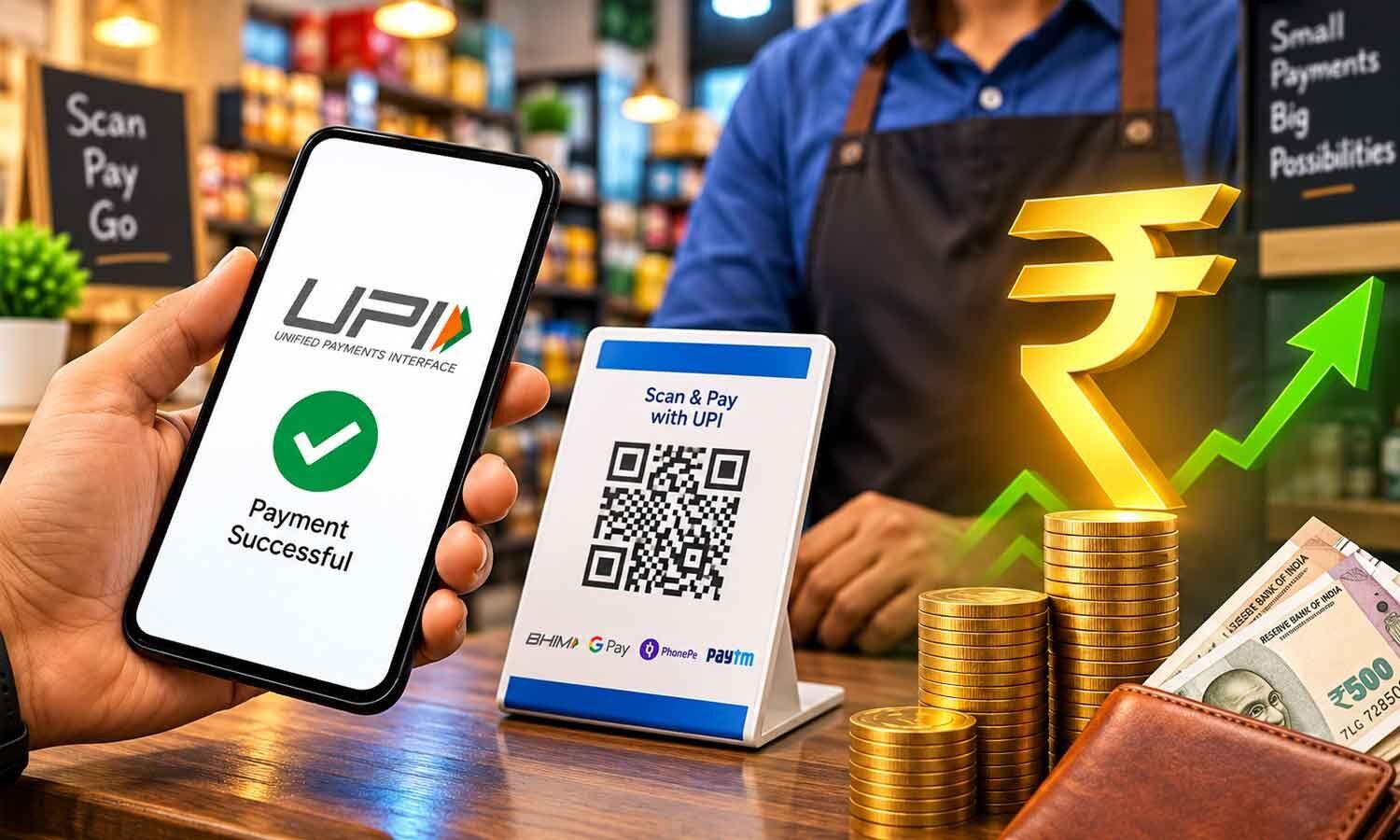
The rollout of merchant discount rates (MDR) on select Unified Payments Interface (UPI) transactions has been postponed until after Diwali, the National Payments Corporation of India (NPCI) said on Tuesday.
The UPI and Services Steering Committee approved the decision on October 13, taking the festive season into consideration. The revised rates will be introduced immediately after Diwali, with the exact date to be announced separately.
The move puts on hold the planned October 15 implementation of charges on certain merchant transactions. It also gives businesses and payment service providers additional time before the revised MDR framework takes effect.
Transactions covered under the revised MDR framework
Under the proposed structure, UPI transactions above Rs 2,000 in selected merchant categories, including railways, telecom services, insurance and fuel, will carry a flat MDR of Rs 5.
For large merchant payments exceeding Rs 2,000, the earlier framework outlined by NPCI provides for a charge of 0.4%, subject to a maximum of Rs 300.
The changes are expected to cover only a limited portion of UPI transactions. Around 4% of merchant transactions are likely to come under the framework, while more than 95% of person-to-merchant (P2M) transactions will remain outside its scope.
Small merchants operating through the person-to-person merchant (P2PM) model will continue to pay zero MDR.
Impact on UPI users and merchants
Individual users will not be subject to any monthly quota or limit on free UPI transactions. Payments covered by the applicable free framework will continue without an MDR charge.
Banks have also been advised to ensure that merchants do not recover MDR costs from customers. As a result, consumers are not expected to face an additional charge when making UPI payments under the revised system.
The new framework will allocate 5% of the total MDR collections to a dedicated fund aimed at promoting UPI acceptance among small merchants.
MDR revenue will be distributed among participants in the UPI ecosystem. The funds are expected to support the expansion of the payment network, cybersecurity measures and innovation, while the revised rates are likely to remain lower than those applicable to cards and digital wallets.

 Follow us