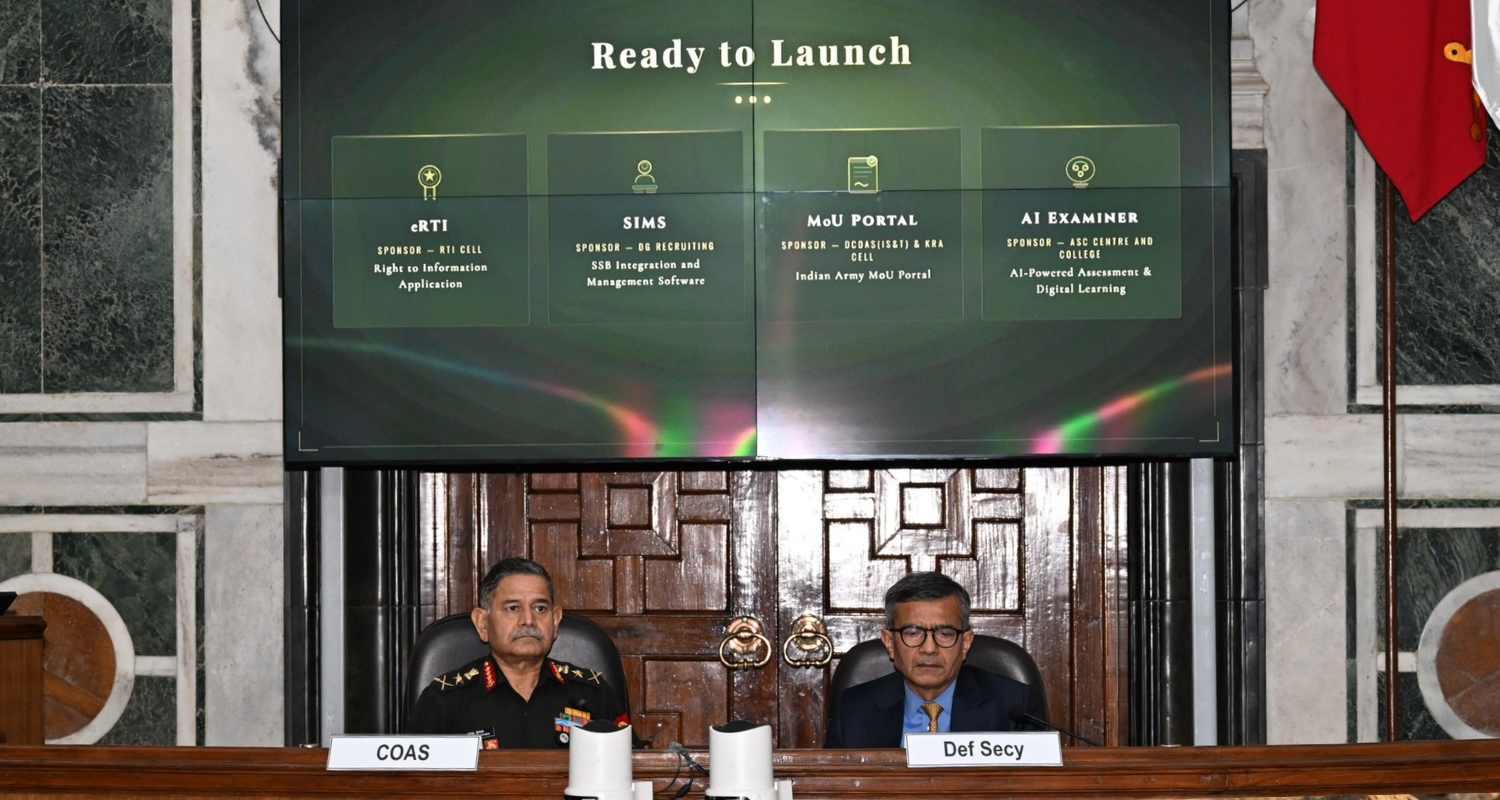
Indian Army Commanders comprehensively assessed the country’s security challenges along the borders with China and Pakistan while looking for ways to further bolster its combat prowess based on the lessons drawn from Operation Sindoor. In line with its vision of evolving into a 'Future Ready Force', the Army designated the year 2026 as the year of 'Networking and Data Centricity, the defence ministry said, a day after the commanders wrapped up their four-day deliberations in New Delhi.
The biannual Army commanders conference also focused on operational capability requirements of the force, including employment of Unmanned Aerial Systems (UAS) and Counter Unmanned Aerial Systems (C-UAS). The top leadership underscored the urgent need to accelerate capabilities for indigenous production of military hardware and strengthen self-reliance in defence to ensure long-term strategic resilience.
The conference, chaired by Army Chief Gen Upendra Dwivedi, was addressed by senior functionaries in the government, including the Cabinet Secretary TV Somanathan, Chief of the Defence Staff Gen Anil Chauhan, Chief of the Naval Staff Admiral Dinesh K Tripathi, and Defence Secretary RK Singh.
"Aligned with the vision of evolving into a 'Future Ready Force', the Indian Army has designated the year 2026 as the year of 'Networking and Data Centricity'," the ministry said. It said the conference discussed a wide array of issues pertaining to modernisation, technology infusion in combat operations, doctrinal and training requirements besides networking and data centricity to enhance operational readiness.
"Based on the lessons learnt from Operation Sindoor, and in keeping with the current operational dynamics globally, senior army leadership also focused on operational capability requirements, including employment of Unmanned Aerial Systems and Counter Unmanned Aerial Systems," the defence ministry said.
"With specific reference to lessons emerging from global conflicts, the speakers alluded to the need for hard power for guaranteed protection of India's strategic and security interests while emphasising inter-ministerial coordination, enhanced synergy between civil and military institutions and a whole-of-nation approach for a coordinated national response to complex security challenges," it said.
"It emerged during the discussions that there is an urgent need to accelerate indigenous production capabilities, for strengthening self-reliance in defence and ensuring long-term strategic resilience in view of the current supply chain crisis," it said.

 Follow us