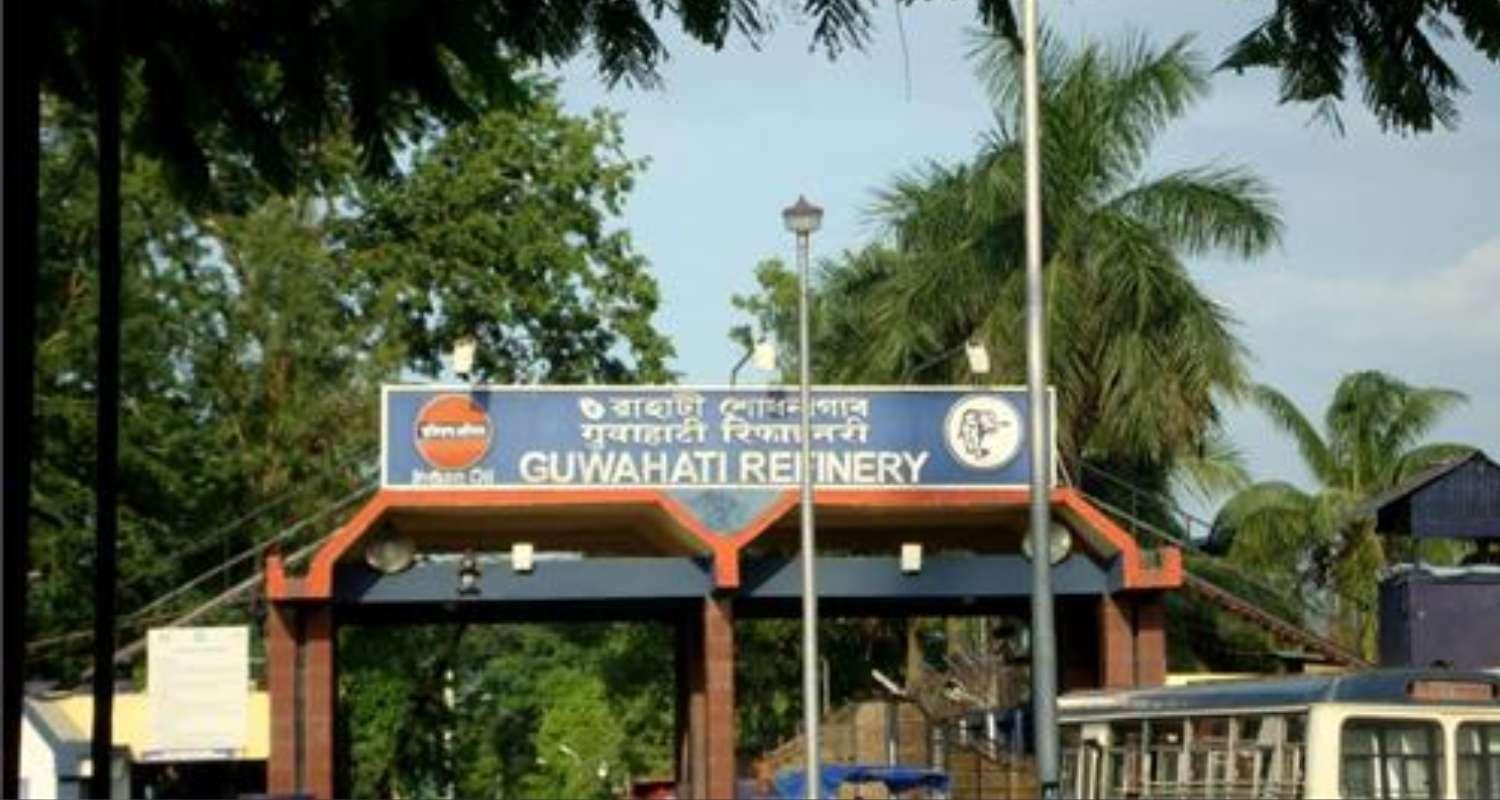
The Guwahati Refinery claimed to have supplied 19 thousand metric tonnes (TMT) of smokeless fuel to the Indian Armed Forces during last May’s ‘Operation Sindoor’, where terrorist infrastructures were destroyed in Pakistan and Pakistan-occupied Kashmir. The refinery is owned by Indian Oil Corporation (IOC).
Interacting with the media, Guwahati Refinery (GR) Executive Director Sunil Kanti said the unit is one of the very few in the country that can produce Low Sulphur Low Aromatics SKO (LSLA SKO), and it was the sole unit to provide the specialised fuel to the army during Operation Sindoor.
"The Indian Army had requested us sometime back to produce a special fuel, which would not emit smoke. They wanted it to keep our soldiers warm in extreme cold conditions. Usually, all types of fuels emit smoke when they are burned. During Operation Sindoor, only our refinery produced and supplied 19 TMT of LSLA SKO within record time. The product was transported to Misamari, Siliguri, and Agra for further transportation to Army bases in cold border areas," he cited.
"The LSLA we had sent to Agra was given to the Indian Army stationed in the Ladakh region. This is a matter of pride that Guwahati Refinery played an important role during the country's defence mechanism in Operation Sindoor," he then informed.
The LSLA contains approximately 1 parts per million (ppm) of sulphur against a permissible limit of 10 ppm, 2-3 per cent aromatics against 4 per cent upper limit and 30 mm smoke point. The capacity was enhanced to 1.2 MMTPA in 2023. Currently, the crude requirement of the refinery is distributed between those from Assam and imported ones. Assam crude constitutes around 40 per cent of GR's input, while 60 per cent are imported, Kanti said.
"Earlier, we used to get fully Assam crude. But after Numaligarh Refinery came into existence, our share reduced and there is no fixed amount. Assam crude's first priority is Digboi and Numaligarh refineries. So, we are dependent on imported crude, coming from Paradip via Barauni," he added.
"We at present do not have the facility to produce reformate, which is a low-sulfur and high-octane-number gasoline blend component from Naphtha. This stream is required for the production of gasoline and is currently imported from other refineries," he added.

 Follow us