
Trending:
History debunks doubts about women in combat
Competence, professionalism, team work, and a certain amount of luck all matter on the battlefield. A person’s gender does not. History agrees with this sentiment. Follow us
News Arena Network - London - UPDATED: December 21, 2025, 01:27 PM - 2 min read
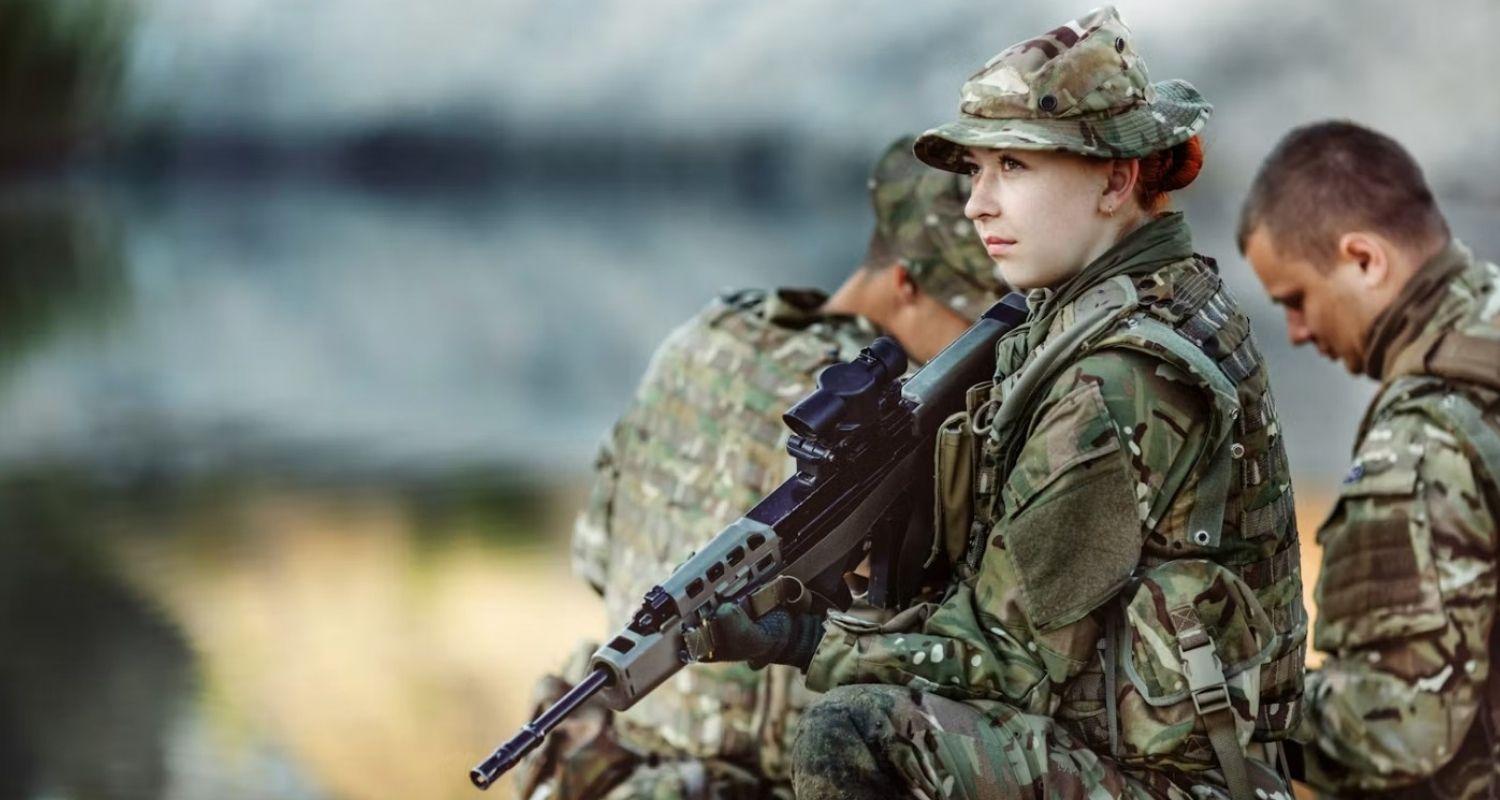
British special forces soldiers take part in a training exercise.
Germany has unveiled plans to introduce voluntary military service. From January 2026, all 18-year-old men will be required to complete a questionnaire asking if they are interested and willing to join the armed forces. Women will not be required to fill out this form.
Across Europe, the pattern is similar. In countries where military service is compulsory such as Austria, Cyprus, Estonia, Finland, Greece, Latvia, Lithuania, Switzerland and Ukraine, women’s enlistment remains voluntary.
The German government’s move, which has sparked a debate within the country about the role of women in the armed forces, comes months after US Defence Secretary, Pete Hegseth, said in a speech to a hall of generals that if “no women qualify for some combat jobs, then so be it.”
Ashleigh Percival-Borley, PhD candidate in the Department of History, Durham University, who is also a former British Army combat medic and served in Afghanistan, recognises that here is an age-old myth that war is, and always has been, a man’s world.
During her military service, Ashleigh says she learned the different sounds made by bullets whizzing past her ears or pinging overhead. She also became familiar with the unmistakable ringing after an IED explosion. She knows from experience that competence, professionalism, team work, and a certain amount of luck all matter on the battlefield. A person’s gender does not.
History agrees with this sentiment. From the Scythian warriors of the ancient steppes—the inspiration for the Amazons’ race of women warriors in Greek mythology—and Viking shieldmaidens, to the Japanese samurai and women fighting in the crusades, evidence reveals women not only participating in battle but leading it.
The modern era has been no different. Women like Harriet Tubman guided raids during the American civil war in the 19th century.
Polish women performed crucial roles in the Warsaw uprising against German forces in 1944. And Britain’s female agents in the Special Operations Executive (SOE) assassinated, sabotaged and led resistance forces in the second world war.
Yet these women are largely remembered as exceptions, having performed extraordinary roles due to wartime necessity, rather than as proof of a long tradition of competence and ability under fire. Their stories remain at odds with the wider war narrative in a culture that is uncomfortable seeing women as combatants.
This was evident in Britain following the second world war, which saw the largest mobilisation of women for war work in history. Women were called upon to carry out a variety of war roles, including pilots and anti-aircraft gunners. Some women even parachuted into occupied territories as secret soldiers.
These roles allowed women to bypass the combat taboo. Yet they were still regarded as temporary, effectively excluding them from the broader war story. After the war ended, there was a strong push in Britain for women to return to traditional roles as housewives and mothers.
Also read: America’s troubled past holds key lessons
This was not new. Following the first world war, the 1919 Restoration of Pre-War Practices Act forced women out of the jobs they had taken during the war so that returning soldiers could be reinstated. There was no similar law following the second world war, but the government and media still encouraged women to leave working roles and focus on home life.
Magazines promoted the idea of the perfect homemaker, with Christian Dior’s 1947 “new look” fashion collection reinforcing a nostalgic vision of femininity that symbolised the broader cultural return to pre-war gender norms.
Some women welcomed this return to gendered ideals, others resisted. Pearl Witherington, an SOE agent who commanded 3,500 Maquis resistance fighters in France, was recommended for a Military Cross medal following the war. But, as a woman, she was not allowed to receive it.
Witherington refused a civil MBE honour when offered; instead writing in a letter to Vera Atkins, an intelligence officer in the SOE: “The work which I undertook was of a purely military nature in enemy occupied country… The men have received military decorations, why this discrimination with women when they put the best of themselves into the accomplishment of their duties?”
Witherington became so important in Nazi-occupied France that the Germans put up posters offering one million francs for her capture. The reluctance to recognise her achievements shows how women’s military service was quietly stripped of its combat significance in the post-war years.
Excluding women no more
Modern conflicts have made the exclusion of women’s presence in war increasingly untenable. Insurgencies, as well as cyber and drone warfare, mean the boundaries between combatants and non-combatants have become much more blurred. Many wars nowadays no longer have clear frontlines, making it harder to distinguish between those who fight and those who don’t.
The increasing complexity of modern battlefields has demanded broader thinking and adaptability beyond traditional combat practices. This shift has contributed to the adoption of gender-neutral military standards and the more widespread inclusion of women in combat roles in many armies.
The British Army has employed gender-neutral physical standards for combat roles since 2019. Male and female recruits must pass a 4km march carrying 40kg of equipment in less than 40 minutes, followed by a 2km march carrying 25kg of equipment in under 15 minutes.
The Australian Defence Force has adopted similar standards since 2017, while the Canadian military has been employing women in combat roles for 25 years.
War has always been a test of human skill and courage, not of gender. A bullet does not care which body it shatters and nor should history.
Via The Conversation
