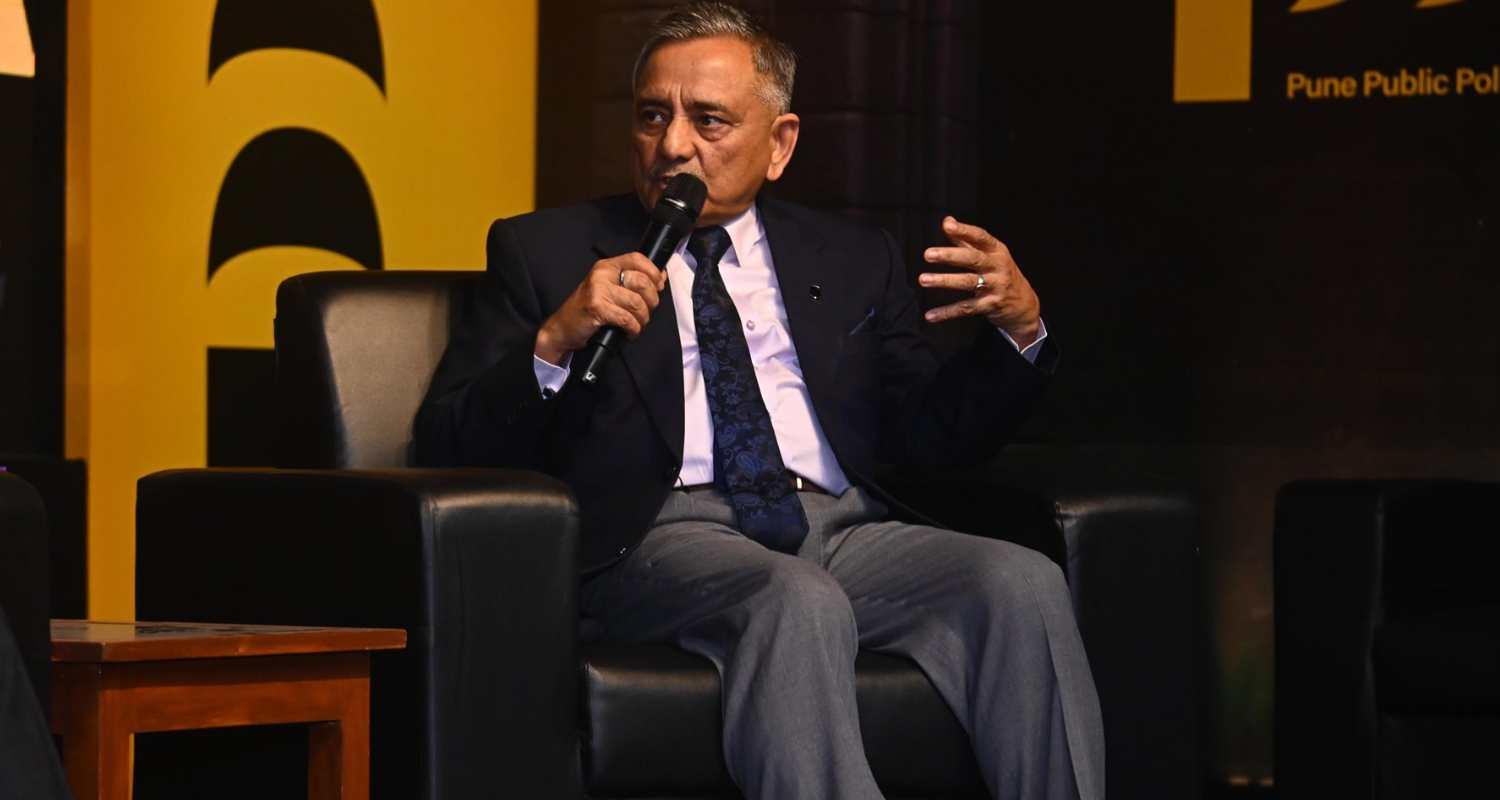
‘The constitutional amendments are the proof that Operation Sindoor did not go well for the neighbouring nation’, said Chief of Defence Staff General Anil Chauhan. The CDS made the remark addressing the Pune Public Policy Festival.
"The changes which have been brought about in Pakistan, including the constitutional amendment done hurriedly, are actually an acknowledgement of the fact that everything didn't go well for them in this operation. They found a lot of shortcomings and deficiencies.”
The amendment to Article 243 of the Constitution of Pakistan has brought about significant changes in that country's higher defence organisation. This entire amendment essentially deals with the constitution of federal customs courts, which is a separate matter altogether, the general added.
"This is of particular importance to us in India, and especially to the armed forces. If I were to narrow down these changes, the first is the abolition of the post of Chairman, Joint Chiefs of Staff Committee, a position that was likely created to promote jointness among the three services. That post has now been abolished. In its place, they have created the post of Chief of Defence Forces (CDF)," he said.
However, Pakistan has also stated that this post can be created only by the Chief of Army Staff, which goes against the basic principle of jointness, General Chauhan highlighted.
"That is one major change. The second change is the creation of a National Strategy Command. On that front, things may work well from their perspective. Earlier, they had also created an Army Rocket Forces Command. From both conventional and strategic standpoints, this may strengthen their capabilities. What they have essentially done is concentrate power by creating these new structures," the CDS pointed out, adding, "Today, the Army Chief will be responsible for land operations, joint operations with the Navy and Air Force through the CDF, as well as strategic and nuclear matters. The creation of the Rocket Forces Command adds another important layer. This, in some ways, reflects a land-centric mindset.”
These are the reasons why these changes were undertaken, and these are essentially the changes that have been implemented, he said.
"For those who may not regularly follow such developments, or may not fully understand what 'strategic forces' mean, it refers primarily to nuclear forces or nuclear weapons," the general informed.
Drawing on experiences from recent military engagements, including the Uri surgical strikes, the Doklam and Galwan standoffs, the Balakot air strike and Operation Sindoor, he said Indian armed forces have often operated with innovative, situation-specific command arrangements.
"What we are now working towards is evolving a standardised system that will be applicable across all contingencies," the general added.
CDS further put light on the progress of the proposed joint theatre commands in India, calling it one of his key responsibilities and said that the process is in its final stages. He then informed that the Central government has granted an extension for completing the exercise until May 30, 2026. However, the armed forces are working to put the structure in place well before the deadline.

 Follow us