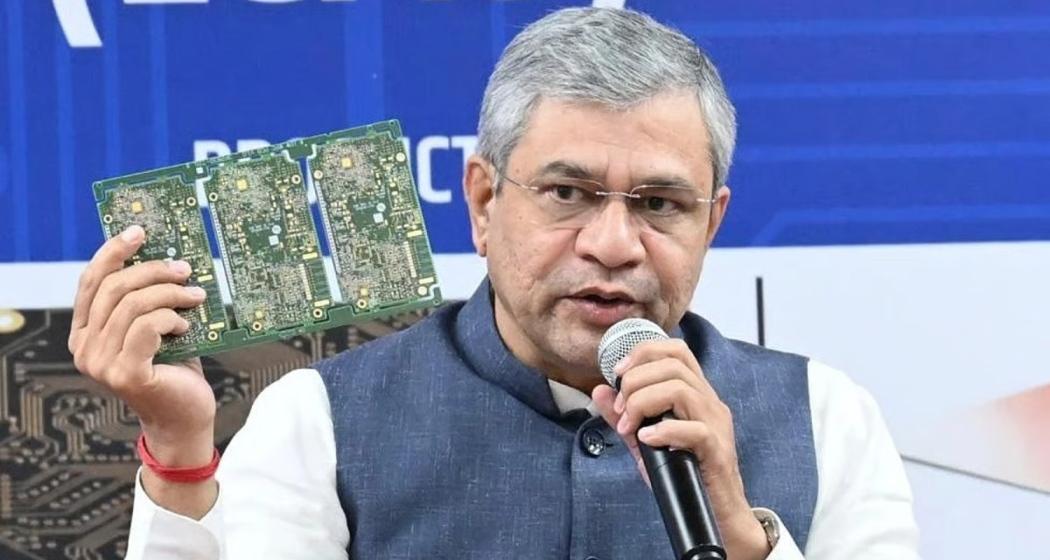
Three more semiconductor plants will begin commercial production in 2026, taking the total to four out of the ten approved units, Union Electronics and IT Minister Ashwini Vaishnaw said on Sunday, a day after the inauguration of Micron’s facility in Gujarat.
Prime Minister Narendra Modi on Saturday inaugurated the Micron ATMP (Assembly, Test, Marking and Packaging) facility at Sanand, marking the start of commercial production at the unit.
“The promise he (PM Modi) made to the country that the semiconductor industry has to be brought to India, he fulfilled that promise. This is the first step,” Vaishnaw said at a semiconductor-focused conference here.
“Very soon, the second plant is also going to go into commercial production and after that two more plants will go into commercial production this year. In other words, four of the ten plants that have been approved, will be inaugurated in 2026,” he added.
The minister is also scheduled to review the under-construction Tata semiconductor fabrication plant at Dholera.
Also read: PM powers up ₹22,516 cr semiconductor plant in Gujarat
The push forms part of the India Semiconductor Mission launched in 2021 to build a domestic chip manufacturing ecosystem. To support the initiative, the government rolled out a Production Linked Incentive (PLI) scheme aimed at attracting global and domestic investment.
At present, 10 semiconductor projects have been approved across six states, representing a combined investment of around Rs 1.60 lakh crore.
Semiconductors power critical sectors including healthcare, transport, communications, defence and space. The government has positioned domestic chip manufacturing as central to India’s economic security and technological self-reliance amid rising global supply chain vulnerabilities.
Vaishnaw also reiterated that the Mumbai-Ahmedabad High Speed Rail project is expected to be inaugurated in 2027.
The 508-km corridor, being executed with technical and financial assistance from Japan, will connect Mumbai and Ahmedabad through 12 stations across Gujarat, Maharashtra and the Union Territory of Dadra and Nagar Haveli. The travel time between the two cities is projected to be under two hours.
The developments signal an acceleration in India’s semiconductor manufacturing ambitions as New Delhi seeks to position the country among leading global technology hubs.

 Follow us