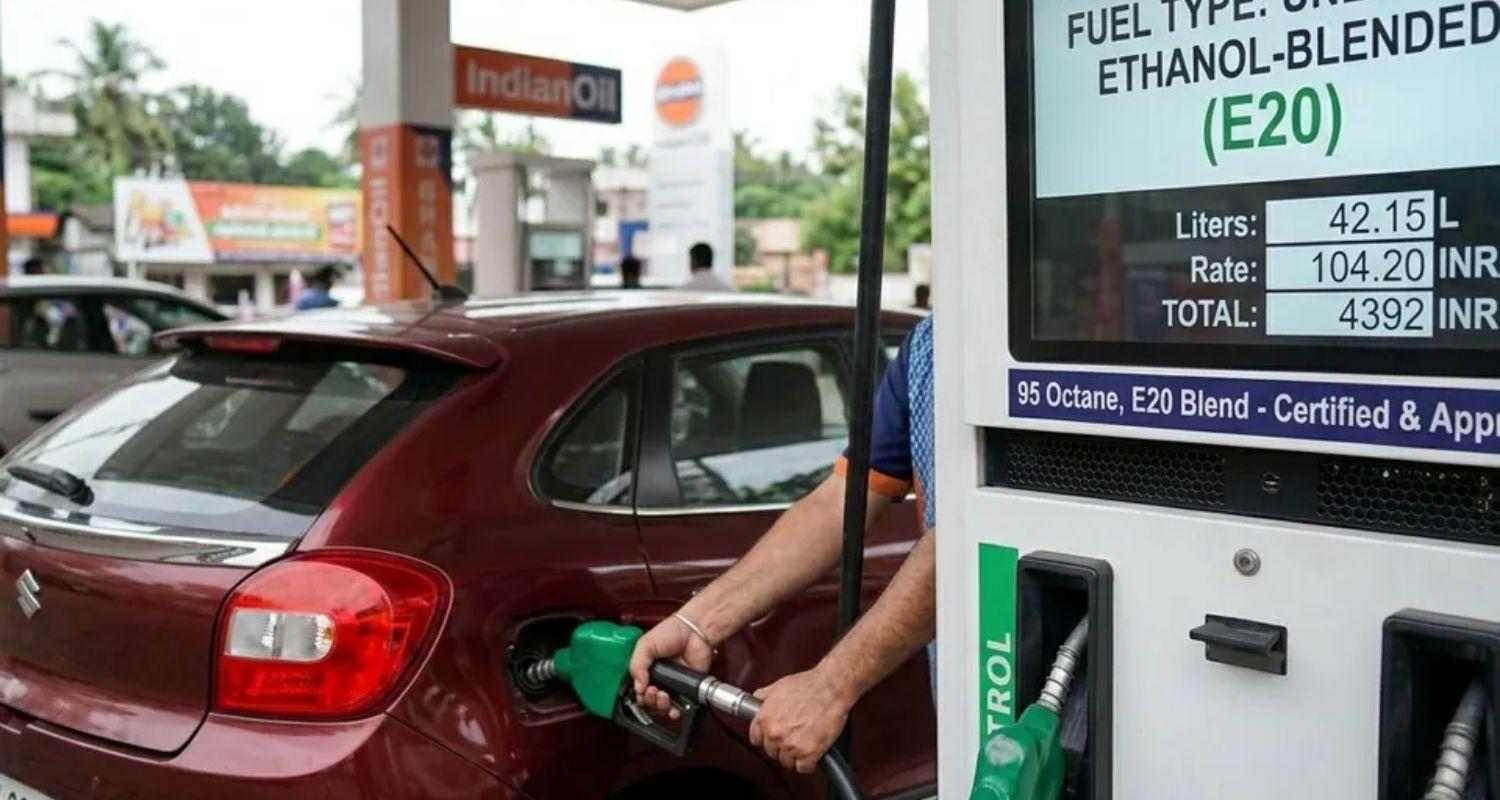
India should consider bringing back a petrol variant with a lower ethanol blend to provide greater choice to consumers and protect millions of older vehicles, the Chief Economic Adviser has said, in one of the strongest calls yet from a senior government official for a rethink of the country's ethanol-blending policy.
The suggestion comes amid an ongoing debate over the impact of higher ethanol content in petrol, particularly on older vehicles that were not originally designed to run on high-ethanol blends. The government has been promoting ethanol-blended fuel as a key component of its strategy to reduce India's dependence on imported crude oil, support domestic farmers and lower carbon emissions.
E20 petrol, which contains 20 per cent ethanol, was rolled out across the country last year. Since April 1, it has been the only petrol variant available for sale at fuel stations nationwide, effectively making E20 the standard petrol option for consumers.
The move towards E20 has been a major step in India's ethanol-blending programme. By increasing the use of domestically produced ethanol, policymakers aim to reduce the country's reliance on imported petroleum and improve energy security. The programme has also created an additional market for agricultural produce used in ethanol production.
However, the transition to higher ethanol blends has generated concerns among some vehicle owners, particularly those using older and non-BS-VI compliant vehicles. Some users have reported lower fuel efficiency, changes in vehicle performance and possible deterioration of certain automotive components after switching to E20 petrol.
The government has repeatedly rejected claims that E20 is broadly damaging vehicles, maintaining that modern vehicles are designed and tested to operate with higher ethanol blends. Officials and oil companies have also emphasised that the fuel is being introduced as part of a long-term strategy to reduce India's oil import bill and promote cleaner energy.
The Chief Economic Adviser's suggestion nevertheless brings the issue of consumer choice into sharper focus. Reintroducing a lower-ethanol petrol option could allow owners of older vehicles to choose a fuel better suited to their engines while allowing newer vehicles to continue using E20.
The proposal, however, could pose logistical and infrastructure challenges. The Oil Ministry has maintained that supplying multiple grades of petrol would not be practical because it would require additional storage, transportation and retail infrastructure across the country.
Maintaining separate fuel grades at petrol stations could increase operational costs for oil marketing companies and require substantial investment in segregated storage tanks, pipelines and dispensing systems. The government has therefore favoured a uniform E20 fuel supply as the country progresses towards higher ethanol blending.
Also read: Mcap of 5 top-10 most valued firms erodes
The debate highlights the challenge of balancing India's broader energy and environmental objectives with the immediate concerns of vehicle owners. While higher ethanol blending can help reduce the use of imported petrol and create demand for domestic ethanol, the transition also needs to account for India's diverse vehicle fleet, which includes a large number of older automobiles.
A lower-ethanol option, if reintroduced, could potentially offer a middle path by preserving the country's ethanol-blending ambitions while giving consumers greater flexibility.
The proposal is likely to fuel further discussion among policymakers, automobile manufacturers, fuel retailers and consumers as India seeks to expand the use of biofuels without imposing disproportionate costs on owners of older vehicles.
For now, E20 remains the standard petrol available nationwide, but the Chief Economic Adviser's intervention has opened a fresh debate over whether India's fuel policy should provide consumers with more choice during the transition to cleaner and more domestically sourced energy.

 Follow us