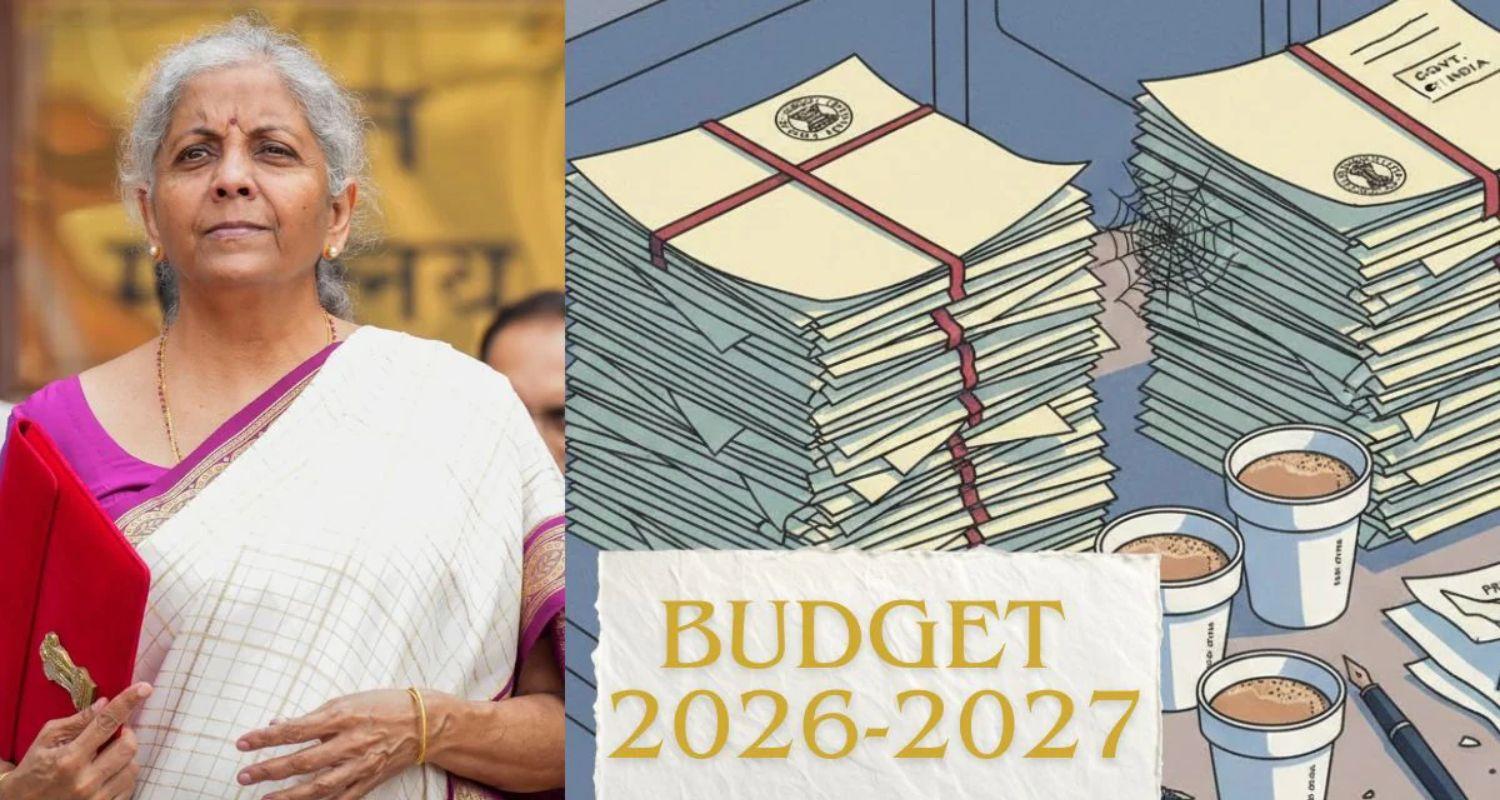
The forthcoming Budget would incorporate the recommendations of the 16th Finance Commission, which has already submitted its report to President Droupadi Murmu.
The Finance Commission, which has been set up under the Constitution, provides a formula for devolution of taxes between the Centre and states. Cesses and surcharge levied by the Centre are not part of the divisible pool.
The Finance Commission is a constitutional body that gives suggestions on Centre-state financial relations and is set up periodically. The 16th Finance Commission, headed by former Vice-Chairman of Niti Aayog Arvind Panagariya, was set up on December 31, 2023.
Led by Panagariya, Finance Commission members, including retired bureaucrat Annie George Mathew, economist Manoj Panda, SBI Group Chief Economic Adviser Soumya Kanti Ghosh and RBI Deputy Governor T Rabi Sankar, and Secretary to the Commission Ritvik Pandey had submitted their report to Murmu on November 17, 2025. The Commission also presented a copy of the report to Prime Minister Narendra Modi and Union Finance Minister Nirmala Sitharaman.
Although the 16th Finance Commission report has not been made public, the Union government has historically been accepting the recommendations of the Commission. The 16th Finance Commission’s recommendations with regard to the formula for sharing taxes for five years starting 2026-27 to 2030-31 would be the key lookout once the report is made public.
As per the Terms of Reference (ToR), the 16th FC was mandated to give its report covering a period of five years commencing on April 1, 2026, making recommendations on the distribution of the net proceeds of taxes between the Union and the states as well as the allocation between the states of the respective shares of such proceeds, grants-in-aid to states, review arrangements on financing disaster management initiatives, etc.
The erstwhile 15th Finance Commission, under NK Singh, had recommended that states be given 41 per cent of the divisible tax pool of the Centre during the six-year period, i.e. 2020-21 to 2025-26, which is at the same level as was recommended by the 14th Finance Commission.
The 41 per cent devolution took into account the territorial adjustments following creation of union territories of Jammu & Kashmir, and Ladakh. Historically, finance commissions have determined states' share in central taxes based on a weighted sum of population, area, demographic performance, fiscal effort, income distance and forest cover.
The issue has long been a point of friction between the Centre and the states, particularly Opposition-ruled ones, which said they have not received their fair share. Southern states have also objected to the use of population as a criterion for devolution, arguing that it penalises them despite their success in controlling population growth.
The 15th Finance Commission had given 15 per cent weight to population, 15 per cent to area, 12.5 per cent to demographic performance, 10 per cent to forest cover and ecology and 2.5 per cent to tax and fiscal efforts.
Also read: Union Budget 2026: President Murmu addresses both Houses

 Follow us