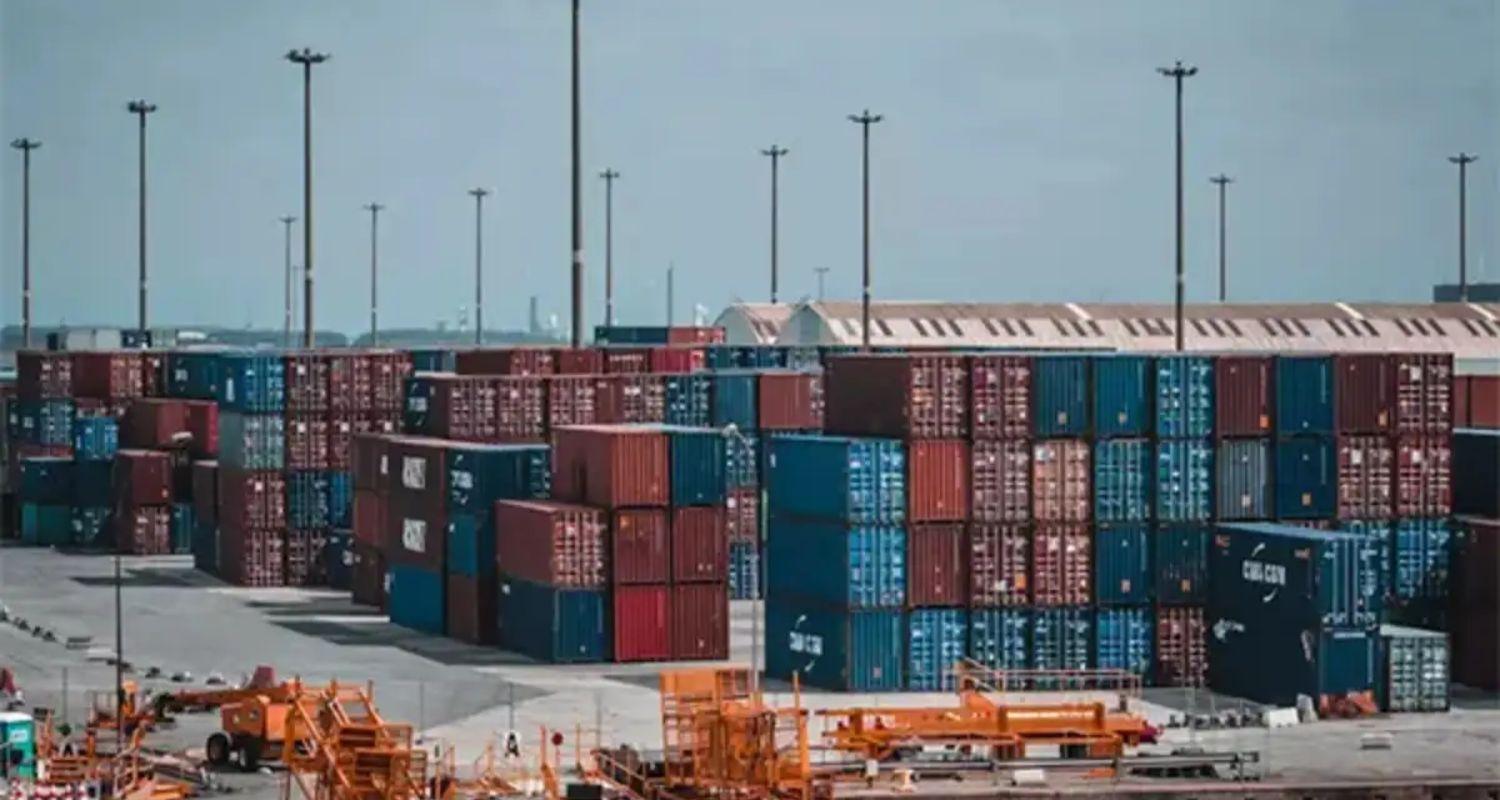
Container traffic is expected to remain the primary engine of growth for Indian ports over the next three financial years, supported by favourable macroeconomic conditions, rising domestic consumption, expanding manufacturing activity, and increasing adoption of containerization across industries, according to a report by Motilal Oswal.
The report projects container volumes to grow at a robust compound annual growth rate (CAGR) of 7-9 per cent during FY26-FY28, making it the fastest-growing cargo segment among major commodities handled at Indian ports.
It noted that the growth trajectory of container traffic is likely to stand in sharp contrast to several traditional cargo categories, reflecting the structural shift in India's trade patterns and the increasing movement of higher-value manufactured goods through containers.
Coal traffic, on the other hand, is expected to witness a compounding annual decline of 2-4 per cent during the same period. According to the report, this decline will be driven by higher domestic coal production, growing adoption of renewable energy, and continued efforts to reduce dependence on imported thermal coal through import substitution. However, it added that coastal coal movement is likely to remain relatively resilient, supported by domestic transportation requirements and power generation needs.
Petroleum, Oil and Lubricants (POL) traffic is projected to register a moderate CAGR of 2-4 per cent over FY26-FY28. The report said the segment will continue to benefit from stable fuel demand, although the pace of growth is expected to remain moderate due to improving fuel efficiency, wider adoption of electric mobility, and the increasing use of alternative energy sources.
"The trajectory is driven by stable fuel demand but moderated by improving fuel efficiency and increasing use of alternative energy sources," the report stated. Iron ore traffic is also expected to record healthy growth, with volumes projected to expand at a CAGR of 5-7 per cent during FY26-FY28. The report attributed this outlook to higher coastal transportation of iron ore to domestic steel plants, along with increased imports resulting from elevated domestic ore prices. However, export demand is expected to remain relatively subdued, limiting stronger growth in the segment.
The report's projections come after a strong operational performance by India's major ports in FY26. During the financial year, cargo volumes handled by major ports increased around 7 per cent year-on-year to reach 915 million metric tonnes (MMT). The growth was supported by healthy expansion in both overseas cargo traffic, which rose 6.6 per cent year-on-year, and coastal cargo movement, which grew by about 8 per cent.
Also read: LPG subsidy bill likely to cross Rs 1 lakh crore in FY27
Among individual cargo segments, Petroleum, Oil and Lubricants (POL) and crude oil, which account for nearly 30 per cent of total cargo handled at major ports, emerged as the biggest contributors to overall growth, registering a 16 per cent year-on-year increase. Coal traffic also recorded strong growth of 21 per cent, while container traffic expanded by 10 per cent during the year, reflecting sustained demand from both domestic and international trade.
In comparison, non-major ports posted relatively modest growth in FY26. Cargo volumes at these ports increased by approximately 1.4 per cent year-on-year to 753 MMT. While POL and crude volumes remained largely stable during the period, fertilizer cargo witnessed a sharp rebound, recording a 52 per cent increase compared with the previous year.
According to the report, India's port sector is well positioned for long-term expansion, backed by continued policy support, rising private sector participation, and sustained investment in port infrastructure. Government initiatives such as Sagarmala and the Maritime Amrit Kaal Vision 2047 are expected to play a crucial role in enhancing port capacity, improving logistics efficiency, strengthening multimodal connectivity, and boosting India's competitiveness in global maritime trade.
"With focused policy support, private investments, and infrastructure development under initiatives such as Sagarmala and the Maritime Amrit Kaal Vision 2047, India is well-positioned to emerge as a global maritime hub," the report said.
At the same time, the report cautioned that certain structural challenges will need to be addressed to fully unlock the sector's growth potential. These include delays in policy implementation, gaps in last-mile connectivity, and environmental concerns associated with port expansion and cargo handling operations.
It added that timely execution of infrastructure projects, improved coordination across stakeholders, and continued reforms aimed at enhancing operational efficiency will be essential for sustaining growth and enabling India's ports to meet rising domestic and global trade requirements over the coming years.

 Follow us