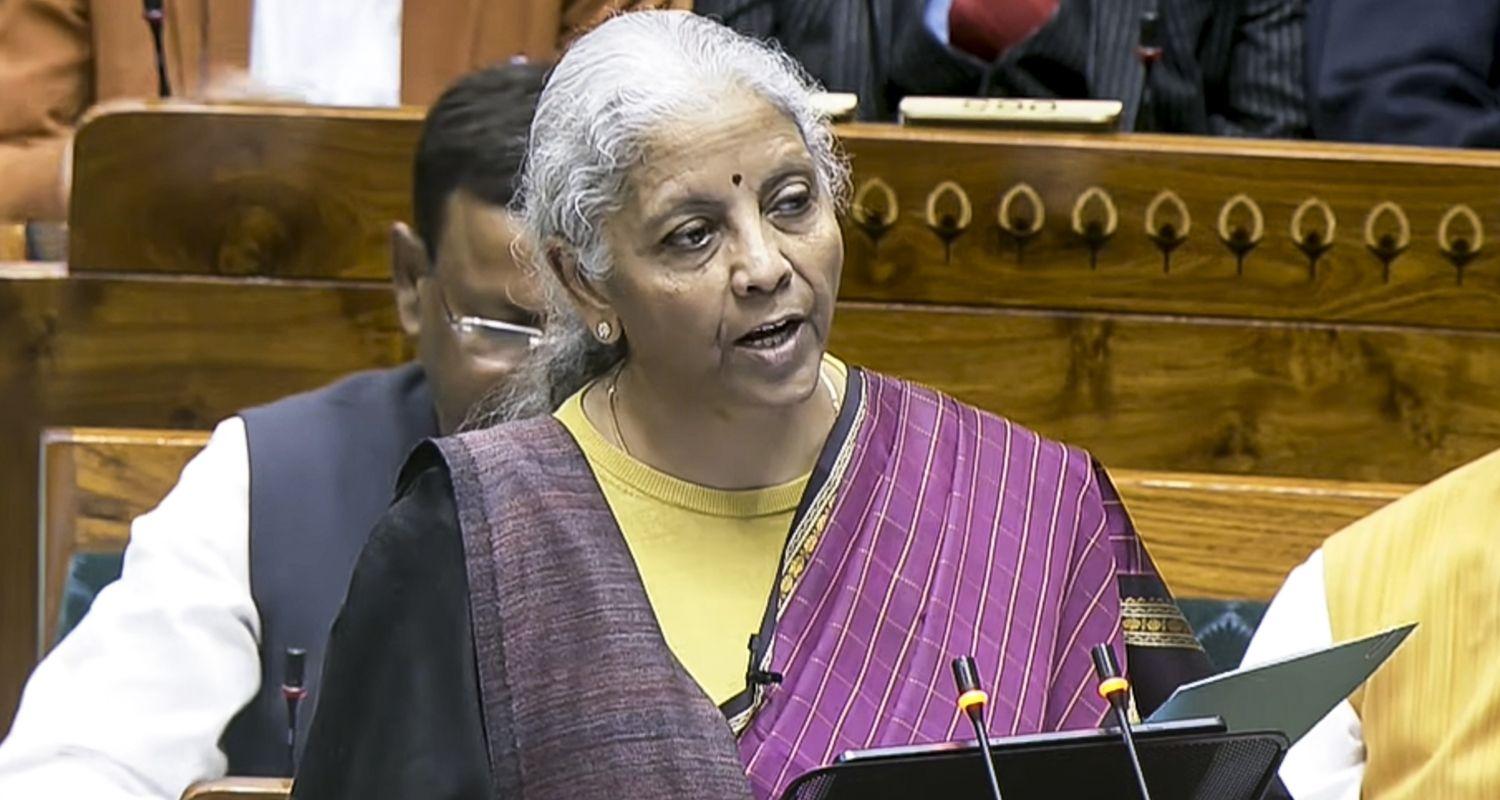
Union Finance Minister Nirmala Sitharaman on Sunday announced an increase in the government’s capital expenditure by about 9 per cent in the upcoming financial year, allocating ₹12.2 lakh crore to it for the Union Budget 2026-27.
Presenting the Budget in Parliament, the Finance Minister said the higher capital expenditure allocation is aimed at continuing the momentum in infrastructure development and supporting economic growth as part of her government’s “reform express”.
The capital expenditure has been increased to ₹11.21 lakh crore, up from the ₹11.21 lakh crore allocated in the last Union Budget for FY25-26. For FY26, the government had set a capex allocation of ₹11.21 lakh crore.
In her budget speech, Sitharaman highlighted the sharp rise in public capital spending over the past decade. “Public capital expenditure has increased manifold from 2 lakh crore in 2014-15 to an allocation of 11.2 lakh crore in 2025-26. In this coming year, that is, financial year 2026-27, I propose to increase it to 12.2 lakh crores to continue the momentum,” she said.
Also Read: Gross GST collections rise 6.2 pc in January 2026: Govt data
Infrastructure development, she said, remained a key focus area for the government over the last 10 years. Several initiatives have been undertaken for large-scale enhancement of public infrastructure, including the introduction of new financing instruments such as Infrastructure Investment Trusts (InvITs) and Real Estate Investment Trusts (REITs), added the minister, while referring to the role of institutions such as the National Investment and Infrastructure Fund (NIIF) and the National Bank for Financing Infrastructure and Development (NaBFID), which have supported infrastructure financing during this period.
Sitharaman said the government will continue to focus on developing infrastructure in cities with populations over 5 lakh. These include tier-2 and tier-3 cities, which she said have expanded over time and have emerged as important growth centres.
To address concerns facing private players, she announced a new proposal to strengthen confidence among private developers by setting up an infrastructure risk guarantee fund. The fund will provide prudentially calibrated partial credit guarantees to lenders, helping to reduce risk perception and support financing for infrastructure projects.
The Finance Minister also said the higher capital expenditure, continued focus on urban infrastructure, and measures to support private participation reflect the government’s commitment to sustaining infrastructure-led growth in the coming years.

 Follow us