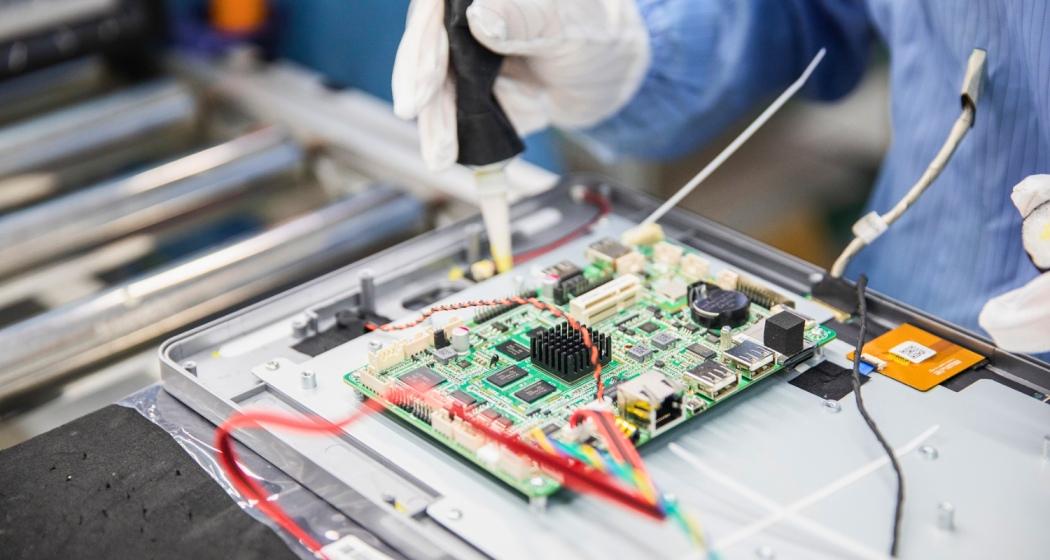
The government has disbursed incentives worth Rs 15,554 crore so far under the production-linked incentive (PLI) scheme for the electronics sector, Minister of State for Commerce and Industry Jitin Prasada informed the Rajya Sabha on Friday.
In a written reply, Prasada said the incentives were provided under large-scale electronics manufacturing and IT hardware 2.0 schemes. He added that Rs 2,377.56 crore has also been disbursed under the automobiles and auto components sector.
The minister noted that the PLI schemes have attracted investments exceeding Rs 2.16 lakh crore so far, while generating incremental production worth about Rs 4,20,581 crore in the current financial year up to December 2025.
The government has rolled out PLI schemes across 14 sectors with a total outlay of Rs 1.91 lakh crore to strengthen domestic manufacturing and boost exports. As of December 2025, a cumulative incentive of Rs 28,748 crore has been disbursed across sectors.
Also read: PM powers up ₹22,516 cr semiconductor plant in Gujarat
Providing a sector-wise break-up, Prasada said Rs 6,022 crore has been disbursed for the pharmaceutical sector, Rs 1,859 crore for telecommunications, and Rs 2,163 crore for food products. Other allocations include Rs 55 crore for bulk drugs, Rs 157 crore for medical devices, Rs 281 crore for white goods, Rs 93 crore for drones, Rs 81 crore for IT hardware, Rs 55 crore for textiles, and Rs 132 crore for speciality steel.
No incentives have been disbursed so far for high-efficiency solar PV modules and advanced chemistry cell (ACC) battery schemes, he added.
In a separate reply, the minister highlighted the importance of West Asia and Gulf countries as key markets for Indian agricultural exports. The region, including UAE, Saudi Arabia, Oman, Kuwait, Qatar, Bahrain, as well as Iran, Iraq and Yemen, accounted for exports worth USD 10.68 billion in 2024-25, nearly 20.5 per cent of India’s total agri exports.
These exports span a wide range of products, including cereals, animal products, fruits and vegetables, spices and processed foods sourced from across the country.
Prasada said the government is closely monitoring the evolving geopolitical situation in West Asia and its impact on trade, shipping routes and logistics. Exporters have reported challenges such as higher freight rates, war-risk surcharges, container shortages, shipment delays and port congestion.

 Follow us