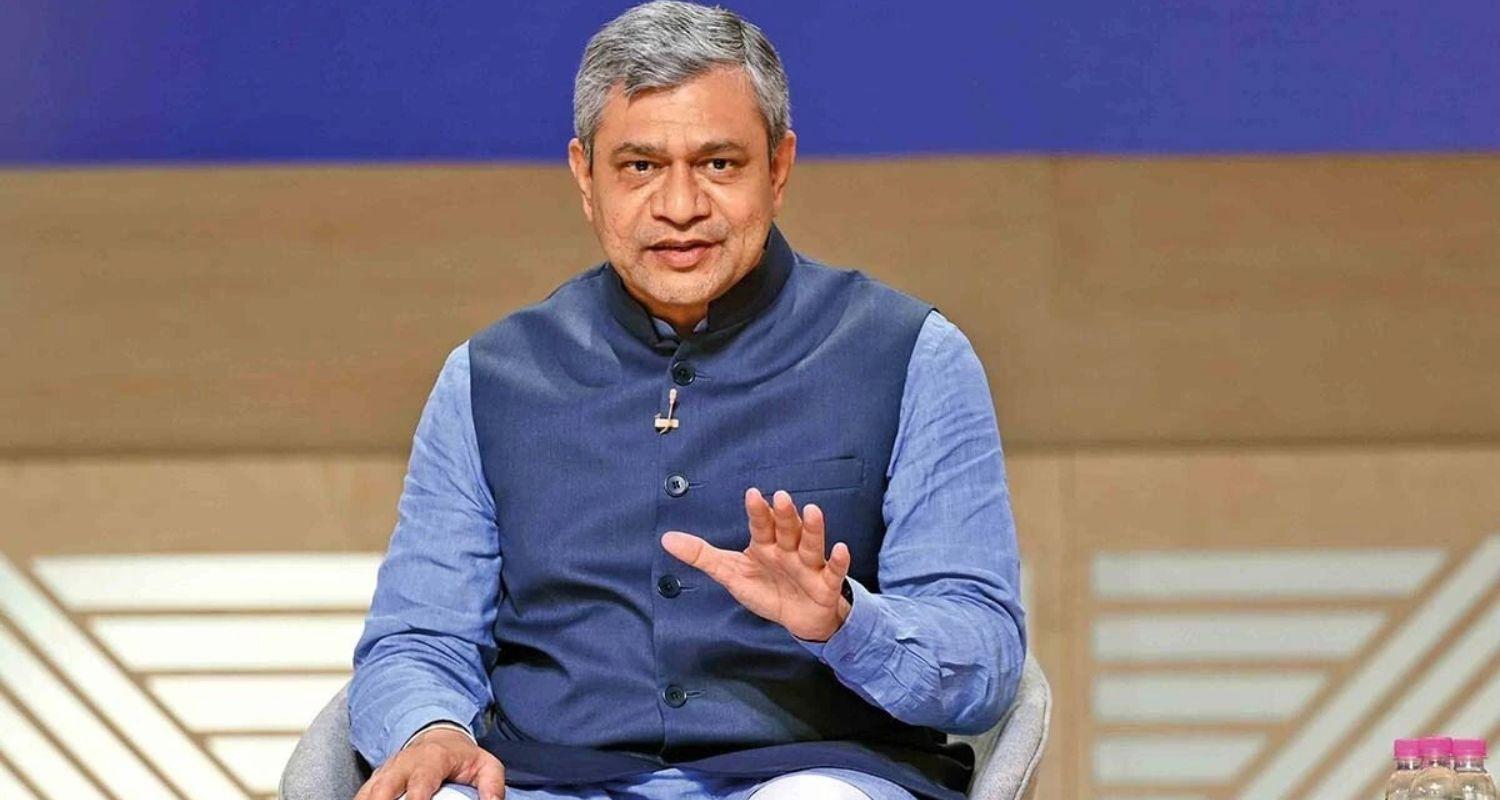
India marked a significant milestone in its semiconductor journey with the start of commercial production at CG SEMI's OSAT (Outsourced Semiconductor Assembly and Test) facility in Sanand, Gujarat, on Saturday. Union Minister for Electronics and Information Technology Ashwini Vaishnaw described the development as the beginning of a "new era in semiconductors" for the country.
The Sanand plant has become India's third semiconductor unit to commence commercial production in 2026. Speaking at the inauguration, Vaishnaw said the country is steadily building a strong semiconductor manufacturing ecosystem under Prime Minister Narendra Modi's vision, which he described as a key pillar for achieving the goal of a developed India.
The Minister thanked Prime Minister Modi, Gujarat Chief Minister Bhupendra Patel and Deputy Chief Minister Harsh Sanghavi for their support, while acknowledging the Gujarat government's role in enabling the project to move from groundbreaking on March 13, 2024, to commercial production in just 27 months. Established with an investment of more than Rs 7,600 crore, the facility has been developed in partnership with Japan's Renesas Electronics.
Vaishnaw noted that the Prime Minister had already dedicated the country's first and second semiconductor plants on February 28 and March 31, 2026, respectively. Of the 12 semiconductor projects approved by the Centre, three are now commercially operational, while two more are expected to be inaugurated in the coming months.
Also read: 'AI spending, macro uncertainty may slow down IT sector growth'
"By the end of 2026, five semiconductor plants are expected to be operational across the country. This momentum will give a new boost to the Atmanirbhar Bharat mission," the Minister said.
The chips produced at the Sanand facility will cater to domestic demand from the automobile, two-wheeler and industrial equipment sectors, while also being exported to markets including Japan, the United States and Europe. The government believes the plant will strengthen India's position in the global semiconductor supply chain.
Describing the project as more than a technological achievement, Vaishnaw called it a symbol of social transformation. He said young women from Jharkhand, Chhattisgarh, Madhya Pradesh, Bihar, Jammu & Kashmir, Kerala and Gujarat have been recruited as operators after receiving specialised training in Malaysia. As India's semiconductor ecosystem expands, he added, such advanced training can increasingly be conducted within the country.
Highlighting the sector's broader progress, the Minister said 12 semiconductor units are currently under construction, 24 deep-tech chip design startups have emerged, more than 70,000 young people have been trained in chip design, and 315 universities now offer semiconductor-related courses.
He also said construction of India's first semiconductor fabrication plant at Dholera is progressing rapidly. Vaishnaw further noted that India's electronics manufacturing industry has expanded to nearly Rs 13 lakh crore, generating employment for more than 25 lakh people across the country.
Prime Minister Narendra Modi visited the Sanand facility, toured its Experience Centre and Clean Room, unveiled the plaque marking the commencement of commercial production, and witnessed the handover of the first product to Renesas Electronics India.
According to the government, the launch of commercial production at the Sanand facility underscores India's emergence as a reliable, self-reliant destination for semiconductor manufacturing and reinforces its growing stature as a global technology powerhouse.

 Follow us