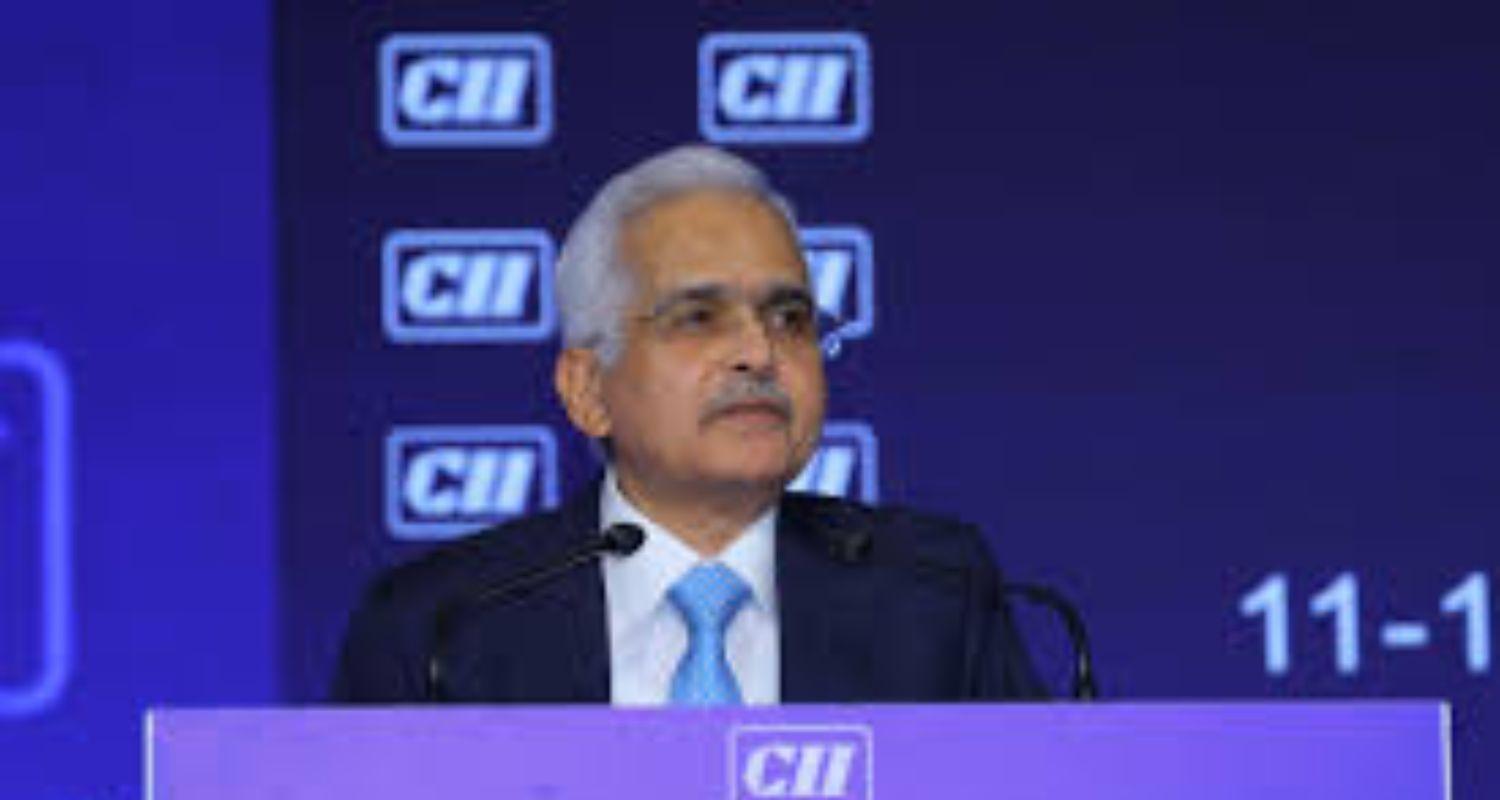
The Indian industry should undertake strategic reorientation of their businesses, from concentration to diversification of supply chains, and focus on long-term resilience, Principal Secretary to Prime Minister Shaktikanta Das said on Monday.
Addressing the CII Annual Business Summit, Das said the government has taken a host of steps to safeguard India from the prevailing geopolitical situation, including focus on renewable energy, spending on infrastructure and entering into FTAs with nations, and there is “no reform complacency”.
Das said that since over-dependence on a narrow set of markets or geographies increases vulnerability during global slowdowns, especially for exporters, Indian businesses should actively explore and engage with new export markets and leverage India’s growing economic and diplomatic footprint. “Market diversification would spread the risks, stabilise revenue streams and allow firms to tap into new growth corridors and demand patterns,” he said.
Das said the Indian industry should focus on strategic reorientation in the evolving global economic order as over the years and across the world, firms have optimised efficiency through single-source supply chains. “It has now become necessary for the Indian industry and business to undertake strategic reorientation of their businesses in today’s world of geoeconomic fragmentation and supply chain disruption, the world of corner-solution is increasingly becoming less efficient,” Das said.
Corner solution means being more reliant on a single source of production and just-in-time supply chains or over-dependence on a single source of supply chain. Stating that no country or single supply chain remains the cheapest, safest or the most predictable on a sustained basis, Das said due to geopolitical conflicts, fragmentation, supply chains which the world believed are the cheapest, the safest and the quickest, are getting disrupted.
“In this context, it is resilience maximisation which is increasingly replacing cost minimisation as a priority for corporates and businesses. Resilience maximisation can indeed be highly cost effective in the long run. Operational strategies of industry and businesses need to be reoriented from concentration to diversification and from short-term efficiency to long-term resilience,” Das said.
He said that India has made a sustained push towards reliance on alternative energy and investment in renewable energy has risen sharply, which will help mitigate the challenges posed by the war in West Asia. “India is better positioned today to confront extreme (energy) demand conditions head-on and emerge resilient,” he said.
With regard to infrastructure investment, Das said the unprecedented expansion in infrastructure facilities is anchored in rising capital expenditure of the central government, which has gone up exponentially in the recent years. “Amidst global geopolitical and geoeconomic tensions, India offers a striking counter-narrative. New mega infrastructure projects are being delivered to the nation in quick succession,” he said.
Das said that “in a world of unknown unknowns”, the Indian industry and business must focus on seven strategies, build organisational resilience, strengthen balance sheet, build new supply chain, resell manpower, diversify into new markets, invest strategically for future readiness and invest in research and development.
“Policy consistency combined with timely and calibrated reforms are expected to ensure that India not only maintains macroeconomic stability but also emerges as a globally competitive and inclusive economy,” Das said while addressing a session on Journey to Viksit Bharat: The next Generation Reforms.
He said that in parallel to reforms, India is taking bold and forward-looking measures to enhance strategic self-reliance in a number of critical sectors from rare earth permanent magnets to critical minerals, shipbuilding, cotton productivity and artificial intelligence.
“There are several other initiatives which are in the pipeline and they will follow in the coming months and years to strengthen long-term resilience of our economy,” Das said.
Also read: PM urges citizens restraint in fuel use, carpool, WFM

 Follow us