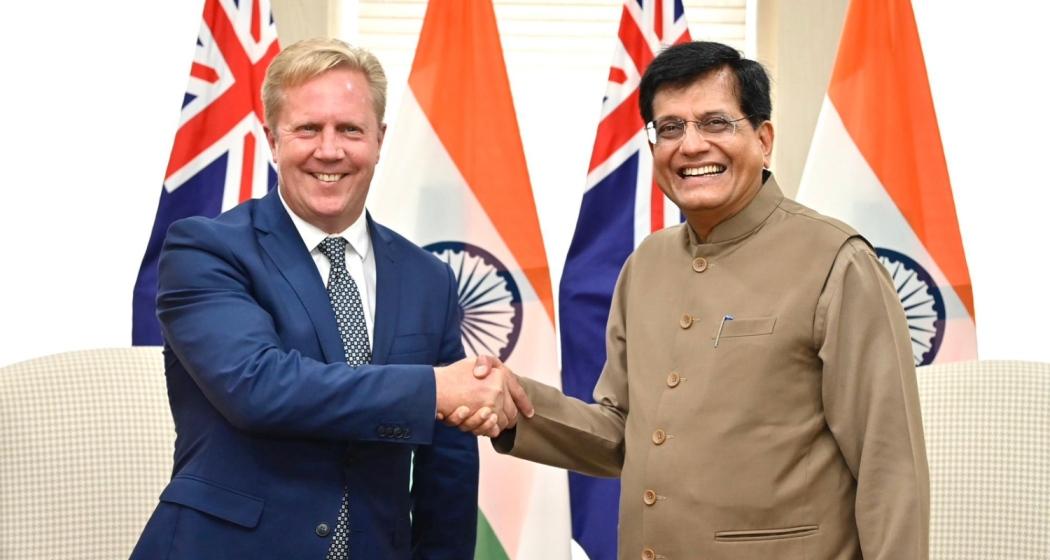
India and New Zealand will sign a long-negotiated free trade agreement on April 27 at Bharat Mandapam, aiming to double bilateral trade to USD 5 billion within five years while unlocking investment and market access across sectors.
The pact, to be inked in the presence of Commerce and Industry Minister Piyush Goyal and New Zealand Trade Minister Todd McClay, comes over four months after negotiations concluded on December 22.
It will grant Indian companies duty-free access to New Zealand’s markets and is expected to bring in USD 20 billion in investment over 15 years, spanning manufacturing, infrastructure, services, innovation and job creation.
A key feature is enhanced mobility for Indian professionals. New Zealand will offer a dedicated temporary employment visa pathway with a quota of 5,000 visas annually for up to three years, covering sectors such as IT, engineering, healthcare, education and construction, along with professions like yoga instructors, chefs and music teachers.
On goods, India has agreed to eliminate or reduce tariffs on about 95 per cent of New Zealand’s exports, including wool, coal, wood, wine and select fruits. However, New Delhi has drawn a firm red line around sensitive sectors, excluding dairy, onions, sugar, edible oils and rubber to shield domestic farmers and MSMEs.
Also read: 'Proposed FTA with New Zealand boon for Agra leather exporters'
New Zealand will receive duty-free access for products such as sheep meat, wool and most forestry goods, along with concessional access for kiwifruit, wine, seafood, cherries, avocados and Manuka honey. Quota-based tariff cuts will apply to apples and kiwifruit.
The agreement also seeks to ease non-tariff barriers through streamlined customs procedures and stronger regulatory cooperation, including sanitary and phytosanitary measures.
India’s pharmaceutical and medical devices sector is set to benefit from faster regulatory approvals in New Zealand, with mutual recognition of inspection reports from major regulators such as the US FDA, EMA and MHRA. This is expected to cut compliance costs and speed up market entry.
An agri-technology action plan will focus on kiwifruit, apples and honey, including centres of excellence, better planting material and technical support to improve productivity and supply chains for Indian farmers.
The deal builds on India’s expanding trade architecture, following agreements with Australia, the UAE and others, and marks its third FTA with members of the Five Eyes grouping after Australia and the UK.
Bilateral merchandise trade stood at USD 1.3 billion in 2024-25, while total trade in goods and services reached about USD 2.4 billion in 2024, underlining the scope for growth the new pact seeks to unlock.

 Follow us