India's bioeconomy has exceeded $150 billion in 2023 and is projected to reach $300 billion by 2030, according to the government.
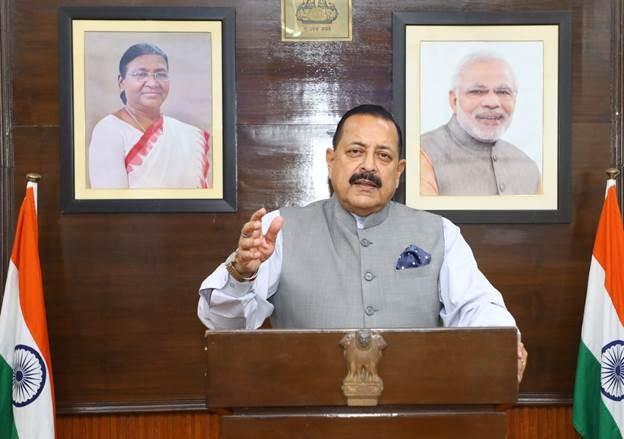
During the inauguration of India's first demonstration facility for biopolymers in Pune, Union Minister Jitendra Singh highlighted this milestone as a significant step towards developing integrated technology for the production of Polylactic Acid (PLA) bioplastic.
“This marks a pivotal development in India's commitment to sustainable solutions, showcasing our resolve to shift from fossil-based plastics to eco-friendly alternatives, which is essential in tackling the global plastic pollution crisis,” Singh said.
India currently ranks 12th globally in biotechnology and third in the Asia-Pacific region. Singh noted, “We are the largest vaccine manufacturer and the third-largest startup ecosystem,” emphasizing that the biotech sector is growing rapidly with the establishment of 95 bio-incubators and an increasing number of biotech startups.
The number of biotech startups has surged from around 50 in 2014 to over 8,500 in 2023. Singh stated, “The rise of biotech startups is vital for our future economy, positioning India at the forefront of the global bioplastics movement and demonstrating how biotechnology can contribute to a cleaner, more sustainable future.”
The country has become an attractive destination on the global stage, driven by Prime Minister Narendra Modi's vision of an “Atmanirbhar Bharat.” Singh underscored the importance of partnerships among industry, academia, and government for translating innovative ideas into practical solutions and fostering research and development.
“This Pune facility represents a new chapter for India’s bioeconomy, showcasing our capacity for technological innovation and providing a sustainable pathway to reduce environmental impact,” Singh remarked.
The government's ‘BioE3 Policy’ is a crucial advancement towards sustainable growth in light of climate change, dwindling non-renewable resources, and unsustainable waste generation.

 Follow us