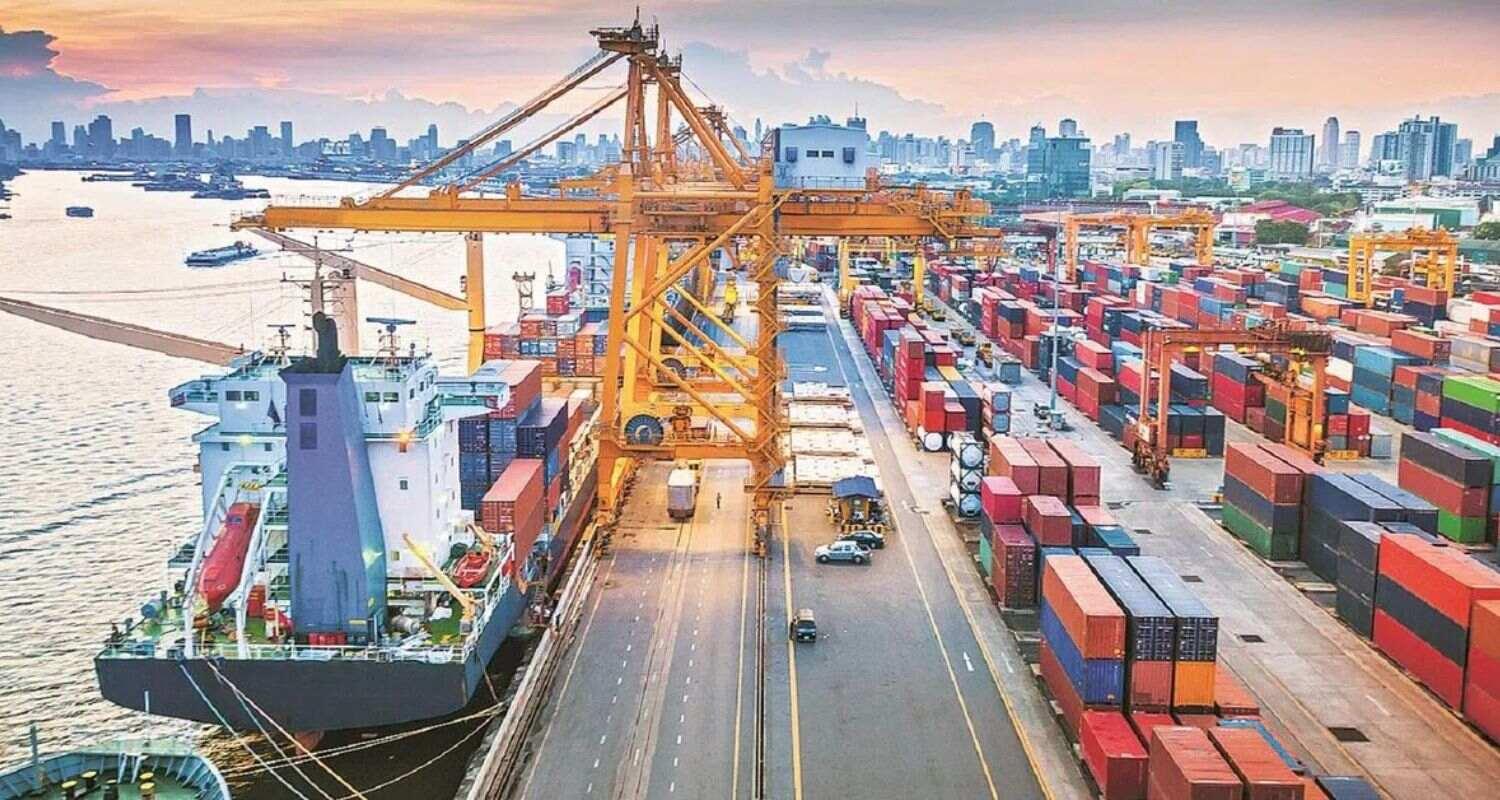
North America, North-East Asia and Latin America together contributed more than 35 per cent of India’s merchandise exports during 2025-26, reflecting a gradual shift towards a broader and more resilient trade framework amid continuing global economic uncertainty.
According to data released by the Ministry of Commerce and Industry, India’s merchandise exports reached USD 441.78 billion in FY26, supported by robust expansion across several emerging and non-traditional markets.
Officials said the trend highlighted India’s growing global trade presence despite ongoing geopolitical tensions and disruptions in international supply chains. North America remained the largest destination for Indian exports, with shipments valued at USD 97.7 billion, accounting for 22.1 per cent of total outbound trade. However, export growth to the region was relatively modest at 1.3 per cent year-on-year, suggesting stable but mature market demand.
The sharpest rise came from North-East Asia, where exports jumped 21.6 per cent to USD 41.6 billion, lifting the region’s share to 9.4 per cent of India’s overall exports. The region—which includes China, Japan, South Korea, North Korea, Mongolia and Taiwan—recorded rising demand for Indian engineering products, electronics, chemicals and industrial goods.
Also read: FPIs pull out Rs 27,000 crore from equities in May
Commerce Ministry officials attributed the increase to India’s deeper integration into global manufacturing and technology supply chains.
Exports to Latin America also posted healthy growth, rising 7.8 per cent to USD 16.4 billion and contributing 3.7 per cent to India’s export basket. African markets delivered encouraging performance as well. Shipments to East Africa climbed 13.7 per cent to USD 12.6 billion, while exports to North Africa increased 14.8 per cent to USD 8 billion.
Meanwhile, exports to West Africa and other West Asian regions remained relatively steady, contributing approximately 3 per cent and 2 per cent respectively to India’s total exports. Smaller markets such as Central Africa and the Central Asian Republics also registered double-digit growth rates, albeit from a comparatively lower base.
The data further pointed to significant diversification in India’s export profile during FY26. Indian exporters entered 1,821 new principal commodity product markets during the year, signalling a gradual move away from traditional commodity-centric trade patterns.
Officials said much of the expansion was being driven by high-value manufacturing, engineering products, agri-processing and technology-intensive industries.
Among the key performing categories, ships, boats and floating structures emerged as the largest contributor, generating exports worth USD 57 million across 19 new markets. Exports of nuclear reactors, industrial boilers and associated equipment reached USD 14.3 million across 13 new markets, while telecom instruments expanded into 20 new markets with exports valued at USD 5.8 million.
Emerging sectors including aircraft and spacecraft parts, railway equipment, graphite products, explosives and consumer electronics also witnessed growth in overseas demand. Officials said the widening export basket reflects India’s broader strategy to establish itself as a competitive manufacturing base and an important supply-chain hub in the changing global trade environment.

 Follow us