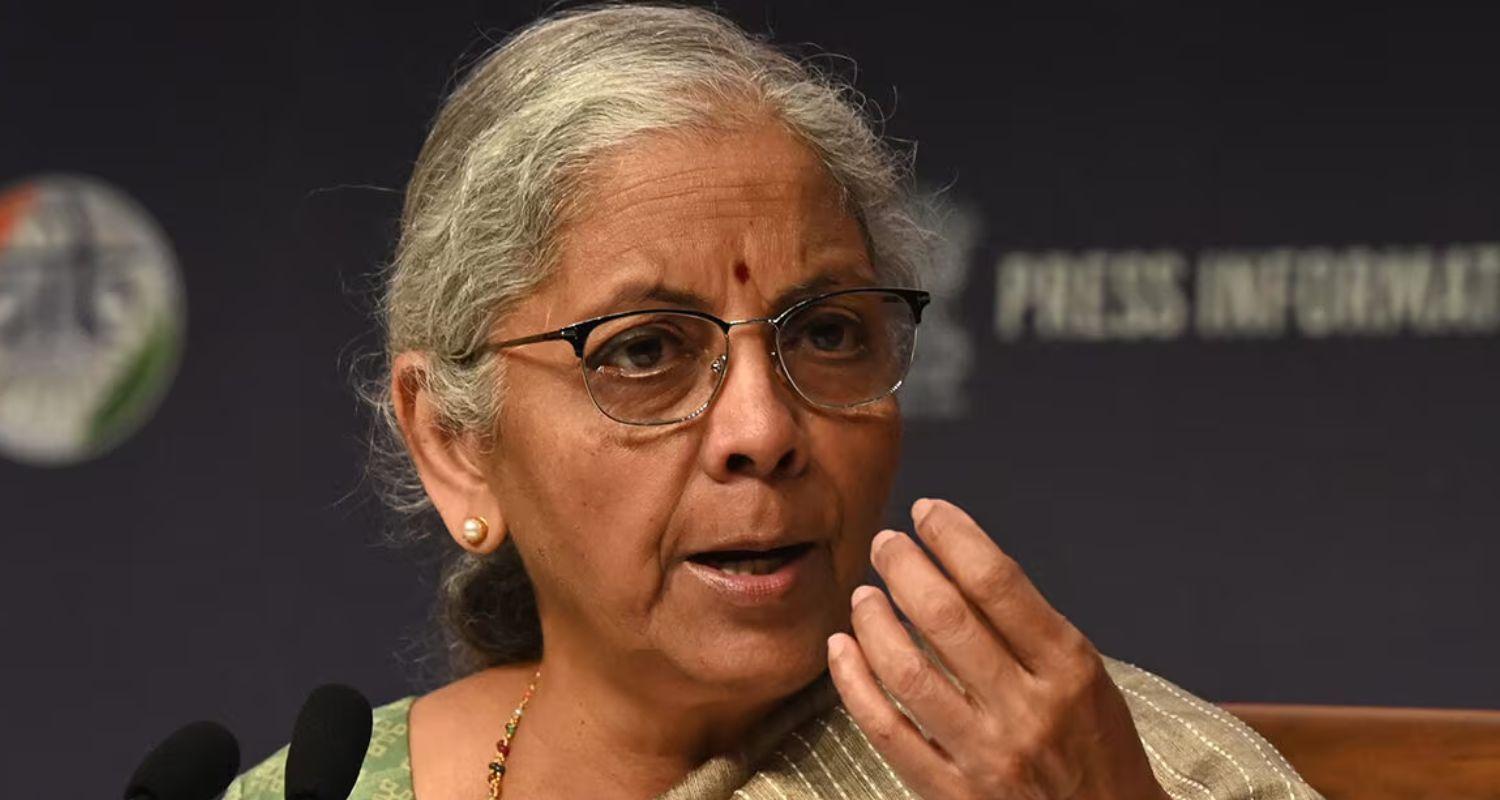
India’s middle class is poised to play an increasingly dominant role in driving economic growth, with an estimated 93 per cent of total spending in the country expected to come from middle-class and aspirational consumers by 2036, Union Finance Minister Nirmala Sitharaman said on Saturday at the Rencontres Économiques d’Aix-en-Provence in France.
She noted that the geography of this growth is also undergoing a shift. Around 500 cities are expected to emerge as new hubs of economic activity, and unlike several other economies, India’s middle class is not confined to major metropolitan centres such as Mumbai, Delhi, Bengaluru or Chennai. Instead, she said, it is increasingly concentrated in tier-2 and tier-3 cities, leading to a more distributed pattern of economic development.
“The middle class is not just a beneficiary of growth, but actually the engine of growth,” Sitharaman said, adding that consumption by this segment creates a virtuous cycle of economic expansion. She noted that the middle class currently makes up about 31 per cent of India’s population and has grown at an annual rate of 6.3 per cent since 1995. According to OECD projections, India is expected to overtake China in terms of absolute middle-class population between 2030 and 2035.
Also read: AI capex cycle likely to end with market pushback: Jefferies
The Finance Minister outlined a series of policy measures aimed at expanding and strengthening the middle class, particularly through upward mobility from lower-income groups.
She said the first major step was financial inclusion via Jan Dhan accounts introduced in 2014, which enabled millions to enter the formal banking system. Citing World Bank and IMF estimates, she said 248 million people have moved out of multidimensional poverty, many of whom have been integrated into formal financial networks through these accounts.
To encourage entrepreneurship, the government introduced sovereign-backed concessional loans for individuals without collateral, enabling them to start small businesses. Many of these borrowers have since scaled up their operations and developed formal credit histories, she said.
The second pillar, she added, was digital infrastructure. Financial services and payment systems were made accessible not only on smartphones but also on feature phones and in regional languages, helping small informal businesses integrate into the formal economy and improving their access to credit.
On fiscal and welfare measures, Sitharaman said the income tax exemption threshold was raised from Rs 0.25 million to Rs 1.2 million, increasing disposable income for households. She also said the Goods and Services Tax (GST) structure was rationalised across categories to boost consumption and support small enterprises.
In the healthcare sector, she highlighted that every family is covered under a cashless insurance scheme providing up to Rs 5 lakh annually, while government-supported pharmacies supply generic medicines at discounts of up to 80 per cent.
On skill development, she said the government is funding girls’ hostels in every district to support STEM education and is establishing five university townships dedicated to training and higher learning. The government is also focusing on skilling youth in AVGC (audiovisual, graphics and gaming) sectors to support India’s growing media, entertainment and export industries.
“The middle class is supported through these measures. And they are today, therefore, an engine of India’s growth,” she said.

 Follow us