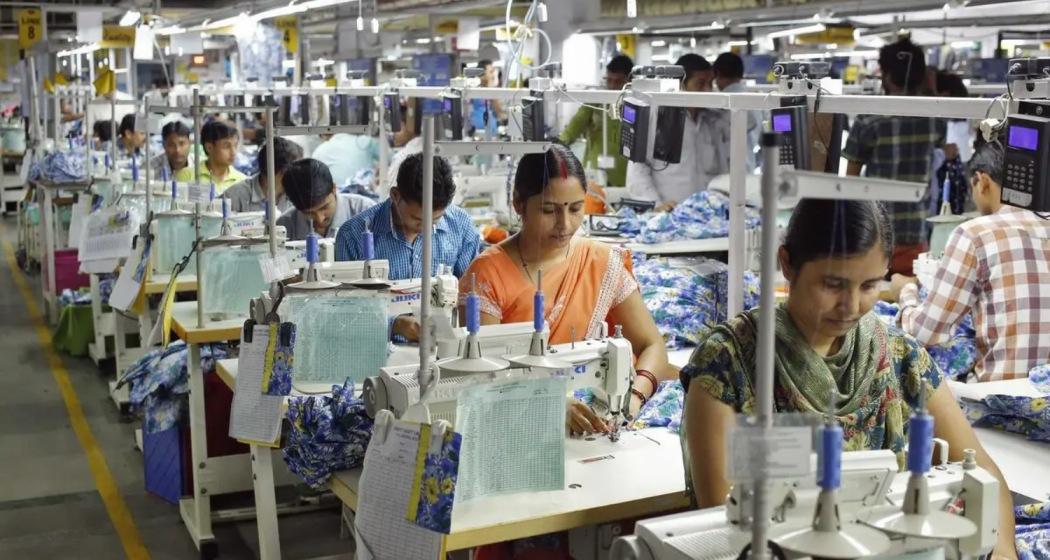
India’s labour productivity gap with China has widened by more than USD 30,000 per worker since 2000, despite decades of strong economic growth, with the country yet to achieve the industry-led productivity transformation seen in economies such as China, South Korea and Vietnam, according to an Equirus Securities research report.
In its report titled Labour Productivity in Emerging Economies: Catch-up, Innovation, and now AI, Equirus said India’s GDP per worker has more than tripled since 1995, but productivity gains have lagged behind several Asian peers.
The report stated that India’s productivity gap with China has expanded significantly over the past two decades, even as both economies recorded strong growth trajectories. It added that India and Bangladesh currently sit at near-identical productivity levels.
While emerging market labour productivity has generally improved over the last three decades, the report highlighted a growing divergence among countries in recent years. Vietnam was identified as the standout performer in the post-pandemic period, driven largely by manufacturing-led foreign investment inflows.
According to Equirus, India has not yet achieved the kind of industry-led productivity leap witnessed in China, South Korea and Vietnam during their high-growth phases.
Also read: SpaceX aiming for largest IPO in history on June 12
India’s productivity growth was strongest in the 2000s, when it averaged 5.3 per cent annually, supported by the IT and services boom. However, it slowed to 3.4 per cent in the 2010s, impacted by economic disruptions including demonetisation in 2016, GST rollout challenges in 2017 and liquidity stress in the NBFC sector, which particularly affected the informal economy.
The report also flagged the severe impact of the COVID-19 pandemic, noting that India experienced a sharp 12.3 per cent productivity contraction in 2020, driven by its large informal workforce and strict lockdown measures.
Although productivity has recovered in recent years, Equirus said the rebound remains uneven, as high-productivity sectors account for a relatively small share of total employment. The services-manufacturing divide continues to weigh on overall gains.
While initiatives such as the Production Linked Incentive (PLI) scheme and the China+1 investment shift have boosted output in sectors like electronics, pharmaceuticals and auto components, the report said manufacturing’s share of GDP has not seen a structural rise.
Equirus also pointed to high logistics costs and labour market rigidities as key constraints, noting that logistics expenses in India remain significantly higher than in China.
The report concluded that while India’s demographic advantage, digital infrastructure and investment inflows remain strong positives, deeper structural reforms will be required to sustain long-term productivity growth.

 Follow us