India’s labour market witnessed a moderation in workforce participation during the April-June quarter of 2026, with the overall labour force participation rate (LFPR) for people aged 15 years and above declining to 54.6 per cent from 55.5 per cent in the previous quarter, according to government data released on Monday.
The latest figures were published in the quarterly bulletin of the Periodic Labour Force Survey (PLFS) by the Ministry of Statistics and Programme Implementation (MoSPI). The data indicated that the slowdown was more visible in rural areas, where both labour force participation and employment indicators weakened during the quarter.
The Worker Population Ratio (WPR), which measures the proportion of the population that is employed, declined to 51.7 per cent in April-June from 52.8 per cent in January-March 2026. The fall suggests that a smaller share of the working-age population was engaged in employment during the quarter.
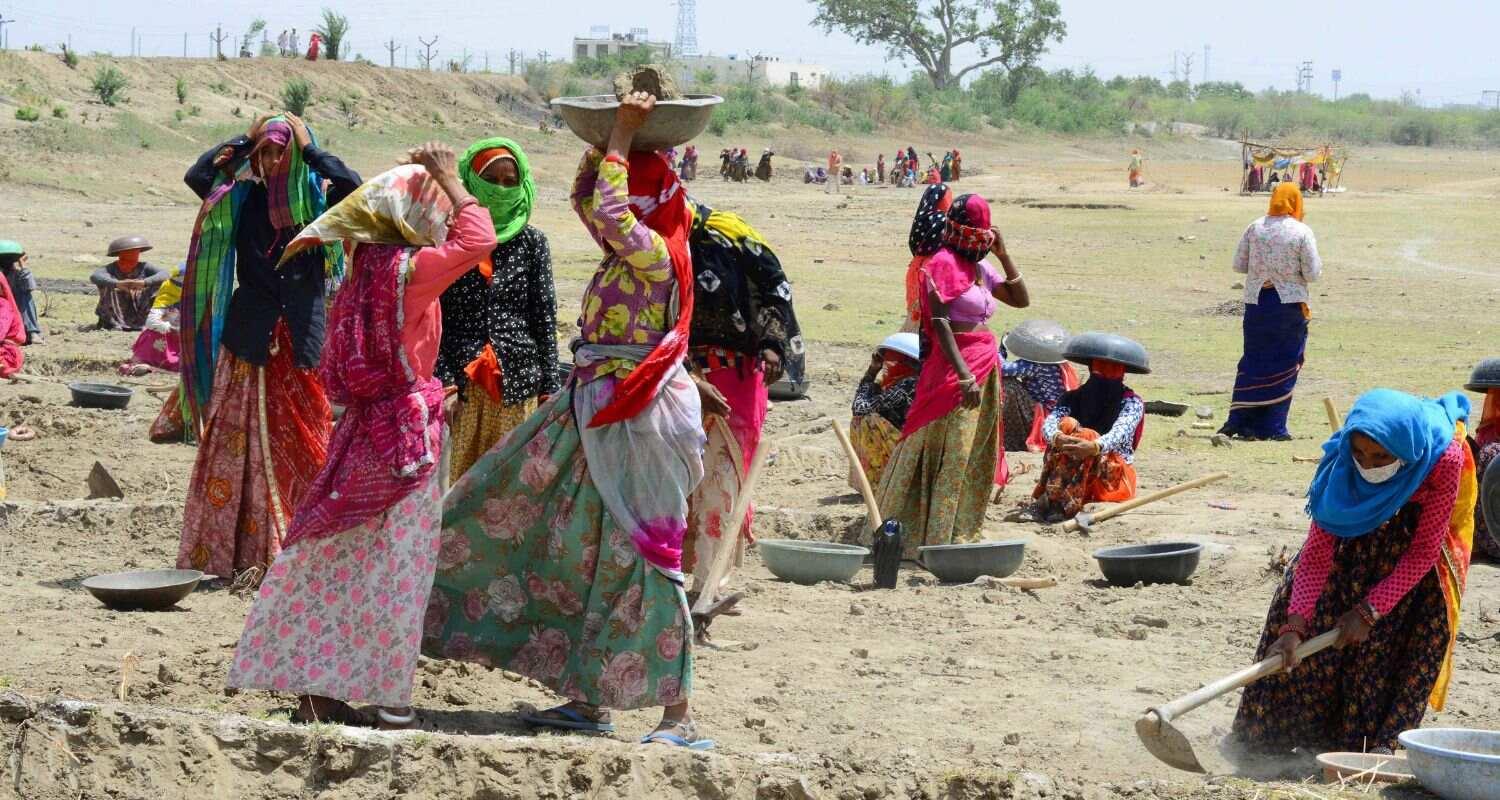
Rural areas recorded a sharper decline in labour force participation, with the LFPR falling to 56.9 per cent from 58.2 per cent in the previous quarter. At the same time, the rural unemployment rate increased to 4.8 per cent from 4.3 per cent. However, the rural unemployment rate remained unchanged compared with the April-June quarter of 2025.
The overall LFPR was also 0.4 percentage points lower than the level recorded a year earlier, highlighting a moderation in workforce participation compared with the corresponding period of the previous year.
Female participation weakened during the quarter. The overall female LFPR declined to 33.2 per cent from 34.7 per cent in January-March, while the female WPR fell to 31.3 per cent from 32.8 per cent. The decline points to a reduction in the participation and employment of women across the labour market during the quarter.
Urban labour-market indicators, meanwhile, remained relatively stable. The urban LFPR was unchanged at 50.2 per cent, while the urban WPR stood at 46.8 per cent, marginally lower than 46.9 per cent in the previous quarter. Urban unemployment edged up to 6.7 per cent from 6.6 per cent.
There were some positive shifts within the urban labour market. Urban female unemployment declined to 8.7 per cent from 9.1 per cent, while the LFPR among urban men increased marginally to 75.3 per cent from 75 per cent.
Also read: AI transformation likely to accelerate: McKinsey
The survey also highlighted an increase in regular wage and salaried employment. In rural areas, the share of regular wage and salaried workers rose to 16.1 per cent from 15.5 per cent. In urban areas, the corresponding share increased to 49.3 per cent from 48.9 per cent, indicating a gradual strengthening of more stable forms of employment.
Rural employment also recorded a notable structural shift away from agriculture. Agriculture’s share of rural employment declined to 52.9 per cent from 55.8 per cent in the previous quarter. At the same time, the secondary sector, including mining and quarrying, increased its share to 24.4 per cent from 22.6 per cent. The tertiary sector’s share also rose to 22.7 per cent from 21.7 per cent.
According to the government, an average of 56.6 crore people aged 15 years and above were employed during April-June 2026. This included approximately 40.2 crore men and 16.4 crore women.
The quarterly estimates were compiled from information collected from 5,59,673 respondents across rural and urban parts of the country, providing a broad snapshot of employment and labour-market trends during the first quarter of the 2026-27 financial year.

 Follow us