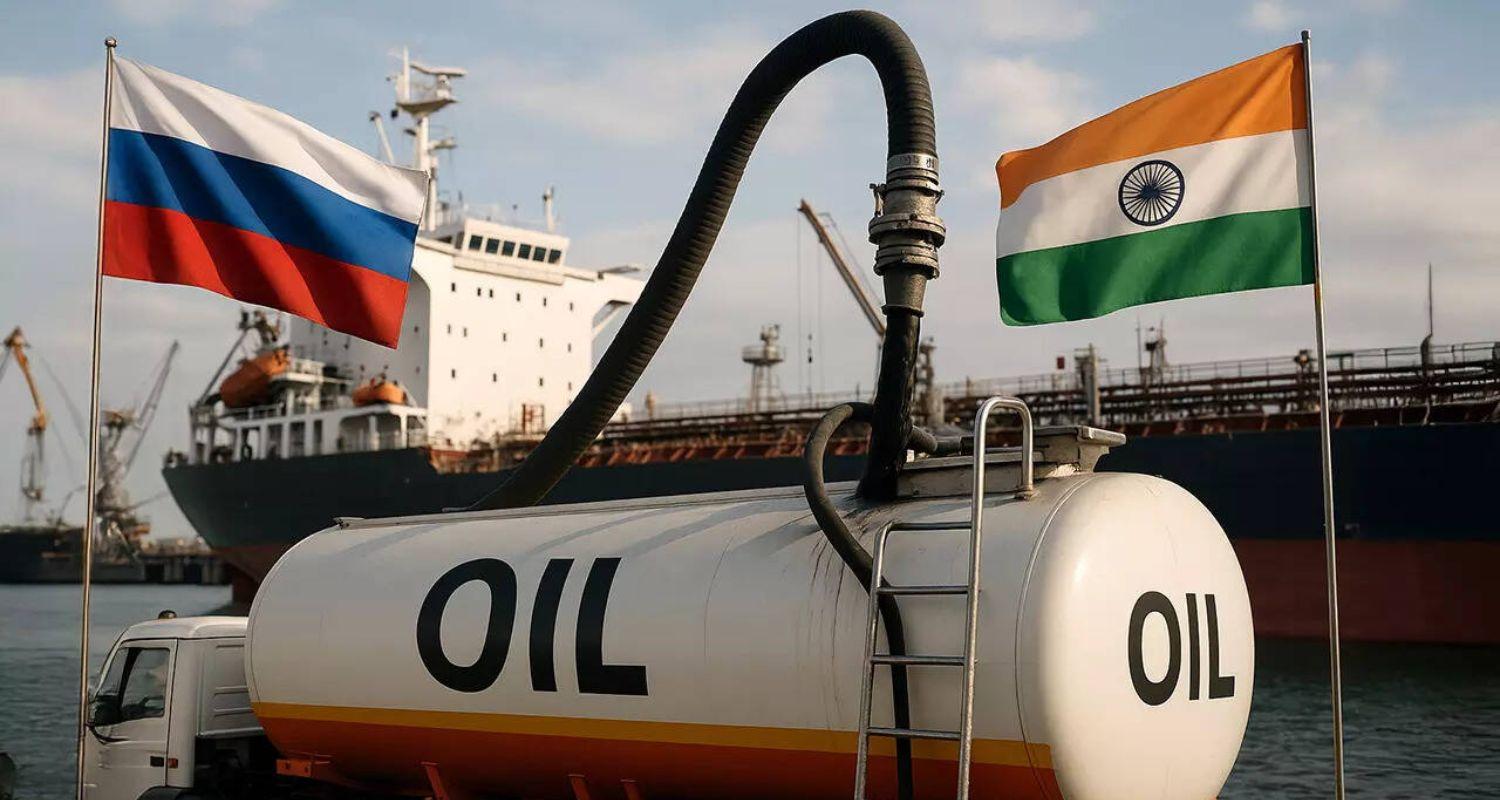
India’s crude oil purchases from Russia more than tripled to 5.3 billion euro in March as volumes doubled and a surge in oil prices pushed up the import bill. European think tank Centre for Research on Energy and Clean Air (CREA), in a report, said after a drop in purchases in February, India was back to a buying binge in March.
“India was the second-highest buyer of Russian fossil fuels in March 2026, importing a total of EUR 5.8 billion of Russian hydrocarbons. Crude oil products constituted 91 per cent of India's purchases, totalling EUR 5.3 billion,” it said.
Coal (EUR 337 million) and oil products (EUR 178.5 million) constituted the remainder of their monthly imports. In February, India was the third largest importer, purchasing Russian hydrocarbons worth 1.8 billion euro. Crude oil constituted the largest share at 81 per cent (EUR 1.4 billion), followed by coal (EUR 223 million) and oil products (EUR 121 million).
“While India's total crude imports recorded a 4 per cent reduction in March, Russian imports doubled,” CREA said. The spurt in volumes followed the United States granting a one-month sanctions waiver on Russian oil, covering cargoes already at sea and shipments on previously sanctioned vessels. The move was to ease prices that had spiked after Washington waged war against Iran.
The waiver led to state refiners, which had previously paused Russian oil purchases, resuming imports from Moscow. “The biggest shift (in March) was in state-owned refineries' imports from Russia, which saw a massive 148 per cent month-on-month increase,” CREA said. “Their imports were in fact 72 per cent higher than March 2025, presumably due to Russian barrels being more available in the spot market, which serves as the primary source of imports for them.”
The state-owned Mangalore and Visakhapatnam refineries had stopped Russian imports at the end of November 2025, but purchases resumed in March 2026. "Private refineries, meanwhile, registered a more modest 66 per cent month-on-month increase, but remained lower than the same time last year," it said.
In March, China bought 51 per cent of Russia's crude exports, followed by India (38 per cent), Turkiye (6 per cent), and the European Union (1.8 per cent). In February, India was the third-largest importer of Russian oil behind China and Turkiye.
“While India's Russian crude imports recorded a 19 per cent reduction in February, total imports saw a more modest 9 per cent reduction. Russia was still India's biggest crude oil supplier in February, with imports constituting 20 per cent of the total share,” the think tank said.
According to CREA, Russia is heavily reliant on Asian markets to sell its oil, with 90 per cent of its total exports of crude delivered to China and India in the first quarter of 2026. Despite the EU’s ban on imports of oil products made from Russian crude on January 21, 2026, 14 shipments of oil products from refineries using Russian crude, and identified as high risk according to EU guidance - have unloaded at EU ports in March.
“Nine of these shipments departed from Turkiye's refineries, four from India and one from Georgia,” it said. “Some shipments from refineries running on Russian crude unloaded oil products at multiple European ports.” France was the largest recipient of shipments from these refineries running on Russian crude, unloading four shipments in March, followed by Cyprus (three shipments).
In March, Belgium, Bulgaria, Italy, and the Netherlands also received two shipments each from refineries in non-sanctioning countries that partially process Russian crude. “Enforcement agencies in member states must investigate shipments of oil products imported from refineries that run on Russian crude to prevent Russian oil molecules from entering the bloc, which would violate the EU's recently implemented ban,” it said.
Also read: Losses on petrol rise to ₹18 a litre, diesel losses mount to ₹35

 Follow us