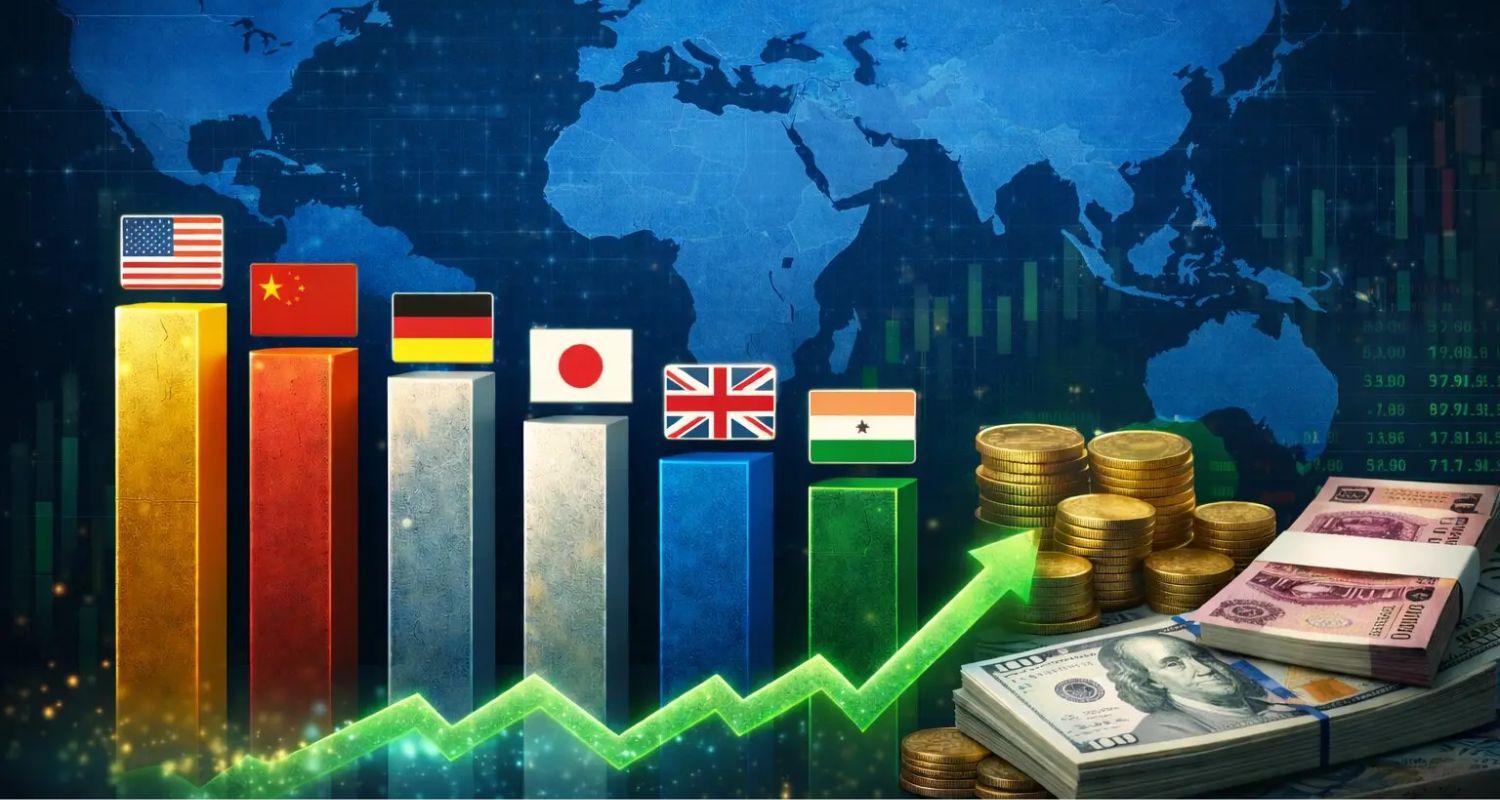
India has slipped two places to the world’s sixth largest economy with the nominal GDP estimated between $3.9 trillion and $4.2 trillion, according to the latest data issued by the International Monetary Fund (IMF). India is now placed behind the United States, China, Germany, Japan and the United Kingdom.
The drop comes despite continued strong domestic growth, indicating that the decline in rank is more technical than structural.
The IMF has attributed the decline in ranking mainly to the weakening of the Indian rupee against the US dollar. Since global GDP comparisons are calculated in terms of dollar, a softer currency reduces the size of the economy when converted.
A revision in the GDP base year has also influenced the nominal output figures, making the economy appear smaller on paper. These statistical adjustments, combined with exchange rate movements, have contributed to the development.
The decline in ranking notwithstanding, India continues to be among the fastest-growing major economies with the IMF projecting growth of 6 to 7 per cent. Experts feel the underlying momentum of the economy remains robust.
The falling rupee makes the economy “look smaller in international dollar terms despite the fact that India has been the world’s fastest growing large economy. Currency movements, along with potential foreign portfolio investment inflows and softer crude prices, could support the rupee going forward.
On the positive side, infrastructure spending and services activity remain intact even as currency fluctuations influence global comparisons. Broader economic fundamentals also continue to support a stable trajectory.
Projections suggest that India could regain higher positions in coming years with several forecasts indicating a return to the fourth spot by next year and a potential climb to the third place in early 2030s.
Also read: India must reduce imports to become 3rd-largest economy: Gadkari

 Follow us