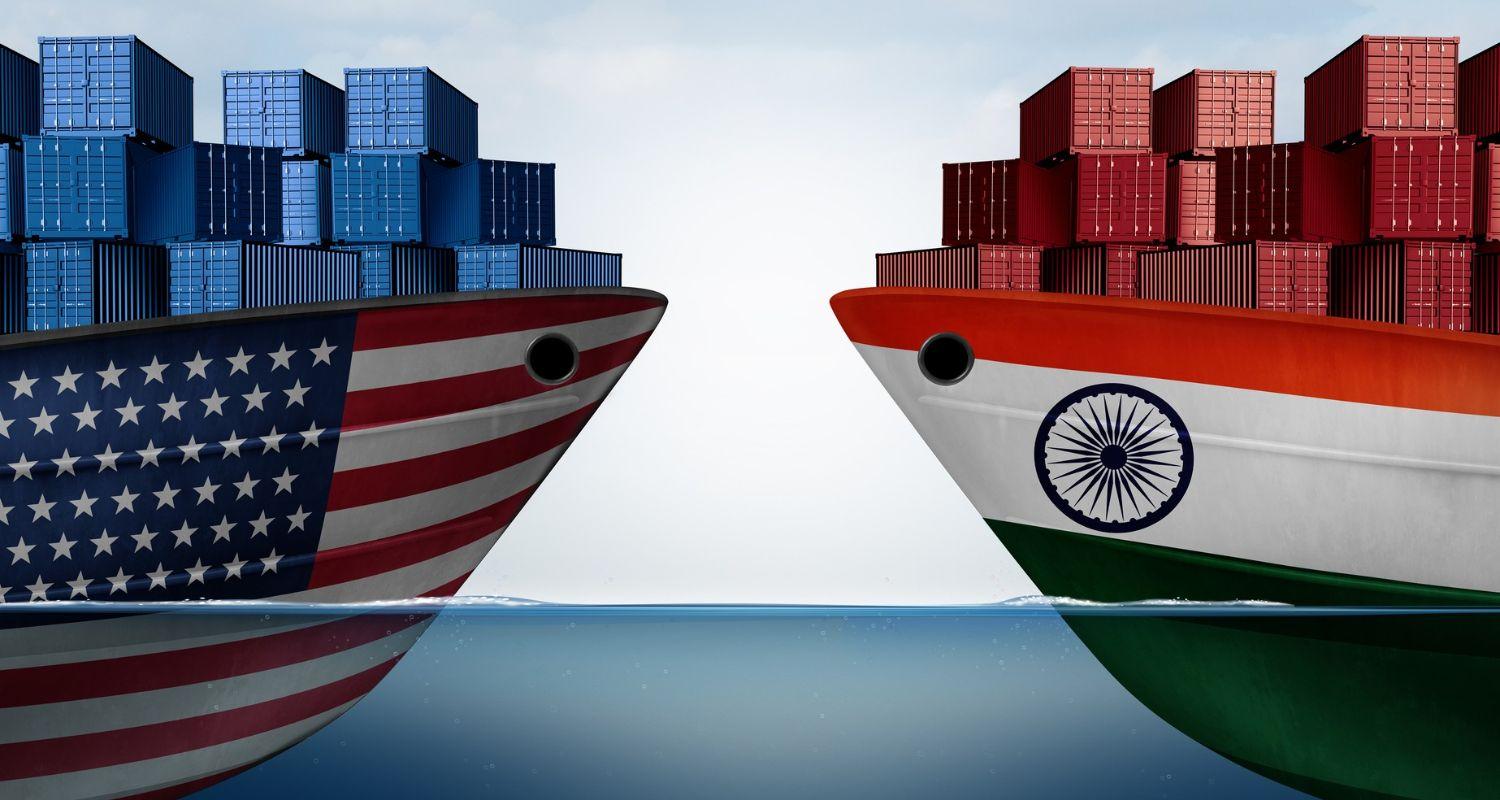
The interim trade agreement between India and the US will be signed once the new global tariff architecture of America is in place, a senior government official said on Monday. “Because at the end of it, each country is doing a deal as a part of a package where one is at comparative advantage...vis-a-vis competitors,” the official said.
India and the US last month announced finalisation of a framework for the first phase of the bilateral trade agreement. According to that framework, the US had agreed to reduce tariffs on India to 18 per cent. However, the tariff architecture in the US has changed following its Supreme Court ruling against President Donald Trump's sweeping tariffs. After that, the US President imposed 10 per cent tariffs on all countries for 150 days from February 24.
In view of these changes, the meeting of the chief negotiators of India and the US has been postponed. They were scheduled to meet last month to finalise the legal text of the pact, which was expected to be signed this month.
“The deal was to be signed in March. (But) When we said this, that time, the Supreme Court judgment on IEEPA (International Emergency Economic Powers Act) tariffs had not come. Now, with the Supreme Court judgment on IEEPA tariffs, the tariffs per se don't exist. "Now there are tariffs under Article 122, which is related to the balance of payment crisis, which are for five months. And the tariff is around 10 per cent. So the deal that we finalise and sign has to be against the tariff structure or the comparative advantage that India gets in the US market,” the official said.
The official stated that the US is working to recreate a global tariff architecture. "Once they are on that pathway, they are able to create that. I think at that juncture, it would be right to sign the deal,” he said.
The pact, the official said, has already been finalised and decided upon, and both teams are negotiating to iron out the finer details. “But actual signing, to my mind, will be done when the new architecture of tariff globally will be in place,” the official added.
In case of any change in the 18 per cent tariffs on India, he said, these are all subject to how it happens and how the global architecture pans out. “If the global architecture is exactly the way the IEEPA tariffs were there, then it may remain so also. If it is different, then it may also change. So we will have to wait to see how it goes,” another official said.
When India finalised the deal, it was at a comparative advantage as compared to its competitor countries.
“So whenever we are ready, the US side is ready with that architecture, I think that will be the opportune time to sign it," the official said, adding, “There is nothing that there is a standoff. There is nothing that the deal is not there." The trade deal is about comparative and preferential market access to each other. The 18 per cent tariff on India was the lowest among its competitors, including China, Vietnam and Thailand.”
Also read: ‘India, US engaged in talks on bilateral trade pact’

 Follow us