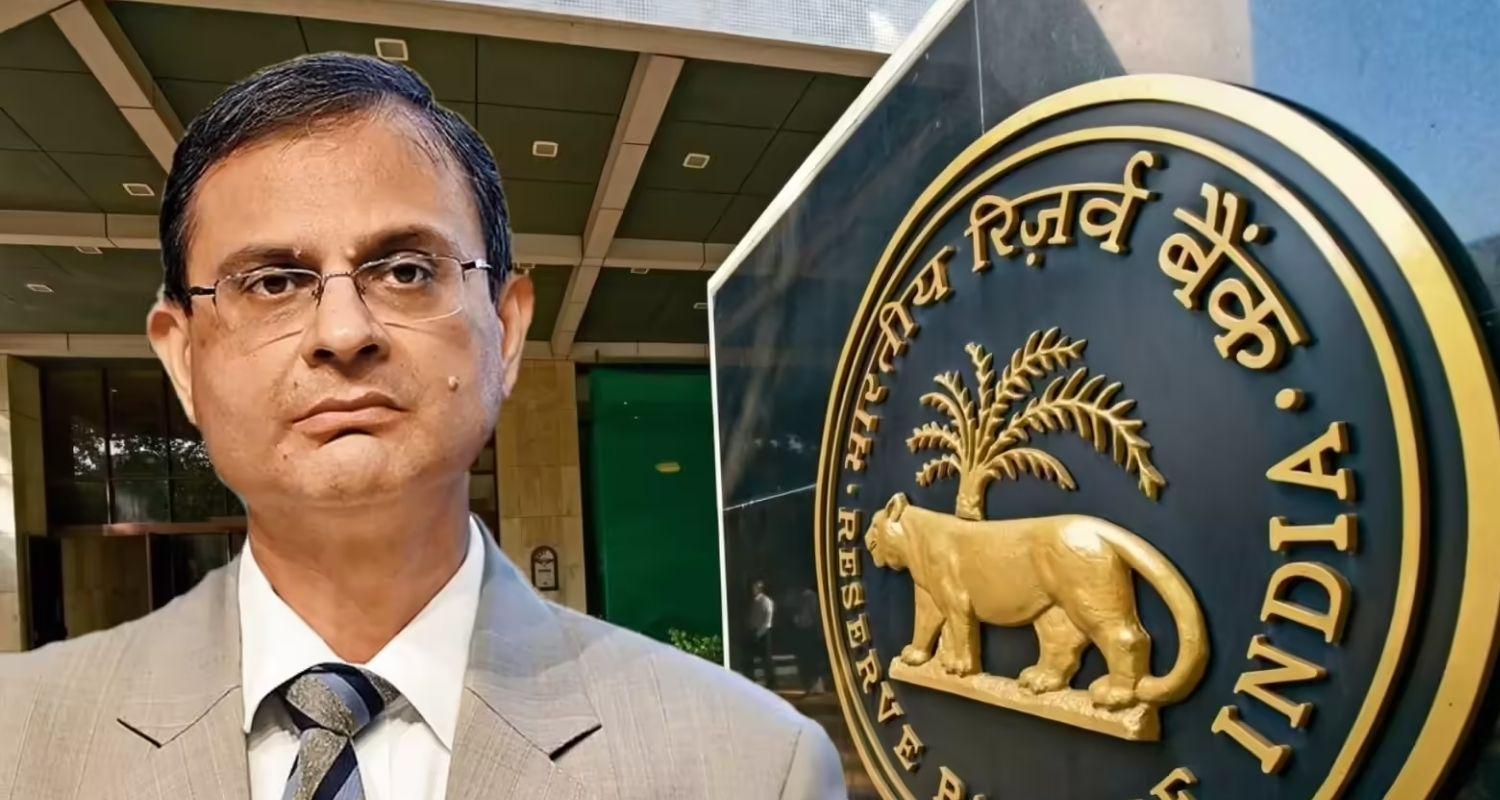
The Reserve Bank of India Governor Sanjay Malhotra has indicated that it is too early to discuss the possibility of an interest rate hike, stressing that the central bank remains vigilant about developments in West Asia while continuing to rely on incoming economic data to guide policy decisions.
Malhotra pointed out that if the RBI had been preparing financial markets for a rate increase, it would have signalled such an intention by altering its monetary policy stance.
"If we actually wanted to prepare the market for a rate hike, we would have changed our stance. If it was so certain that rates would be increased in the coming months, we would have moved from a 'neutral' stance to a 'restrictive' one. We have not done that," he said.
The governor emphasised that discussions about tightening monetary policy at this stage would be premature. Instead, he said the central bank remains cautious as it monitors evolving risks to both inflation and economic growth, particularly those arising from global geopolitical tensions.
"I think it is premature to talk about a rate hike. What we have said is that we are cautious and aware that there could be risks to inflation as well as growth. We will continue to remain data-dependent," Malhotra said.
Earlier this month, the RBI's Monetary Policy Committee (MPC) unanimously decided to keep the benchmark repo rate unchanged at 5.25 per cent. The committee also retained its "neutral" policy stance, citing uncertainty stemming from the prolonged conflict in West Asia, elevated energy prices and disruptions to global supply chains.
At the same time, the central bank revised its economic projections. The RBI lowered its real GDP growth forecast for 2026-27 to 6.6 per cent from the 6.9 per cent estimate made in April. The latest projection is also below the estimated growth rate of 7.6 per cent for 2025-26.
Inflation forecasts were revised upward. The RBI now expects average retail inflation to reach 5.1 per cent in 2026-27, compared with its earlier estimate of 4.6 per cent. Price pressures are projected to peak at 5.9 per cent during the third quarter before moderating. Core inflation is also expected to rise to 4.7 per cent from the previous forecast of 4.4 per cent.
Commenting on recent geopolitical developments, Malhotra said the easing of tensions in West Asia is a positive development not only for India but for the global economy as a whole. He noted that lower crude oil prices and a significant decline in urea prices have helped ease concerns surrounding inflation and growth. According to the governor, these developments provide additional support to India's economic outlook.
Malhotra also highlighted the resilience of the Indian economy, noting that coordinated efforts by the government and oil marketing companies helped cushion the impact of energy-related shocks during a period of considerable global uncertainty.
Also read: Rupee closes at 94.65 against US dollar
"The government and the oil marketing companies together mitigated much of the impact of the energy shock. High-frequency indicators suggest that India has weathered the challenges relatively well despite uncertain global conditions," he said.
The RBI chief reiterated that the central bank remains in a "wait-and-watch" mode and will continue assessing developments before making any policy adjustments. While acknowledging that some inflationary risks have eased following the moderation in crude oil prices, he cautioned that uncertainty remains and policymakers are not yet in a position to draw firm conclusions.
"Upside risks have certainly moderated, but we will have to wait and see where crude oil prices ultimately settle," he said. On the inflation front, Malhotra said the RBI is closely tracking whether higher fuel-related wholesale prices could eventually spill over into broader consumer prices. At present, however, the central bank does not see clear signs that inflationary pressures are becoming widespread across the economy.
"We are not sure whether there will be second-round effects. If we were certain, the Monetary Policy Committee would have acted. As of now, we do not see evidence of inflation becoming generalized," he explained. Apart from energy prices, the RBI is also monitoring the progress of the monsoon season, which remains a critical factor influencing food prices and overall inflation.
"Both crude oil prices and the monsoon remain uncertain, and both have important implications for inflation. We will continue to watch them closely," Malhotra said.

 Follow us