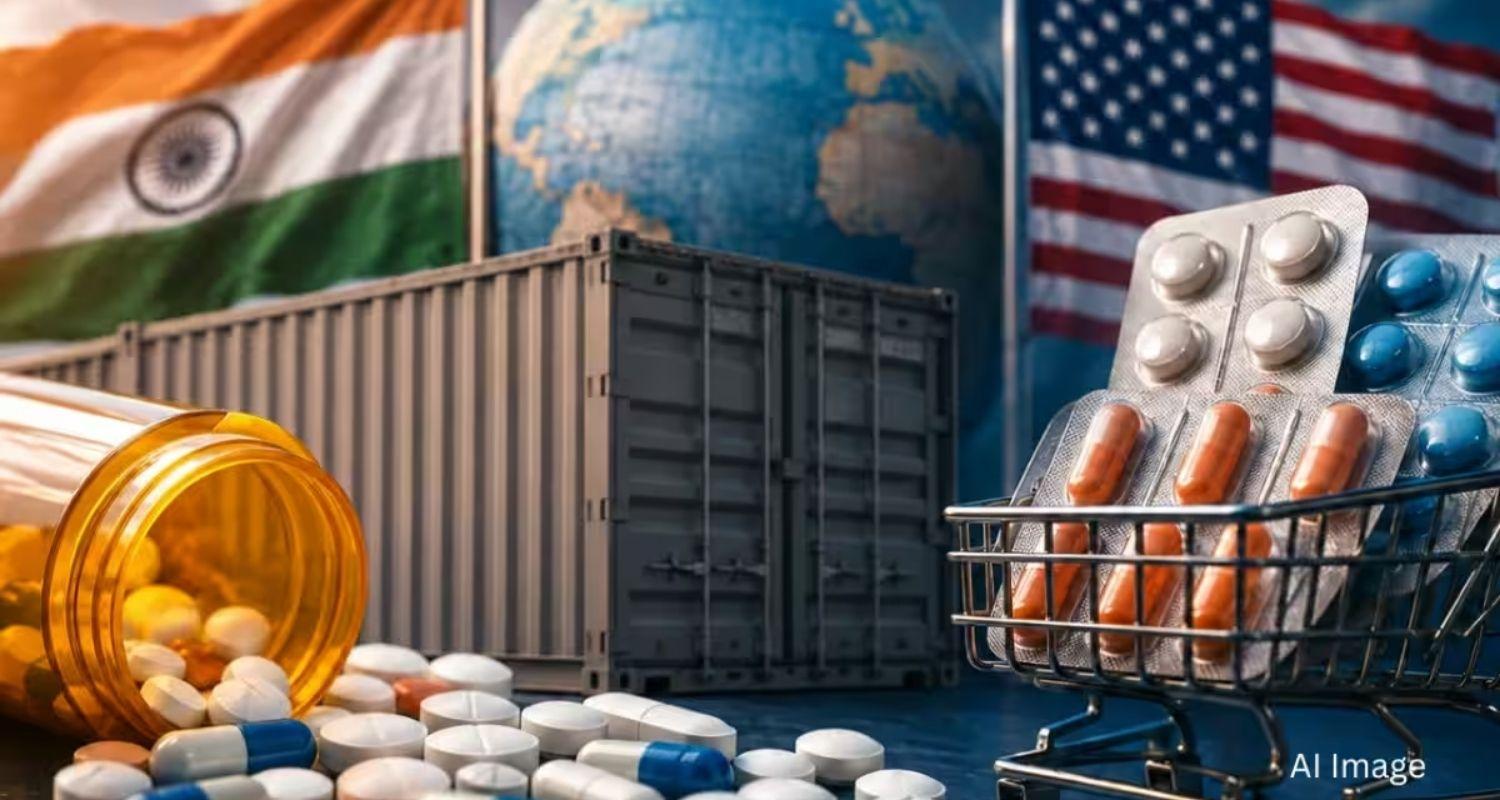
Leaders of India's pharmaceutical industry have voiced strong concerns over the United States' proposed tariff regime on generic medicines, warning that duties of up to 200 per cent would be impossible for manufacturers to absorb given the sector's already thin profit margins.
The comments came after US President Donald Trump announced on Truth Social that, beginning August 1, 2026, generic drugs imported into the United States would continue to enjoy zero tariffs for the next two years. Under the proposed framework, however, tariffs would rise to 100 per cent in the third year before increasing further to 200 per cent from the fourth year. The US administration said the phased policy is intended to encourage the relocation of generic drug manufacturing to the United States, while existing policies governing patented, branded and innovative medicines will remain unchanged.
Reacting to the announcement, Pharmaceuticals Export Promotion Council (Pharmexcil) Chairman Namit Joshi said the proposed timeline is impractical, as establishing a robust pharmaceutical manufacturing ecosystem requires considerably more time than the two-year transition period being offered.
"From our perspective, it doesn't look possible because creating a pharmaceutical generic ecosystem takes a minimum of four to five years. If tariffs are imposed within two years without the necessary manufacturing ecosystem in place, achieving that objective will be very difficult," Joshi said. He added that Indian generic drug manufacturers operate on extremely narrow margins and therefore lack the financial flexibility to absorb steep tariff increases.
"Even if such a situation arises, the Indian industry does not have the scope or margin to absorb these costs. We are already operating on very thin margins. If tariffs of this magnitude are imposed, they will either have to be passed on to buyers or companies may not be able to continue supplying certain products. There are very few alternatives," he explained.
Joshi further stressed that the industry views the proposed duties as commercially unviable. "The entire industry believes that a 200 per cent tariff is completely out of the question, while even a 100 per cent tariff would be extremely difficult for any pharmaceutical manufacturer to absorb," he said.
Indian Pharmaceutical Alliance (IPA) Secretary General Sudarshan Jain said the phased implementation provides an opportunity for continued engagement between the Indian industry and the US administration before the higher tariffs take effect.
He underlined the critical role Indian pharmaceutical companies play in ensuring affordable healthcare in the United States. "The proposed 100 per cent tariff will come into effect only after two years, not immediately. India has consistently supplied medicines to the US market. Nearly 90 per cent of medicines consumed in the US are generic drugs, yet they account for only about 13 per cent of overall healthcare expenditure. The remaining 10 per cent of innovative medicines account for nearly 87 per cent of healthcare costs. Affordable generic medicines therefore provide both healthcare security and medicine security to American citizens," Jain said.
He also highlighted the growing investments made by Indian pharmaceutical companies in the United States, noting that Indian firms already operate more than 40 manufacturing facilities across the country.
"India remains deeply committed to the US market. Over the past year, Indian pharmaceutical companies have continued investing in manufacturing operations in the US. These facilities generate employment in manufacturing, research and development, and supply chain operations. We remain engaged in continuous discussions with the US administration," Jain noted.
Also read: Sebi asks depositories to implement buyback rules by Aug 1
According to Jain, while Indian companies are open to expanding manufacturing in the United States, producing low-cost generic medicines domestically presents significant economic challenges due to substantially higher production costs.
"Manufacturing low-priced generic products in the US is often not economically viable because production costs can be five to ten times higher for many medicines. However, manufacturing high-value products such as oncology drugs and certain respiratory medicines may be feasible, and Indian companies are evaluating such opportunities," he said.
Jain emphasised that any decision to establish additional manufacturing facilities would ultimately depend on commercial viability, adequate market demand and faster regulatory approvals.
"For any manufacturing investment, economic viability is essential. There must be sufficient demand and an efficient regulatory approval process. Our discussions with the US administration continue because ensuring the uninterrupted availability of medicines for American patients remains a priority," he said.
Industry representatives said they remain hopeful that ongoing dialogue between New Delhi and Washington could help address concerns surrounding the proposed tariff structure while preserving the long-standing pharmaceutical trade relationship between the two countries. India remains one of the largest suppliers of affordable generic medicines to the United States, playing a crucial role in keeping healthcare costs under control and ensuring uninterrupted access to essential medicines.

 Follow us