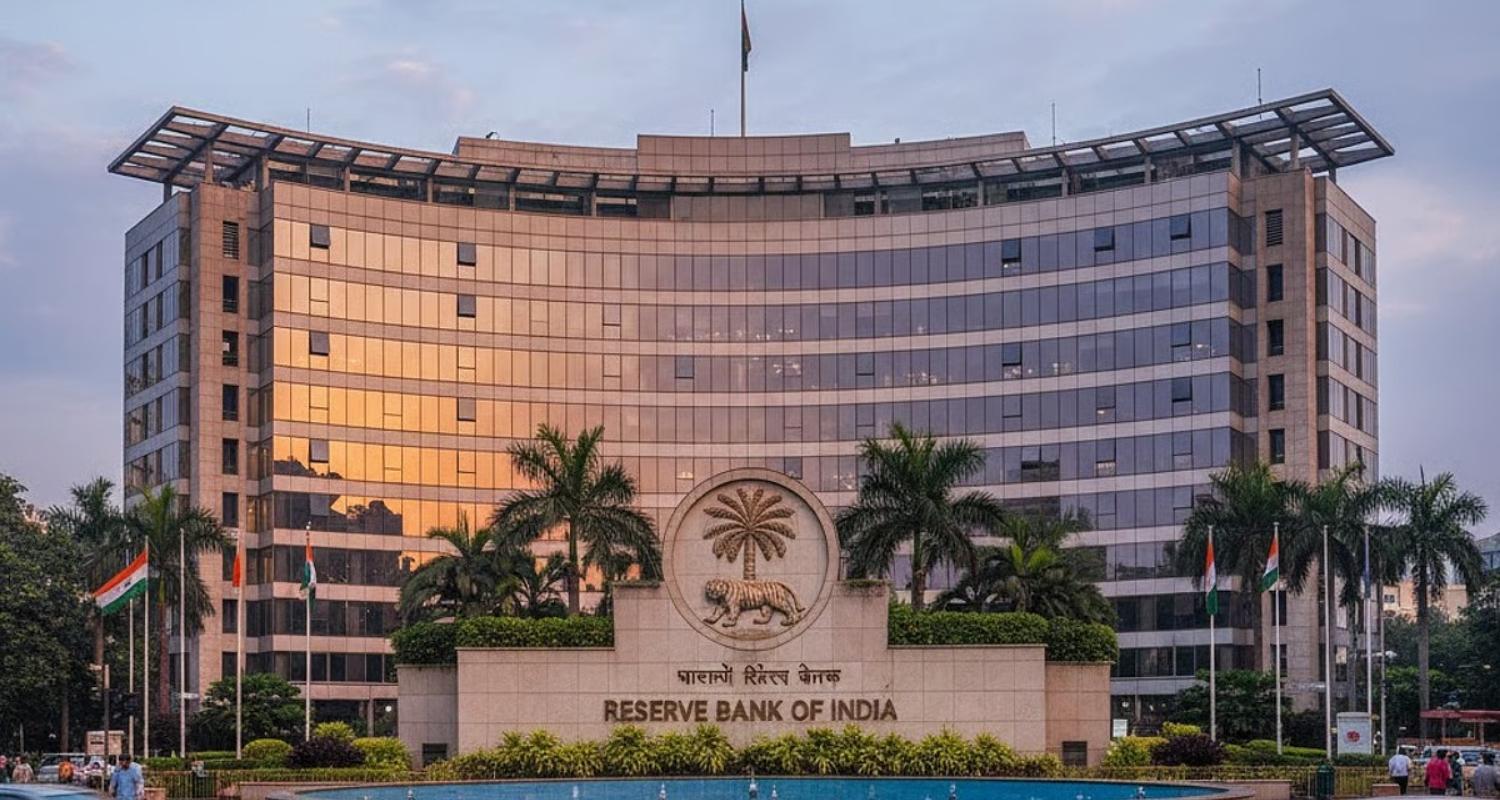
The Reserve Bank of India (RBI) on Wednesday firmly rejected reports suggesting it had sold a portion of its gold reserves, clarifying that the country's physical gold holdings remain unchanged at 880.52 metric tonnes.
The clarification came in response to media reports claiming that the central bank may have liquidated gold worth nearly USD 12 billion to protect India's foreign exchange reserves amid the economic impact of the ongoing conflict in West Asia.
Rejecting the speculation, the RBI said in an official statement that the reports were inaccurate and did not reflect the actual position of the country's gold reserves. "The RBI emphasises that these reports are not correct," the central bank stated, advising the public to rely only on information officially released by the RBI on such matters. The Press Information Bureau (PIB) also issued a fact-check, dismissing the claims circulating in sections of the media and on social platforms.
According to RBI data, the share of gold in India's foreign exchange reserves has steadily increased over recent months. Gold accounted for 13.92 per cent of the country's forex reserves at the end of September 2025, rising to 16.70 per cent as of March 31, 2026, and further to 16.85 per cent by May 22, 2026.
The RBI's latest annual report showed that the total gold held by the central bank stood at 880.52 metric tonnes on March 31, 2026, compared with 879.58 metric tonnes a year earlier, reflecting a net addition of 0.94 metric tonnes during the period.
Also read: ‘India's overall hiring dipped 4 pc in May’
Of the total holdings, 312.32 metric tonnes are maintained as assets of the Issue Department, up marginally from 311.38 metric tonnes a year earlier. The remaining 568.20 metric tonnes continue to be held as assets of the Banking Department, unchanged from March 31, 2025.
The RBI further noted that the value of gold, including gold deposits, held under the Banking Department rose sharply by 63.6 per cent, increasing from Rs 4,31,624.80 crore as of March 31, 2025, to Rs 7,06,162.36 crore by March 31, 2026. The surge in valuation was attributed primarily to the sharp rise in global gold prices and the depreciation of the Indian rupee against the US dollar during the period.
The central bank typically deploys its foreign exchange reserves to manage excessive volatility in the rupee-dollar exchange rate and maintain orderly market conditions. The rupee touched a record closing low of 96.86 against the US dollar on May 20, 2026, weakening by 33 paise from the previous session. Once regarded as one of Asia's relatively stable currencies, the rupee has emerged as one of the weakest-performing emerging market currencies this year.
The currency has come under pressure from a combination of factors, including elevated crude oil prices, sustained capital outflows, widening trade deficits and continued strength in the US dollar. The rupee has depreciated nearly 7 per cent so far in 2026 and has fallen about 6 per cent since the escalation of the Iran-related conflict in late February.
At the start of the calendar year, the rupee had opened at 89.94 against the dollar and ended the first trading day at 89.98. India's foreign exchange reserves have also witnessed a decline in recent months. During the week ended May 22, the country's forex reserves fell by USD 7.511 billion to USD 681.384 billion.
The reserves had earlier touched an all-time high of USD 728.494 billion during the week ended February 27, 2026. However, the onset of conflict in the Middle East and the resulting pressure on the rupee prompted the RBI to intervene repeatedly in the foreign exchange market through dollar sales, leading to a decline in reserve levels.
For comparison, India's foreign exchange reserves stood at USD 686.801 billion in the week ended January 2, 2026, highlighting the impact of recent market developments on the country's external asset position.

 Follow us