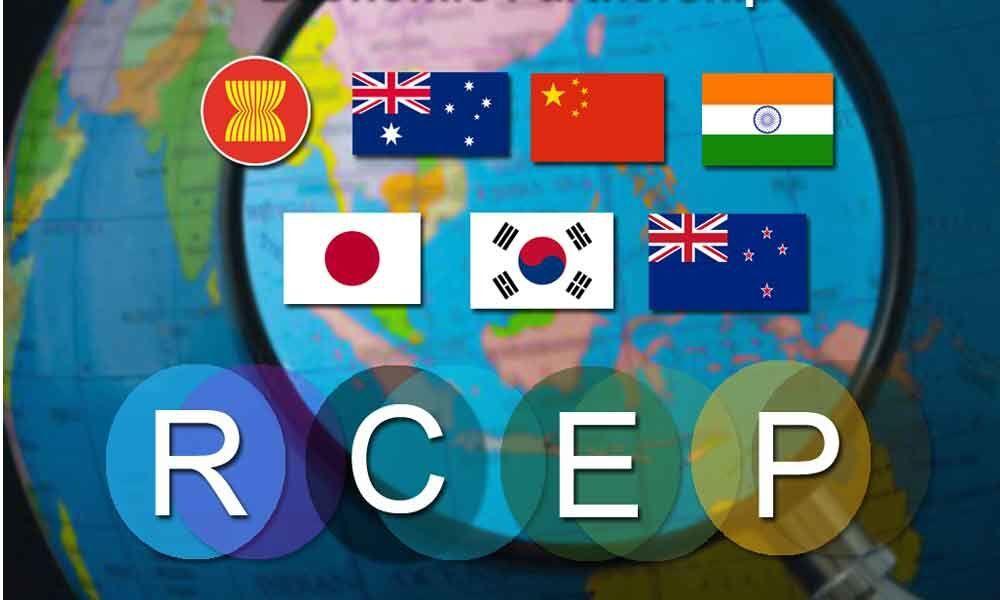
The Regional Comprehensive Economic Partnership (RCEP), the world's largest free trade agreement, is sending a powerful message in favor of open markets, fair competition, and rules-based trade.
This comes at a time when protectionist tendencies and trade tensions threaten global economic stability, according to officials and experts at the fourth RCEP Media and Think Tank Forum held in Haikou, Hainan province.
China, as the largest economy within the RCEP, is committed to working closely with other member countries to fully realize the benefits of the agreement, ensuring win-win cooperation for all, experts emphasized at the forum.
The RCEP, which encompasses around 30% of the world's population, GDP, and goods trade, came into full effect in June last year among its 15 signatory countries, including China, Australia, Japan, New Zealand, South Korea, and the 10 ASEAN member states.
Hu Kaihong, a member of the Affairs Council of the Publicity Department of the Communist Party of China Central Committee, highlighted that the RCEP will unleash more economic vitality as member countries enhance connectivity and boost trade and investment.
The agreement's provisions, such as tariff reductions, cumulative rules of origin, and streamlined customs procedures, have facilitated the continuous entry of high-quality products into the Chinese market. In 2023, trade between China and other RCEP members reached 12.6 trillion yuan ($1.7 trillion), accounting for 30.2% of China's total foreign trade, a 5.3% increase from 2021.
Yin Libo, vice-governor of Hainan province, noted that the RCEP has provided much-needed stability in an uncertain global economy. Hainan aims to leverage the RCEP and its free trade port policies to create a base for Chinese companies entering international markets and a hub for foreign enterprises entering China.
The RCEP is projected to drive an annual increase of $186 billion in global GDP by 2030, according to the Peterson Institute for International Economics. Chi Fulin, president of the China Institute for Reform and Development, called for improved awareness and utilization of RCEP rules among member enterprises to enhance regional market vitality.
Shi Zhongjun, secretary-general of the ASEAN-China Center, highlighted the RCEP's potential to promote the free flow of production factors, optimize allocation, and spur innovation, advancing regional cooperation toward a more inclusive and mutually beneficial future.

 Follow us