
Trending:
Seed firms have 20-30 pc surplus stock for kharif season: FSII
FSII Chairman Ajai Rana said seed companies are carrying 20-30 per cent surplus inventory this season, significantly higher than the usual operational buffer of 15-20 per cent maintained to account for returns and unexpected demand. Follow us
News Arena Network - New Delhi - UPDATED: June 28, 2026, 03:02 PM - 2 min read
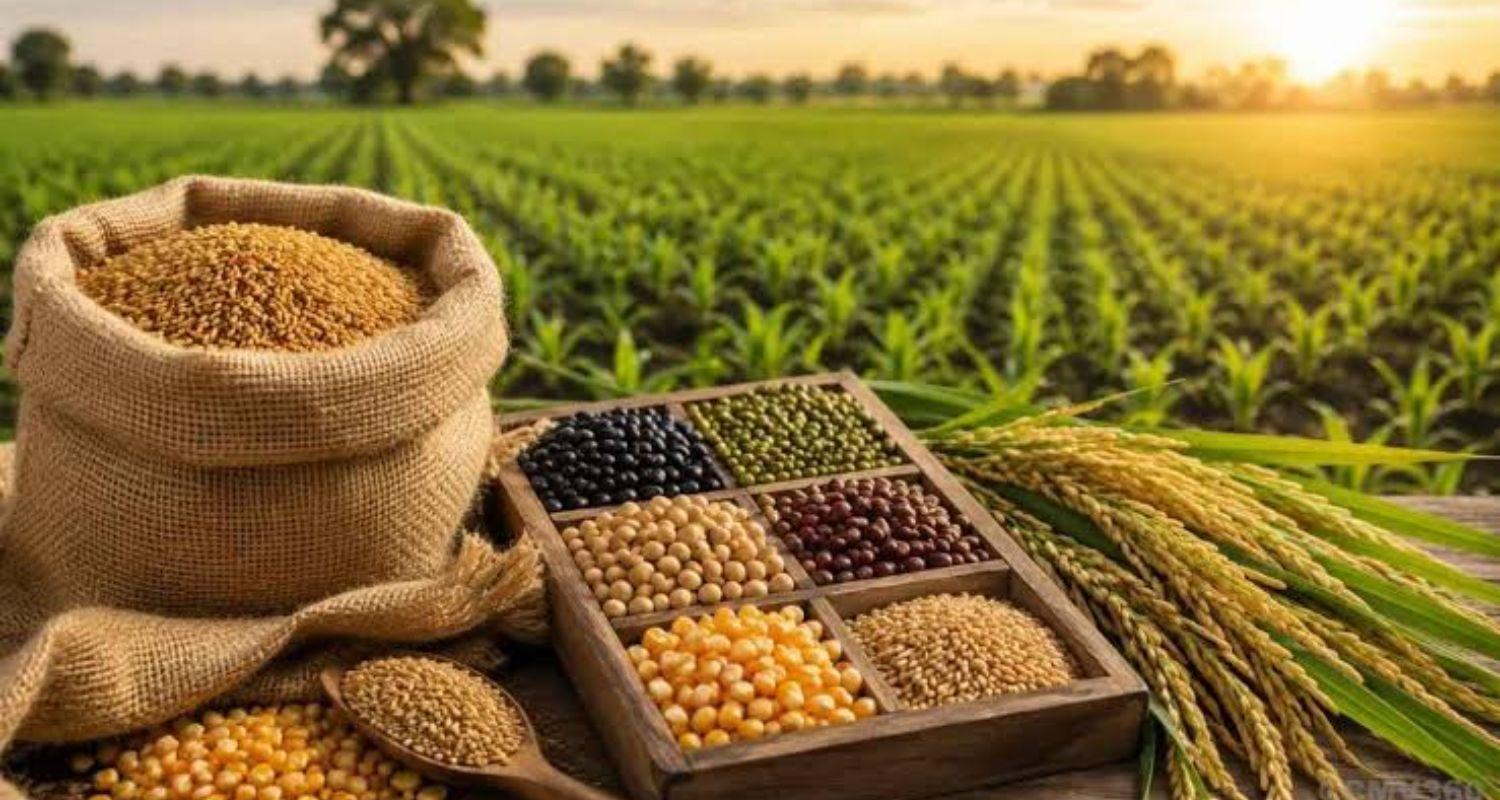
Representational image.
India's private seed industry has built up a healthy surplus of seeds for the ongoing kharif sowing season, but ensuring that stocks reach rain-deficient regions in time remains the biggest challenge as the country braces for the impact of a weak and delayed monsoon linked to the El Niño weather pattern, according to the Federation of Seed Industry of India (FSII).
FSII Chairman Ajai Rana said seed companies are carrying 20-30 per cent surplus inventory this season, significantly higher than the usual operational buffer of 15-20 per cent maintained to account for returns and unexpected demand.
"We typically plan with a 15-20 per cent buffer for returns. This year's strong seed production has further strengthened our position. Many companies are holding 20-30 per cent surplus stock," Rana said.
He said the additional inventory would prove useful if farmers are forced to undertake re-sowing because of delayed or inadequate rainfall. However, the immediate concern is not the overall availability of seeds but ensuring they reach vulnerable districts before the sowing window closes.
"The key challenge is not total availability but timely distribution to the right geographies," Rana said, stressing that short-duration and climate-resilient hybrid varieties would be critical for farmers in rain-hit regions.
The Centre has estimated certified seed availability for the current kharif season at 192.43 lakh quintals against an expected requirement of around 173 lakh quintals, creating a surplus of nearly 11.2 per cent. In addition, the private sector, which accounts for nearly 70 per cent of India's seed supply through a network of more than 10 lakh retailers, has maintained extra stocks to meet any unexpected demand.
The government has also identified 315 districts across 12 states that could face the adverse effects of a delayed monsoon during the ongoing cropping season. Highlighting the risks posed by El Niño, Rana noted that nearly half of India's agricultural land remains rain-fed, making the kharif season particularly vulnerable to deficient rainfall.
"El Niño is not good news for our agriculture, especially the kharif season, which is the major cropping season. It will particularly impact geographies where irrigation coverage is low," he said.
According to him, sowing has already been delayed in Madhya Pradesh, Chhattisgarh, parts of Jharkhand and Bihar. In contrast, states with better irrigation infrastructure such as Punjab, Haryana and western Uttar Pradesh have already achieved more than 90 per cent coverage and are unlikely to face significant disruptions.
If rainfall continues to remain below normal through July and August, Rana advised farmers to switch to short-duration, high-yielding crop varieties that mature faster and are better suited to shortened growing seasons. He also recommended modifying agronomic practices, including earlier fertiliser application in paddy fields.
Also read: 'Made in India' label stands for national pride: Piyush Goyal
Rejecting the common belief that hybrid seeds require more water and fertilisers, Rana said hybrid crops often perform more efficiently because of hybrid vigour.
"In reality, hybrids often require less water and fertiliser. For example, in Punjab and Haryana, hybrid varieties require only two bags of urea compared to three or four bags for conventional varieties, while also maturing nearly 15 days earlier," he explained.
Rana said farmers across several regions are already shifting towards early- and medium-duration crop varieties, and seed companies have adjusted production and inventories accordingly.
For rice, India's largest kharif crop, he identified Madhya Pradesh, Chhattisgarh, Bihar, eastern Uttar Pradesh, West Bengal, Odisha and Telangana as key states where farmers should move towards shorter-duration varieties to reduce weather-related risks.
Maize cultivation in Madhya Pradesh, Maharashtra and Karnataka is also being closely monitored, while millets such as sorghum and pearl millet are expected to perform relatively well even under deficient rainfall conditions. He noted that adequate millet seed stocks are available, supported by the government's Millet Mission.
Rana also expressed concern over Telangana's decision to offer incentives for long-duration fine-grain rice varieties despite the possibility of a weak monsoon. "In a drought-prone year, incentives for long-duration fine varieties encourage more rice cultivation when we should instead promote early and medium-duration varieties such as MTU 1010, which are better suited to these conditions. We have already raised this issue with state governments," he said.
He pointed out that India's rice cultivation area expanded to more than 50 million hectares last year, compared to the historical average of 42-44 million hectares, describing the trend as unsustainable for a country heavily dependent on monsoon rainfall.
To improve preparedness, FSII member companies have mapped vulnerable districts using remote sensing technology and are conducting real-time monitoring through digital platforms and regular telephonic surveys.
A recent survey covering around 1,000 farmers found that nearly 75 per cent had already purchased seeds, while the remaining 25 per cent were waiting for the arrival of monsoon rains before making their purchases.
"The main issue is grassroots coordination—moving seed stocks from surplus areas such as Mathura and Agra to districts in Rajasthan and other regions where demand is expected to rise," Rana said.
Addressing concerns about counterfeit seeds, Rana said FSII is supporting the government's SATHI initiative to improve seed traceability. All member companies have introduced QR codes on seed packets, allowing farmers to verify the authenticity of seeds before purchase.
For farmers in vulnerable districts, Rana advised adopting short-duration, high-yielding hybrids, applying fertilisers early in the crop cycle and transplanting rice seedlings when they are 25-30 days old to minimise yield losses caused by delayed monsoon conditions.
