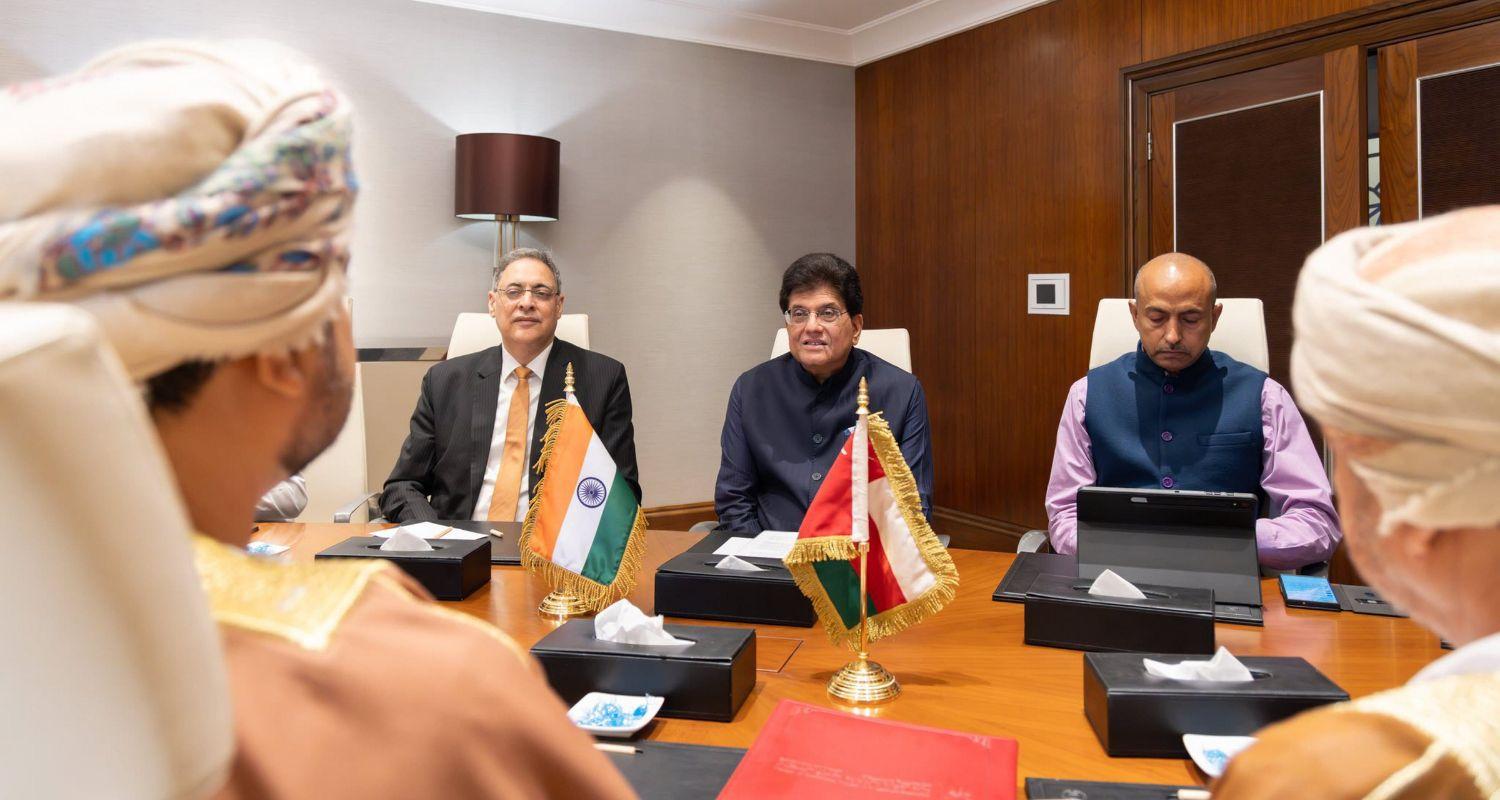
India finally sealed its free trade agreement (FTA) with Oman on Thursday, with the deal being touted as “landmark” for multiple reasons, not least being the inclusion of traditional Ayush products that will find greater market access in the Gulf nation.
The comprehensive economic partnership agreement (CEPA) includes a dedicated annexe that recognises trade in health-related and traditional medicine services – the first time that India’s traditional medicines have been included in a trade pact.
“A landmark element of the agreement is Oman’s commitment to traditional medicine extended across all modes of supply, representing the first such comprehensive commitment made by any country, and creating a significant opportunity for India’s Ayush and wellness sectors to showcase their strength in the Gulf region,” an official statement by the Indian Ministry of Commerce said.
The deal provides for cooperation in licensing and qualification procedures, digital conduct of licensing examinations, medical value travel facilitation and capacity building, harmonisation of standards and joint research.
With the Ministry of Ayush having undertaken various initiatives to promote Indian traditional medicine systems globally, including a central sector scheme under which the ministry provides support to domestic Indian manufacturers and service providers to boost exports, the total Ayush products’ export from India has increased from USD 1.09 billion in 2014 to USD 1.54 billion in 2020.
Also Read: Trade pact will renew India-Oman bilateral relations: PM Modi
Meanwhile, the India-Oman CEPA does not extend any duty concessions on products including agricultural items such as dairy, chocolates, gold, silver, jewellery, footwear, and sports goods to protect the interests of domestic farmers and MSMEs, said the ministry of commerce in its statement.
“To safeguard its interest, sensitive products have been kept in the exclusion category by India without offering any concessions. These include agricultural products, including dairy, tea, coffee, rubber, and tobacco products; gold and silver bullion, jewellery; other labour-intensive products such as footwear, sports goods; and scrap of many base metals,” the ministry said.
Another significant aspect of the FTA is a tariff-rate quota (TRQ)-based tariff liberalisation for products that are sensitive for India, but of export interest to Oman.
Under the TRQ mechanism, India has extended duty concessions up to a specified quota – the annual quota for duty-free dates, for instance, being 2,000 tonnes – beyond which normal import duty will apply. The goods under this category include dates, marbles, and petrochemical products.
An official said Oman has allowed Indian firms to import marble blocks, which is otherwise a banned export item in the Gulf nation.

 Follow us