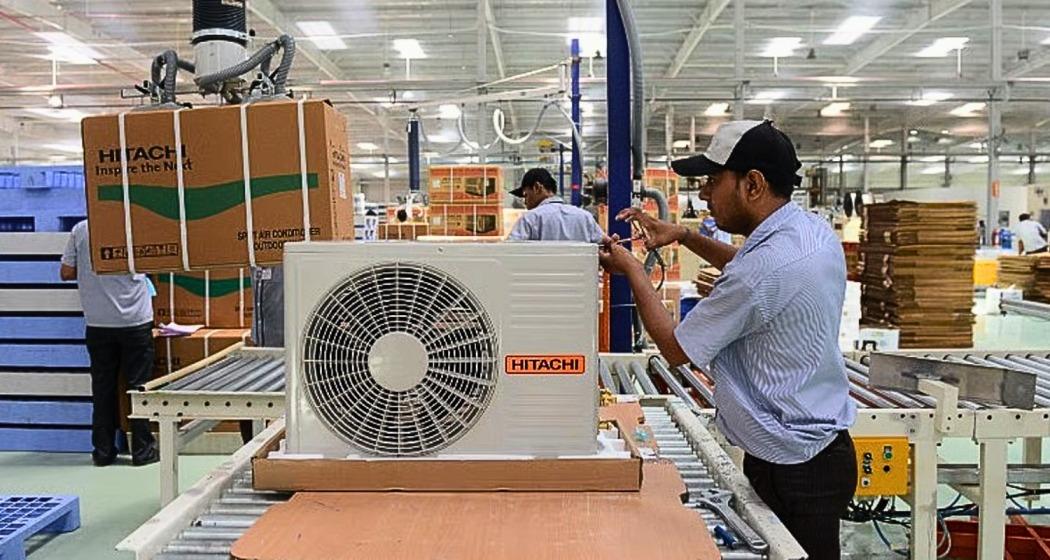
Air-conditioner manufacturers are proceeding with caution after unseasonal rainfall, caused by western disturbances, swept across large parts of the country, potentially affecting early summer demand that typically fuels sales.
The industry is also on edge over recently announced price increases, driven by ongoing geopolitical tensions in West Asia that have pushed up the cost of raw materials, such as plastics, along with constrained LPG supply impacting production.
Due to rising plastic costs, prices of other large appliances like washing machines are also expected to increase by 10–12 per cent, according to industry leaders.
March is usually the period when demand for cooling products begins to surge, but the unusual weather has made manufacturers wary. However, executives remain optimistic, expecting temperatures to rise in April.
“If you look at the weather beyond next week, temperatures are already trending upward in Delhi and other parts of north India,” said Kamal Nandi, Business Head and EVP, Appliances Business at Godrej Enterprises Group.
On the possible impact on sales, he said, “It’s too early to draw conclusions. We may see intermittent rain in some regions, but that does not mean temperatures will not increase.” Nandi added that he expects conditions to stabilise in April.
He noted that the industry had already implemented price hikes earlier this year following the Bureau of Energy Efficiency’s new energy labelling norms introduced in January.
“This will be the second round of hikes, as oil and plastic prices are rising and freight costs are also increasing,” he said. “More than the weather, I am concerned about demand, as the upcoming price hike in April will affect the entire industry.” Godrej is expected to raise prices by 5–10 per cent from April 1, 2026, he added.
Haier India President N S Satish pointed out that LPG supply to factories has been curtailed, and if the situation continues, production could decline by 20–30 per cent just ahead of the peak season.
Also read: West Asia conflict: Indian companies facing shipment delays
To prioritise domestic cooking needs, LPG supply to industrial and commercial users has been reduced from 80 per cent to 65 per cent of their average consumption. “This directly impacts RAC (room air-conditioner) production, as paint shops rely on LPG for high-temperature drying processes,” he explained.
Satish also expressed concern over the rising cost of plastics, a key input in appliances like washing machines and refrigerators.
“In washing machines, plastics account for nearly 20 per cent of the material cost,” he said, adding that prices may need to be increased by 10–12 per cent. He also warned that higher prices could lead to down-trading, where consumers opt for lower-capacity or lower-end models to manage costs.
Blue Star Managing Director B Thiagarajan echoed similar concerns, noting that plastic and other input costs are increasing, and companies operating on thin margins will have little choice but to pass on the burden to consumers.
“Unless the conflict in West Asia eases before the end of March, I am not very optimistic about the summer season,” he said, adding that while growth is expected this year compared to last year, it may not match 2024, when the industry saw record sales driven by intense heat waves.
The year 2025 was challenging for the RAC industry due to unseasonal rains and other disruptions that dampened demand.
Experts believe that 2026 will bring intense competition in the Indian RAC market, with companies vying for market share after a year of negative growth.
The domestic RAC market is estimated at around 13.5 million units, with major players such as Voltas, LG, Daikin, Blue Star, Hitachi, Panasonic, and Lloyd competing in the segment.

 Follow us