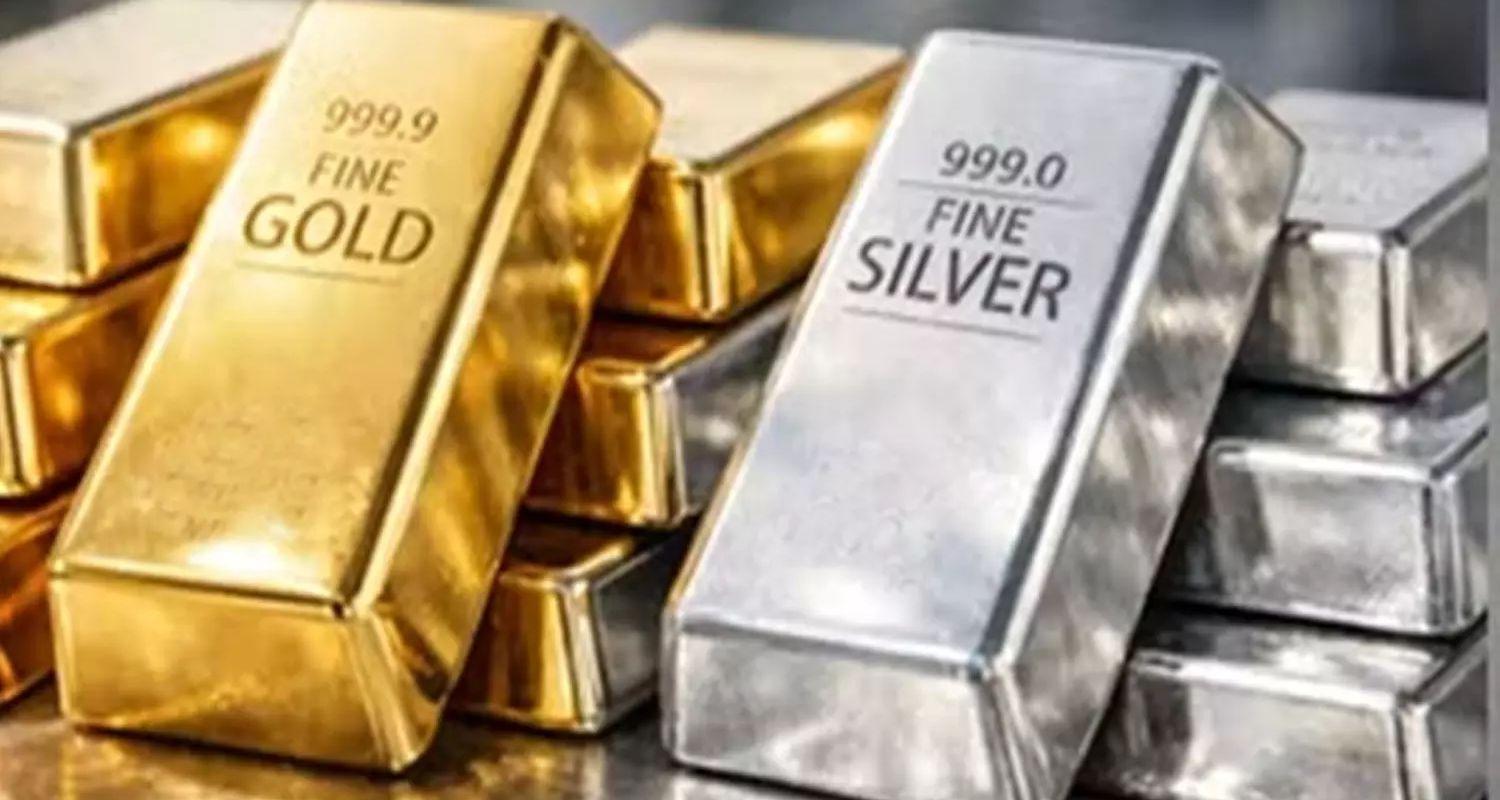
Gold and silver prices are expected to trade with heightened volatility and a corrective bias in the coming week as investors closely monitor the escalating conflict between the United States and Iran, fluctuations in crude oil prices and key inflation data that could influence expectations regarding global interest rates, according to market analysts.
Precious metals, traditionally regarded as safe-haven assets during periods of uncertainty, have witnessed sharp price swings in recent sessions as geopolitical developments and macroeconomic factors continue to shape investor sentiment. Analysts believe that while safe-haven demand may offer support to bullion prices, profit-booking at higher levels and expectations surrounding monetary policy could trigger intermittent corrections.
The latest escalation in West Asia has once again unsettled global financial markets. Fresh tensions emerged after Iran announced that it had struck a vessel travelling along what it described as an unauthorised maritime route. The development was followed by Tehran's declaration that it was closing the strategically significant Strait of Hormuz, one of the world's busiest energy shipping lanes through which a substantial share of global crude oil exports passes.
The announcement immediately raised concerns over possible disruptions to global energy supplies, pushing crude oil prices higher and increasing uncertainty across commodity and financial markets. Any prolonged disruption in the region is expected to have far-reaching implications for inflation, economic growth and central bank policy across major economies.
Also read: Exempted PF Trusts: EPFO opens 6-month amnesty window
The situation intensified further after the US Central Command confirmed that it had carried out military strikes targeting locations in Tehran. Iran subsequently retaliated by launching attacks on installations linked to the United States in the United Arab Emirates, Kuwait and Bahrain, raising fears of a broader regional conflict.
Analysts noted that geopolitical tensions of this magnitude typically strengthen demand for traditional safe-haven assets such as gold. However, sustained gains could be limited if rising bond yields and a stronger US dollar reduce the appeal of non-yielding assets. Investors are therefore expected to remain cautious until there is greater clarity on both the geopolitical front and the direction of monetary policy.
Market participants will also closely watch upcoming inflation readings from major economies, particularly the United States, as the data could influence expectations regarding the timing and pace of future interest rate decisions by the US Federal Reserve. Softer inflation figures may revive hopes of policy easing, providing support to gold and silver, while stronger-than-expected data could reinforce expectations of higher rates for longer, putting pressure on bullion prices.
Apart from inflation, traders will keep an eye on movements in the US dollar index, Treasury yields and global crude oil prices, all of which are likely to influence the direction of precious metals during the week.
Silver, which derives demand from both investment and industrial sectors, may witness relatively sharper swings compared with gold amid heightened uncertainty and changing risk appetite. Industrial demand expectations linked to the global economic outlook will also remain an important factor for the white metal.
Analysts expect volatility to remain elevated until there is greater certainty over developments in West Asia and clearer signals from central banks. In the near term, bullion prices are likely to remain highly sensitive to geopolitical headlines, energy market movements and macroeconomic data releases, with investors adopting a cautious approach while balancing safe-haven demand against evolving interest rate expectations.

 Follow us