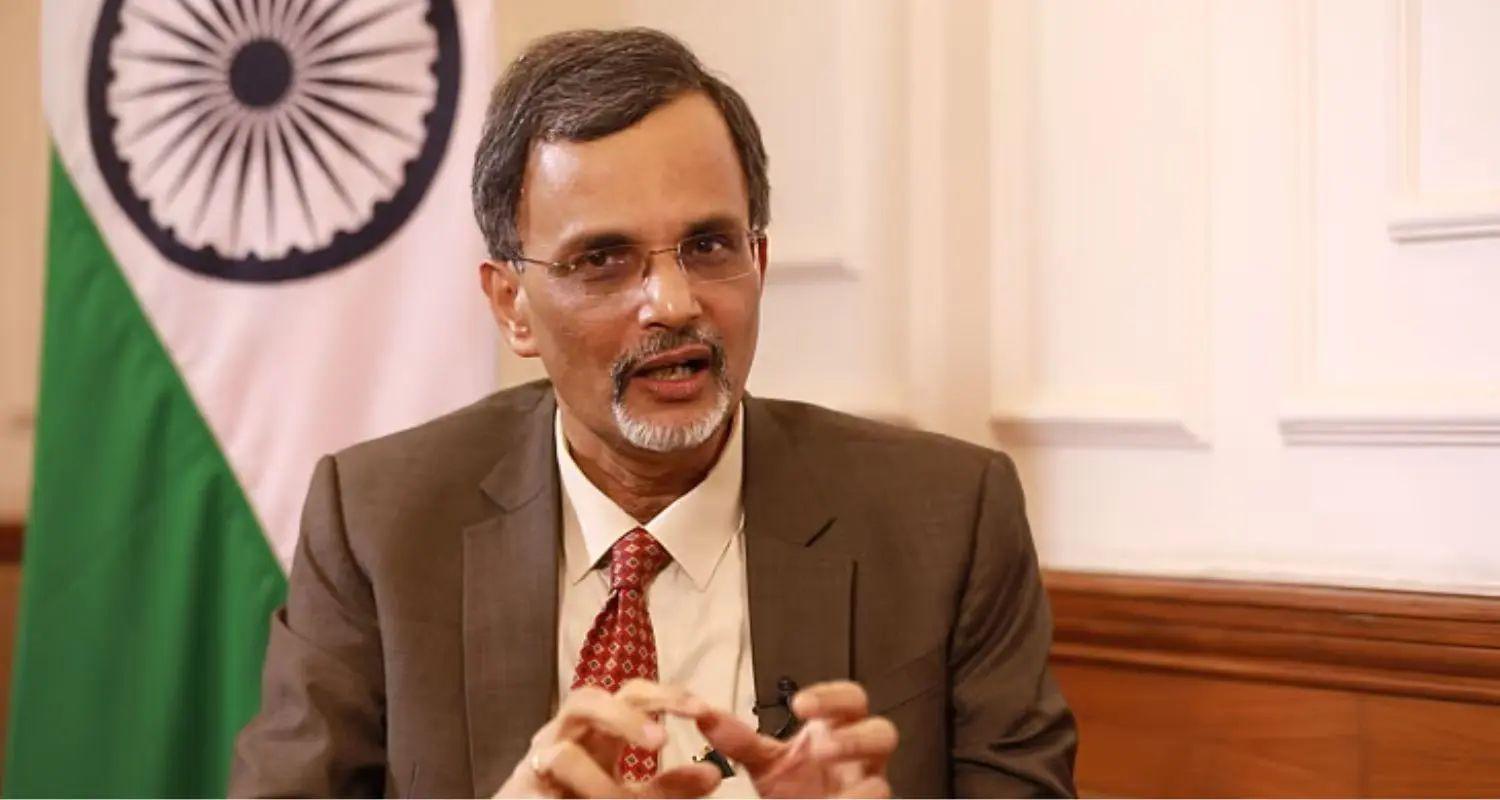
India’s Chief Economic Advisor V Anantha Nageswaran on Tuesday described the escalating West Asia conflict as a ‘live balance of payments stress test’ for the country, warning that the crisis carries serious implications for inflation, the current account deficit, and the rupee’s exchange rate. However, he asserted that India’s ongoing fiscal consolidation, infrastructure push, and reform-driven economic framework provide the resilience needed to navigate the turbulent global environment.
Speaking at a session organised by the Confederation of Indian Industry, Nageswaran highlighted India’s deep economic exposure to the Gulf region and the Strait of Hormuz, stressing that the conflict is no longer merely a geopolitical issue but a direct macroeconomic challenge for the country.
He pointed out that nearly 87 per cent of India’s crude oil requirement is met through imports, with around 46 per cent of those supplies either passing through or originating near the Strait of Hormuz. According to him, tanker movement through the route has sharply declined, with the seven-day moving average dropping to just five vessels amid heightened tensions.
India’s dependence on the Gulf extends beyond crude oil. Nageswaran noted that around 60 per cent of the country’s LPG requirement is imported, with more than 90 per cent sourced from Gulf nations. In addition, nearly 38 per cent of annual remittances received by India originate from workers based in the region.
Also read: Rupee falls to record low of 95.58 against US dollar
“The West Asia crisis is not simply a foreign policy issue that occasionally impacts economic planning. It is an active balance of payments stress test with direct implications for inflation, the current account deficit, and currency stability,” he said.
He stressed that managing the current account deficit effectively, financing it sustainably, and preventing further depreciation of the rupee would be among India’s most critical macroeconomic priorities during FY27.
The crisis intensified after the United States and Israel launched attacks on Iran, resulting in severe disruptions around the Strait of Hormuz over the past two months. Global crude oil prices have reportedly surged by more than 60 per cent during this period, significantly increasing concerns over India’s energy import bill and foreign exchange reserves.
India imports close to 90 per cent of its domestic crude oil requirements, making it particularly vulnerable to prolonged volatility in global energy markets. Economists now expect the country’s current account deficit — which reflects the gap between imports and exports along with overseas income flows — to widen from around 0.8 per cent of GDP in FY26 to nearly 1.3 per cent in FY27.
The balance of payments situation has also come under pressure, while the rupee touched a record low of 95.63 against the US dollar on Tuesday.
Against this backdrop, Prime Minister Narendra Modi recently urged citizens to adopt fuel-saving measures and reduce unnecessary foreign exchange outflows. Addressing a rally in Hyderabad organised by the Bharatiya Janata Party, Modi called for reduced consumption of petrol and diesel, greater use of metro rail networks, car-pooling, adoption of electric vehicles, increased reliance on railways for parcel transport, and even work-from-home arrangements where possible.
He also advised postponing non-essential foreign travel and gold purchases to help conserve foreign exchange reserves during the ongoing crisis. Nageswaran said India’s economic strengths—including disciplined fiscal management, major infrastructure investment, and structural reforms implemented in recent years—provide an important buffer. However, he argued that the changing global order requires more than conventional macroeconomic management.
“It demands a strategic reassessment of how India positions itself in a structurally transformed world,” he observed. According to him, the global landscape is now marked by rising geopolitical rivalry and multiple active conflicts, and emerging economies that continue to assume a return to the pre-2020 global economic order risk making a 'strategic error'.
The CEA outlined four major structural shifts shaping the future global economy. The first is geoeconomic fragmentation, driven by trade wars, sanctions, strategic decoupling, and the rebuilding of supply chains around resilience rather than efficiency.
The second shift involves technological bifurcation, with semiconductor supply chains, digital infrastructure, and technology standards increasingly splitting into rival geopolitical blocs.
The third major challenge is the growing cost associated with the global energy transition, while the fourth is the permanent repricing of geopolitical risk across global financial and commodity markets.
Nageswaran said India, because of its economic scale, democratic framework, and wide-ranging international relationships, is better positioned than many countries to influence the emerging world order. However, he cautioned that the window for repositioning trade partnerships, technology collaborations, supply-chain networks, and strategic alliances may be limited.
He stressed that timely decisions and strategic clarity would be crucial as nations compete to shape the next phase of the global economic architecture.

 Follow us