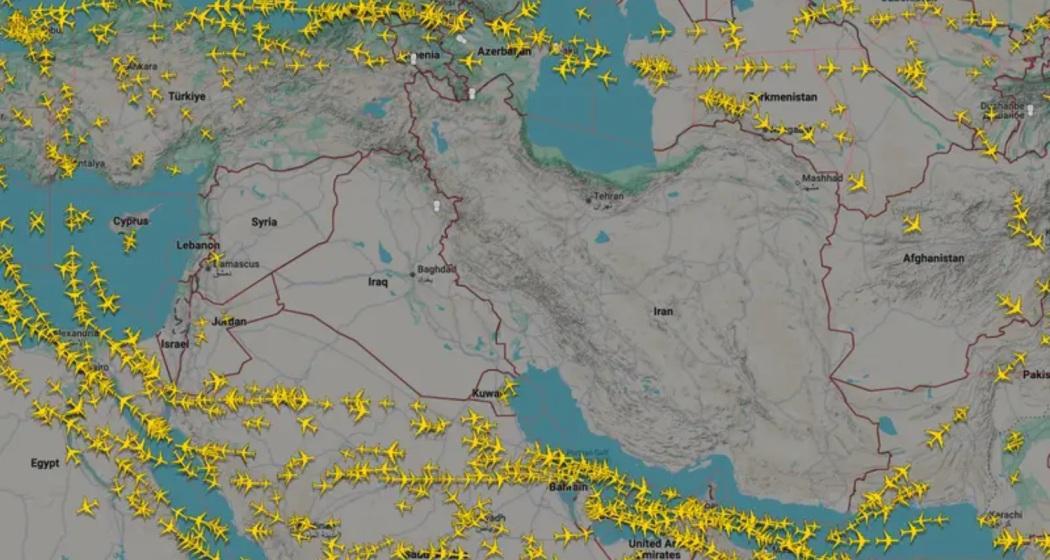
The escalating conflict in West Asia, marked by joint US-Israel strikes on Iran that killed Supreme Leader Ayatollah Ali Khamenei has triggered widespread airspace closures and massive flight disruptions. This has led to a sharp rise in booking cancellations and rescheduling requests among Indian travellers, particularly for routes connecting India to Europe via key Gulf hubs like Dubai, Doha, and Abu Dhabi.
The Indian Association of Tour Operators (IATO) highlighted the impact on Sunday, noting that travel agents nationwide are fielding numerous queries and cancellation requests. IATO President Ravi Gosain told PTI that the situation stems from multiple airspace restrictions across the Middle East, including over Iran, Israel, Iraq, Jordan, Qatar, Bahrain, Kuwait, and the UAE. These closures have forced airlines to cancel, divert, or suspend flights, severely affecting transit routes that many India-Europe journeys rely on.
"While there is short-term uncertainty, we expect the situation to stabilise," Gosain said. "Travellers are being advised to stay in touch with their agents and avoid panic cancellations, as airlines are offering suitable options in most cases, including re-bookings, refunds, and alternate routings."
The crisis erupted on Saturday when US and Israeli forces launched coordinated strikes on Iranian targets, resulting in Khamenei's death and widespread retaliation. Iran responded with missile attacks on US bases and targets in Israel and Gulf states hosting American assets, including reported explosions in Dubai, Doha, and Manama on Sunday. Israel announced further strikes on Tehran and other sites on Sunday, with the conflict entering its second day amid vows of continued operations from both sides.
Also Read: Three-member interim council to head Iran post Khamenei’s killing
Major hubs such as Dubai International Airport (the world's busiest for international traffic) and Doha's Hamad International Airport remain shut or heavily restricted. Flight-tracking data shows thousands of cancellations worldwide, with over 19,000 flights delayed and more than 2,600 cancelled globally as of early Sunday. In India, the Ministry of Civil Aviation reported 410 cancellations by domestic carriers on February 28, with around 444 expected on Sunday due to the restrictions.
Air India suspended all flights to Middle East destinations and cancelled numerous services to Europe and North America on Sunday, including key routes from Delhi and Mumbai to London, New York, and other cities. IndiGo cancelled flights to and from the Middle East until at least Sunday, extending flexibility and waivers for affected bookings until March 7. Other carriers like Emirates, Qatar Airways, and international players such as British Airways, Lufthansa, and Virgin Atlantic have also grounded or rerouted services.
Many India-Europe flights normally overfly the region for efficiency, now facing lengthy detours that increase fuel costs and journey times. Industry insiders estimate tens of thousands of Indian passengers have been affected, with some stranded or diverted mid-flight.
Gosain emphasised close coordination between tour operators, airlines, and overseas partners to minimise inconvenience. "This is unprecedented chaos for transit passengers," he noted, urging calm while airlines work on solutions. Travel industry bodies like TAAI have echoed calls for patience, warning that hasty cancellations could lead to greater losses.
As the situation remains fluid, with ongoing strikes and no immediate resolution in sight, passengers are advised to monitor airline updates, check with agents, and consider travel insurance options. Authorities in India have placed airports on alert, and the DGCA has designated large parts of West Asia as high-risk zones.
The conflict's broader implications for global travel could persist for days or weeks, depending on de-escalation efforts. For now, Indian travellers to Europe and beyond are facing significant uncertainty, but experts stress that flexible airline policies offer viable paths forward without unnecessary panic.



 Follow us