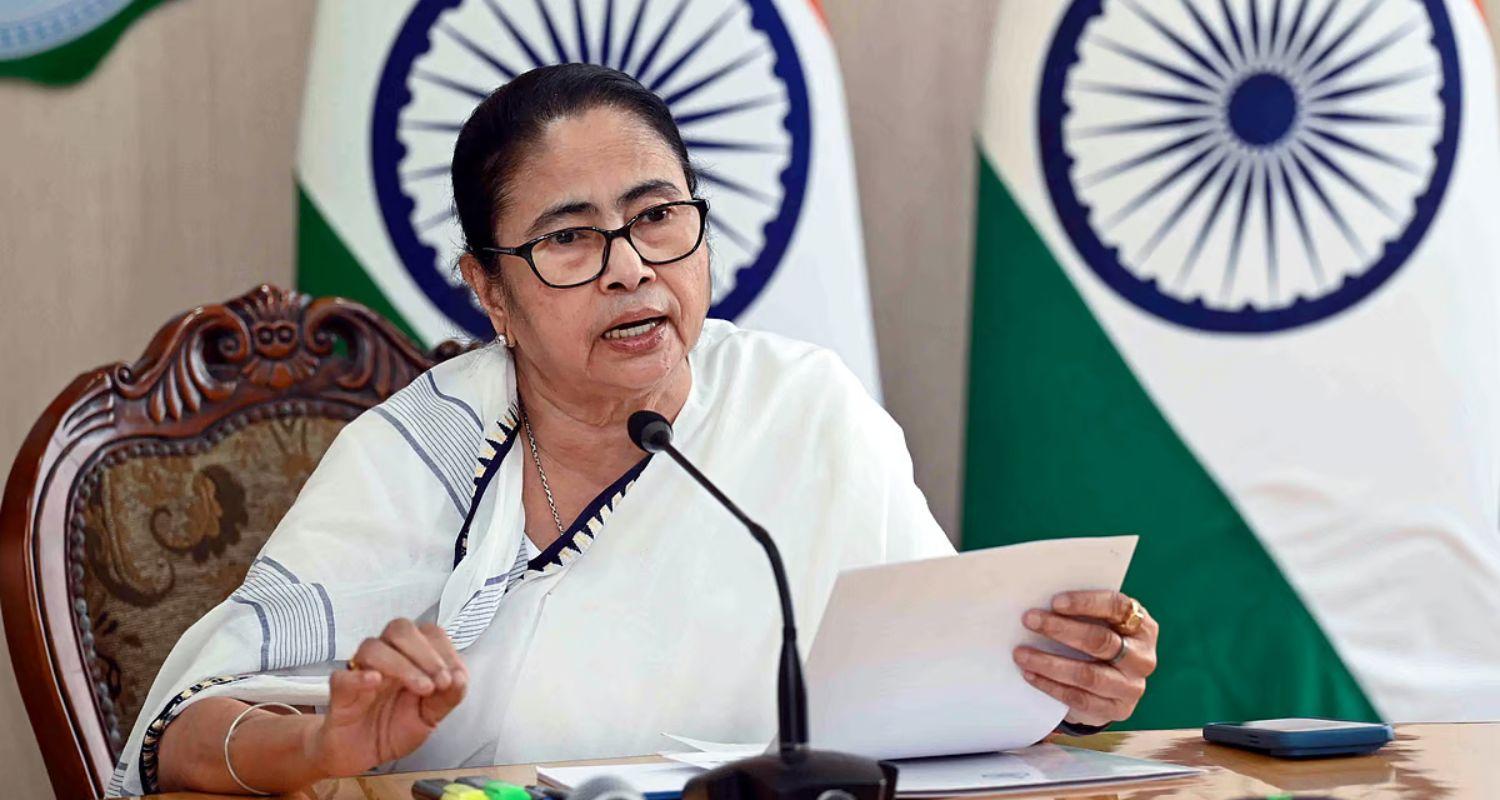
The West Bengal Budget for the financial year 2025-26 will be presented in the Assembly on 12 February, as decided in a meeting of the state cabinet at the state secretariat Nabanna on Monday, presided over by Chief Minister Mamata Banerjee.
The budget session of the state Assembly will begin on 10 February this year. However, on the first day, the session will be adjourned after the mandatory obituary mentions. The budget will be presented by the West Bengal minister in charge of finance (independent charge), Chandrima Bhattacharya, before the crucial state assembly elections in 2026.
Next year, before the elections, there will only be a vote-on-account budget, and the full budget for the following year will be presented only after the polls are concluded and the results are announced.
On 1 February, Union Finance Minister Nirmala Sitharaman will present the Union budget for the financial year 2025-26 in Parliament.
Sources in the state Finance Department have stated that considering this will be the last full budget before the state assembly elections in 2026, there is a possibility of an increase in allocation under various welfare and dole schemes offered by the state government, particularly those that are women- and youth-specific.
At the same time, there is a possibility of an announcement regarding an increase in the dearness allowance for state government employees, which has been a long-standing contentious issue, with a case on the matter pending in the Supreme Court.
Bhattacharya will present the state budget next month amid the recently released ‘Fiscal Health Index: 2025’ report from NITI Aayog, which revealed the poor performance of West Bengal in revenue mobilisation, expenditure quality, and debt index.
Of the 18 states reviewed, West Bengal ranked 16th in the report. According to the report, West Bengal’s spending on physical infrastructure as a proportion of total expenditure has decreased from 5.3 per cent in 2018-19 to 3 per cent in 2022-23, which is lower than the national average.
Equally concerning is the picture of capital expenditure as a proportion of total expenditure, which has reduced from 12.2 per cent in 2018-19 to 8.3 per cent in 2022-23 and is again lower than the national average.
Although the percentage under the head of social expenditure as a proportion of total expenditure had been comparatively higher in West Bengal at 28.2 per cent during the fiscal under review, this figure is again lower than the national average.
The report on ‘Fiscal Health Index: 2025’ highlights that while West Bengal’s tax revenue was the major source of income for the state government, primarily due to collection under SGST, and grew at an annual rate of 6.6 per cent over the past five years, the state’s non-tax revenue has declined over the last five years.
At the same time, the report noted that West Bengal’s reliance on grants-in-aid as a proportion of revenue receipts has increased from 17.6 per cent in 2018-19 to 19.6 per cent in 2022-23.
The same report pointed out that although West Bengal’s debt as a percentage of gross state domestic product (GSDP) has decreased from 40.7 per cent in 2010-11, the last financial year under the previous Left Front regime, to 35.7 per cent in 2018-19, the real cause for concern for the state government is the interest payment on the accrued debt.
“Interest payments account for 20.47 per cent of Revenue Receipts in the current year, constraining the ability of the state to allocate funds for development,” the report read.

 Follow us