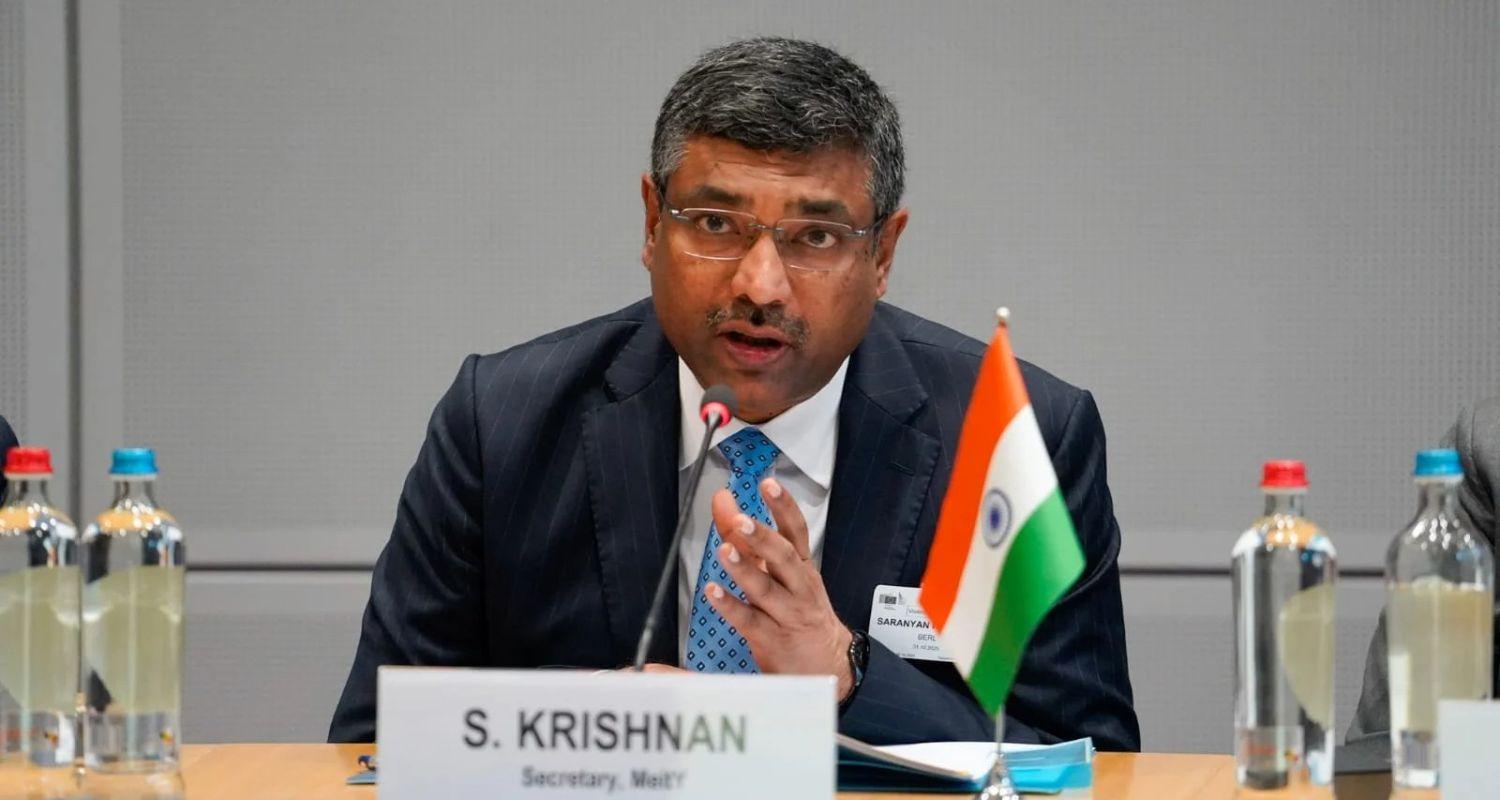
India faces a lower risk of artificial Intelligence (AI)-driven disruption to cognitive jobs as compared to Western economies, IT Secretary S Krishnan has said, citing the country's relatively lower proportion of white-collar roles in the overall workforce, and highlighted that the dominance of STEM-based employment can yield newer opportunities.
Krishnan said AI's real impact will come from building and deploying sector and use-specific applications, a process that will require large numbers of trained professionals. He said this is where India's strength lies and where new AI-driven job opportunities will emerge.
"... For India, where the number of white-collar jobs relative to other jobs is much lower than in the West, this risk to cognitive jobs, I don't think, is as serious as it is in other places. Also, the fact that most of our white-collar jobs are in the STEM space and... means that we have an opportunity...," Krishnan said as he weighed in on the AI versus job impact debate.
Krishnan pointed out that AI is the first technology to pose a risk for knowledge workers and cognitive labour, as opposed to industrial and other revolutions in the past that replaced manual labour with machines.
Krishnan said that while some may believe AI will eliminate the need for workers entirely, he disagrees. "I personally don't think we'll reach that stage in such a hurry. What AI would do is, of course, enhance human capability so that you can be much more productive in your cognitive tasks and have access to the resources," he said.
“At the same time, issues like AI hallucination mean that humans will still be needed to oversee and verify its outputs for a longer time. Whether you've got the right information, whether it is not a hallucination, those issues are still there. So, I think there will continue to be a need for humans-in-the-loop in this process for a much longer time," he said.
Krishnan explained that massive compute that fires the AI systems and building of models itself requires small albeit highly-skilled teams and, while that is indeed capital-intensive, it is limited in employment impact.
The real impact of AI comes from developing and deploying sector-specific, use-case applications, which will require many trained human workers. He believes this is where India can contribute most and where AI-related job opportunities will truly emerge.
"The development of these applications and deployment of these applications will take a lot of trained human resources. And I think that is what India has to offer to the world. And that is where the job opportunities in AI will arise," Krishnan said.
India is well placed to harness artificial intelligence not just for itself, but for the world, while boosting jobs and economic prosperity at home, Krishnan said, adding that indigenised application model under development is expected to be ready before the AI Summit scheduled in February next year.
Also read: ‘FTAs will open up overseas opportunities for Indians’

 Follow us