
Trending:
Revival of music in the Valley
Times have changed. The diktat of militants has dissipated as militancy has begun to fade in the Valley. Though artists still find shadows of those days chasing their creative pursuits to curtail their freedom. Follow us
News Arena Network - Chandigarh - UPDATED: January 4, 2026, 01:44 PM - 2 min read
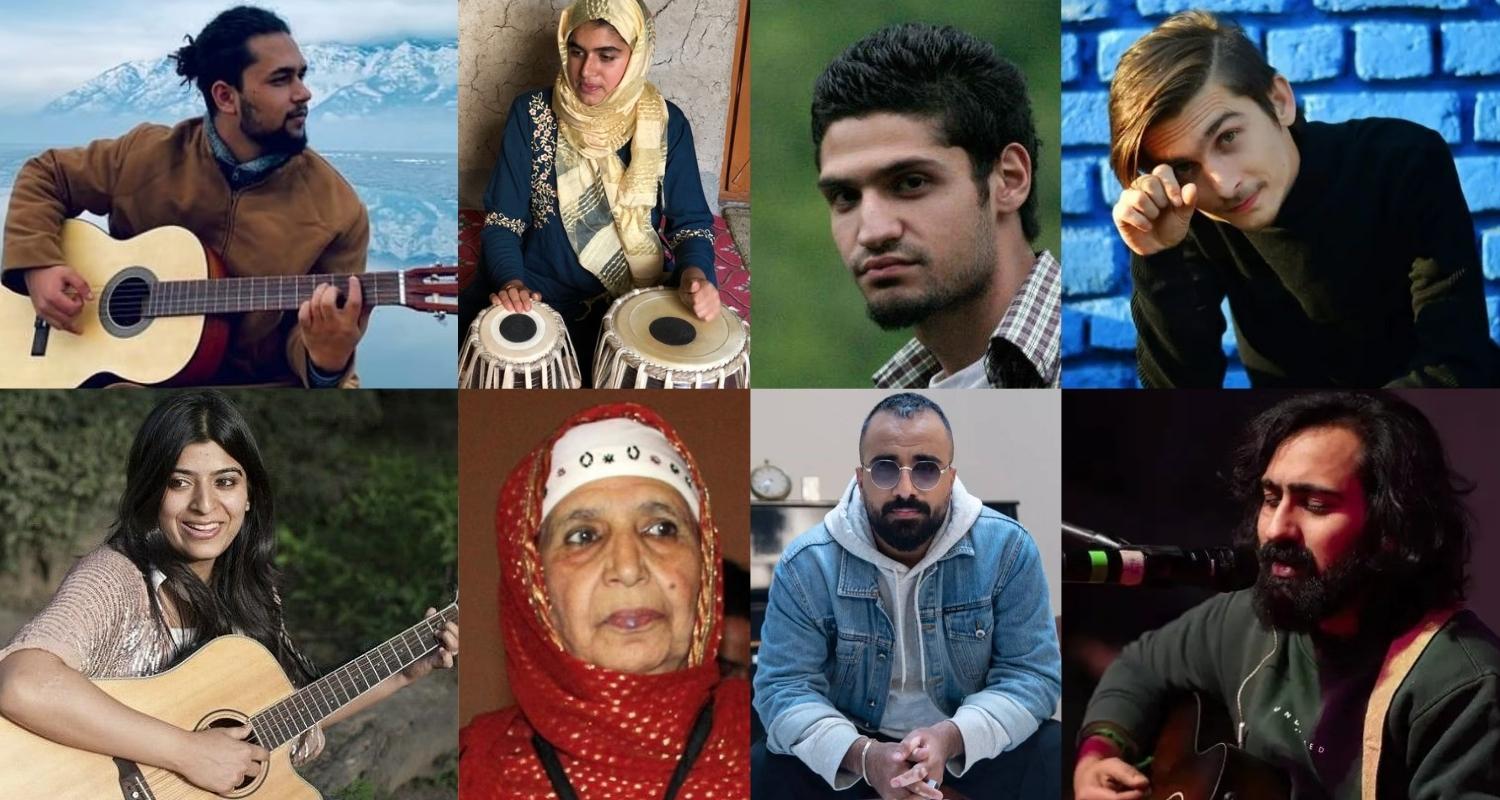
“Folk music sustained even through the worst times. Now, it’s about melody and music; lyrics don’t matter much," says Rauhan Malik, a singer from Kashmir.
In 2012, barely 13 years ago, a group of teen-aged girls from Kashmir started an all-girl musical band named Pragaash; with much fanfare and verve. Pragaash means light or moonshine. The girls came from urban, sophisticated background—all three were high school students—vocalist and guitarist Noma Nazir, drummer Farah Deeba and guitarist Aneeka Khalid. Eventually, they had to disband the group and go into hiding in February 2013, after facing online threats and a fatwa issued by the Grand Mufti of J&K Bashiruddin Ahmad.
Times have changed. The diktat of militants has dissipated as militancy has begun to fade in the Valley. Though artists still find shadows of those days chasing their creative pursuits to curtail their freedom.
Music of the sepia tones
“Songs of Paradise”, a recently released film based on the life of Raj Begum has also created renewed interest in the musical traditions of the Valley. A Padma Shree recipient, well- known Kashmiri singer Raj Begum’s trajectory, as depicted in the film, highlights the struggles of Kashmiri artists in the early 50s and 60s, when the pursuit of music was seen as anti-Islamic by the conservative society. The film is about the resilience and courage of artists like Raj Begum, who followed their passion against many odds. The recordings of Raj Begum were burnt in a mysterious fire at the radio station where they were kept.
A young singer finds inspiration in the life of Raj Begum to become a singer, in the film. She too realises it is not going to be a cakewalk to pursue music in the Valley. Masrat Un Nissa, who gave her voice for the “Songs of Paradise”, rendering Raj Begum’s lilting songs, had to overcome many challenges and criticism for her pursuit of music. The highly hummable Kashmiri songs in her voice “Dil Tsooran” and “Vasiye Goolan” notwithstanding, she had to deal with societal challenges, as a singer.
Things are changing in the Valley. Many young artists, who have grown outside the Valley, in different parts of India and the globe are going back to their traditional roots. Kashmiri Sufi music has found its lovers. Acceptance for music is growing in the Valley. The unprecedented success of a Kashmiri singer Faheem Abdullah with his popular title song in “Saiyyara”, composed by Arslan Nizami and Tanishk Bagchi and written by Irshad Kamil, hitting over a crore streams from various platforms opened new opportunities for musicians in the Valley.
Post “Saiyyara”
Rauhan Malik, another singer from Kashmir, was part of the collaborating trio on a related song "Ishq" that had a similar feel and turned Rauhan into a celebrity. Rauhan also represented India in Moscow and was part of the opening lineup for Sonu Nigam night at SKICC (Sher-i-Kashmir International Conference Centre). He represented India at Intervision 2025 with his song “Ishq”.
Rauhan's music is defined by his blend of traditional Kashmiri music with modern musical genres. He makes his compositions with fusion of folk motifs with elements of rock and pop music; this way he highlights the story and cultural identity of Kashmir through fresh, innovative sounds, setting his music apart from mainstream Bollywood music.
“Other sounds could not gain popularity in India because of over dominance of Bollywood; it began to change with the unprecedented success of Anuv Jain and his guitar- based music. In the last ten years the internet changed the scenario; the dependence on big levels gave way to independent music makers and this gave us a chance to focus on the sounds of our traditional music that includes our rich folk traditions,” says Rauhan.
Not that the music scenario was silent in the Valley. The phenomenon of MC Kash (Raushan Illahi), a popular Kashmiri rapper who gave haunting songs fashioned on Bob Marley’s rap, introduced revolutionary music in the Valley. Known as a street poet, he burst onto the scene in 2010 with his popular track “I protest”. He introduced hip hop to the aspiring Valley musicians, who were looking for a new idiom to express anguish over violence and subjugation. His music was anti India; it gave him an idol-like status among the youth of Kashmir; Sufi rap and Sufi ethnic rock came about with his many collaborations with other musicians. He came from a well-off family of Srinagar, and chose to rap in English. The anti-establishment stance and use of English gave him international media attention and humongous popularity.
Urdu, melody and the strings
Rauhan attributes the success of Kashmiri music at national level to two major factors. One, the beauty of the language—Urdu and two, the melody inherited in their music.
“Folk music sustained even through the worst times; after all those years of silence of music in Kashmir. Now, it’s about melody and music; lyrics don’t matter much. Even if you go back to the history of Kashmiri music 100 or 200 years back—of course, our great poetry by the Sufis was there, but listen to the melody—it remains forever captivating. If you listen to ‘Rah Bakshtam’ by Raiez Khan, it’s a song of the Blues; strings have been ingrown in Kashmir, take any song, the strings will mesmerise even if you remove the lyrics.”
Also read: The musicology of ‘Christmassy’ songs explained
“Many young musicians started from these traditional cover songs and turned them contemporary. With time, Bollywood also started adapting these songs like ‘Bumro Bumro’ and they became very popular across regions. Even in some films of the south they have adapted Kashmiri songs, though they don’t attribute it to Kashmir,” adds Rauhan.
Added to these factors, the success of Coke Studio in Pakistan gave a boost to young musicians in India about the aesthetic quality of fusion music. “What Rohail Hyatt did was an inspiration. In India Bollywood did not let it happen, but the success of Coke Studio set an example; it created a model for us on how fusion should be approached.”
The Indian music scene changed due to these factors.
Rauhan talks about the responsibility to represent Kashmir, especially after the tough times of the 80s and 90s. Things had changed to such an extent that in Baramulla, a young man holding a guitar was taken for holding some kind of a gun. Music was totally wiped out of the Valley. In such a scenario when musicians revive the sounds of music in the Valley; they bear a great responsibility.
Kashmiri music outside the Valley
Rauhan and other musicians from the Valley like Pragnya Wakhloo, Zeeshaan Nabi and Rahul Wangchoo lament the fact that though Kashmiri music has caught people’s imagination, it does not flourish in the Valley. Most musicians practicing Kashmiri music have to settle outside the Valley, for sheer survival. Rauhan lives in NCR, Rahul Wangchoo produces videos of Kashmiri music but is based out of Jammu.
“You can’t be in Kashmir; the state is highly corrupt; everything is in their hands. That apart, there is no commercial scene in Kashmir for music; in Delhi or NCR for example, you can get paid Rs 2 to 15 lakh in a good club or corporate event for a night’s performance, in Kashmir singers are singing for 10 hours for Rs 15,000. These singers are very popular but there is no music industry. People still say, ‘artist ko izzat de do’, music is not happening at the grassroots,” rues Rauhan.
Artists like Zeeshaan, composer and music producer, highly qualified in Indian and western classical, who made a studio in Kashmir, named Meerakii, now lives in Delhi. His band Ramooz produces folk progressive rock music along with other artists by blending instruments like the santoor and rabab with contemporary sounds.
These are popular names in the national and international music arena, producing music based on musical traditions of Kashmir, but none live in Kashmir; not by choice.
Women’s voice
Musicians need to have an ecology where they jam with other musicians and create wonders. Such a scenario is absent in Kashmir, even café culture is absent; at best few events are organised where artists come from outside to perform. The air still does not breathe free.
The shadows of the 80s and 90s still chase. Pragnya Wakhloo, whose first album “Kahwa Speaks”, based on traditional Kashmiri compositions received a lot of love and appreciation, narrates incidents when her performance was stopped in the middle of a song in Srinagar because it was namaz time.
At a small place in Kashmir where she had gone to make a music video, she heard a few women sing some rare traditional Kashmiri songs. She recorded the song on phone and posted it on Instagram. It was a cultural programme, where some women performed a traditional dance in traditional attire. The women started receiving threats. Pragnya received death threats. She had to apologise and remove the post.
“It’s not that everybody is regressive but few voices are louder and they are regressive,” she says.
Since Sufi music has been an exclusive male domain, women find it hard to sing Sufi. But few female singers like Rehana Yousuf, Irfana Yousuf, Gulshan Ara et al are trying to wade through cultural hurdles despite receiving fatwas. Organisations like Fankar-e-Kashmir and mentors like Mohammad Yakub Sheikh are encouraging women to reclaim the space once occupied by the female poets like Lal Ded (14th century) and Habba Khatoon (16th century).
Pragnya is transcribing Lal Ded’s songs; she wants to give more emphasis on women—that they were part of Kashmir’s history and culture. “I want to highlight their philosophical songs about who we are; about identity.”
By Vandana Shukla
