Love for the country has been a recurring theme in Hindi films over the years, showcasing India's transformation since 1947. From "Shaheed" in the post-Independence era to "Fighter" in 2024, these films have depicted various expressions of patriotism.
Transitioning from the early black-and-white films to colourful productions, these movies have explored themes such as sports, war, disillusionment, and romance, with some evoking strong emotions while others encouraging introspection. Among the multitude of films, a few have left a significant mark on India's cinematic history.
Cinema's portrayal of India's journey has often mirrored the prevalent concerns of each era, ranging from the human-machine conflict depicted in the Dilip Kumar-Vyajanthimala starrer "Naya Daur" (1957) and the focus on agriculture in Manoj 'Bharat' Kumar's "Upkar" (1967) to the contemporary theme of counterterrorism in "Uri: The Surgical Strike" and Hrithik Roshan’s recent action-packed film "Fighter."
Early films in the patriotic genre, such as "Kismet" (1943) starring Ashok Kumar and featuring the enduring song "Door Hato Duniya Walon, Hindustan Hamara Hai", and "Shaheed" with Dilip Kumar, were among the first blockbusters, evoking strong emotions through their songs, storylines, and personal accounts of sacrifice and victory, all expressing a deep yearning for independence.
Following India's independence in 1947, the cinematic focus shifted from depicting rebellion to portraying the process of nation-building. The patriotic figures in films from the 1950s and 1960s were portrayed as dream builders, individuals who contributed to the development of a newly independent nation.
In the era, we witnessed the emergence of characters who appeared as engineers, farmers, and soldiers in movies like "Do Bigha Zamin" (1953) and "Haqeeqat," a 1964 film about the India-China war.
The 1970s experienced an increase in films featuring multiple stars, such as "Purab Aur Paschim," "Roti Kapda Aur Makaan," and "Balidaan," which not only celebrated Indian culture but also dramatised perceived threats to it.
The 1980s showcased a varied cinematic landscape. While "Kranti" provided a fictionalized account of India's fight for independence, movies like "Jaane Bhi Do Yaaron" and "Albert Pinto Ko Gussa Kyon Aata Hai" used satire to critique societal problems. "Vijeta," produced by Shashi Kapoor and featuring his son Kunal Kapoor as an Indian Air Force officer, stood out for its portrayal of patriotism without excessive nationalism.
Starting from the 1990s, patriotism was depicted in various ways, including the portrayal of the global Indian - someone living abroad yet maintaining strong ties with their Indian roots.
Films like "Dilwale Dulhania Le Jayenge" and "Pardes," starring Shah Rukh Khan, delved into themes of identity and the challenges of balancing traditional values with modern lifestyles.
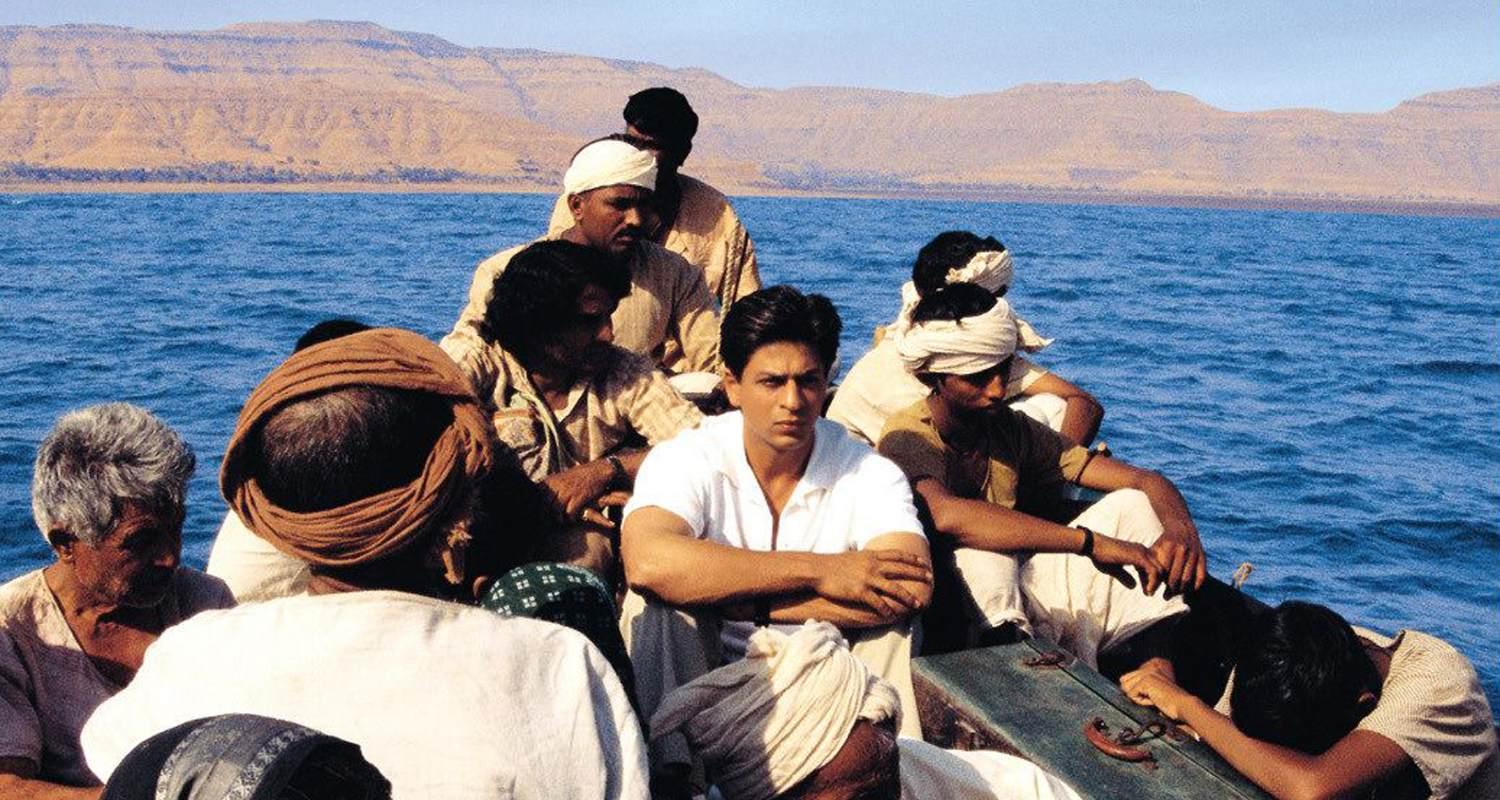
In the early 2000s, Shah Rukh Khan played characters preserving their Indian identity in a foreign land while facing the challenges of a globalised world. His 2004 film "Swades" shed light on this predicament.
Directed by Ashutosh Gowariker, "Swades" explores the idealism and dilemmas faced by a non-resident Indian who leaves his job at NASA to work for the betterment of rural India.
During this time, there were also films like "Border" (1997) and "Gadar" (2001), both starring Sunny Deol. One was set in the 1971 India-Pakistan war and the other during Partition, with both films openly displaying patriotism.
"Sarfarosh," featuring Aamir Khan and Naseeruddin Shah, stood out for its exploration of the threat of terrorism.
The turn of the century brought a populist twist to themes of patriotism in films like "Pukar," "Mission Kashmir," "Fiza," and "Yahaan."
Biopics such as Ajay Devgn's "The Legend of Bhagat Singh," "Shaheed-E-Azam," starring Sonu Sood, and "23rd March 1931 Shaheed" with Bobby Deol in the lead, also emerged during this time.
Aamir Khan's "Lagaan" (2001) and SRK's "Chak De India" (2007) used sports to depict two distinct aspects of patriotism.
In "Lagaan," patriotism is intertwined with resistance against colonial oppression and the struggle for social justice and self-respect, symbolised by the villagers' fight for freedom and dignity. The film uses cricket, originally a British sport, as a metaphor for the struggle against the oppressive colonial regime.
In "Chak De! India," national pride is expressed through a struggling women's hockey team and its quest for an international trophy. Aamir's "Rang De Basanti" (2006) begins as a story of a group of college students who join a British filmmaker's documentary on freedom fighters Bhagat Singh, Chandrashekhar Azad, Ashfaqulla Khan, and Sukhdev Rajguru. The friends realise that they have to take on the system the way their heroes did to fight corruption and injustice.
In the past decade, there has been a resurgence of films highlighting the bravery of Indian soldiers, focusing on external threats to the nation in films like "Uri: The Surgical Strike" (2019), starring Vicky Kaushal, and Sidharth Malhotra's "Shershaah" (2021).
These movies reignited the image of the patriotic man as a soldier or a spy, ardently defending the country from its enemies. Additionally, there were films like Alia Bhatt's "Raazi" (2018), celebrating the unknown woman spy from the 1970s, and Kaushal's "Sardar Udham" (2021), a biopic directed by Shoojit Sircar on Udham Singh, who assassinated Michael O'Dwyer in London to avenge the 1919 Jallianwala Bagh massacre.
As India continues to evolve, so does the portrayal of its patriots, with each era adding new dimensions to the concept of love and service for the nation.

 Follow us