Makki ki roti and sarson da saag are closely associated with Delhi’s winter food traditions, but preparing the maize-flour flatbread at home can be difficult. The dough often cracks, the edges split and the roti may break while being transferred or flipped.
The main challenge is usually the dough rather than the cooking technique. Using finely ground maize flour, hot water and adequate resting time can help produce soft, golden rotis that hold their shape.
Ingredients
- 1 cup maize flour, or makki ka atta
- 1 to 2 tablespoons whole wheat flour, optional and useful for beginners
- 1 teaspoon ghee or oil
- A pinch of salt
- Hot water, as required
- Butter or ghee for serving
Method to Make Soft Makki Ki Roti
Prepare the flour mixture: Place the maize flour in a bowl and add the wheat flour, if using, along with salt and ghee. Combine the ingredients thoroughly with your fingers.
Add hot water gradually: Pour in hot water in small quantities, mixing initially with a spoon because the mixture will be too hot to handle.
Knead well: Once the dough has cooled slightly, wet your hands and knead it for 7 to 8 minutes using the heel of your palm. It should become smooth and soft instead of crumbly.
Rest the dough: Cover it and leave it for 10 to 15 minutes. If the dough develops cracks later, add a few drops of water and knead it again.
Shape the portions: Take a lemon-sized piece of dough and roll it between your palms. Keep your hands slightly wet to prevent sticking.
Flatten the roti: Place the dough on butter paper or a zip-lock sheet, cover it with another sheet and gently press it with your palms or a flat plate. The roti should remain slightly thick and roughly the size of your palm.
Heat the tawa: Allow the tawa to become properly hot before placing the roti on it. A tawa that is not hot enough can cause the dough to stick.
Transfer with care: Lift the sheet, turn the roti onto the tawa and slowly peel the paper away.
Cook over medium heat: When small spots begin to appear, turn the roti over. Avoid pressing or poking it during cooking.
Finish and serve: For a smoky flavour, hold the cooked roti over a direct flame for a few seconds with tongs. Brush it with ghee or white butter and serve hot with sarson da saag.
What to Do If the Roti Keeps Breaking
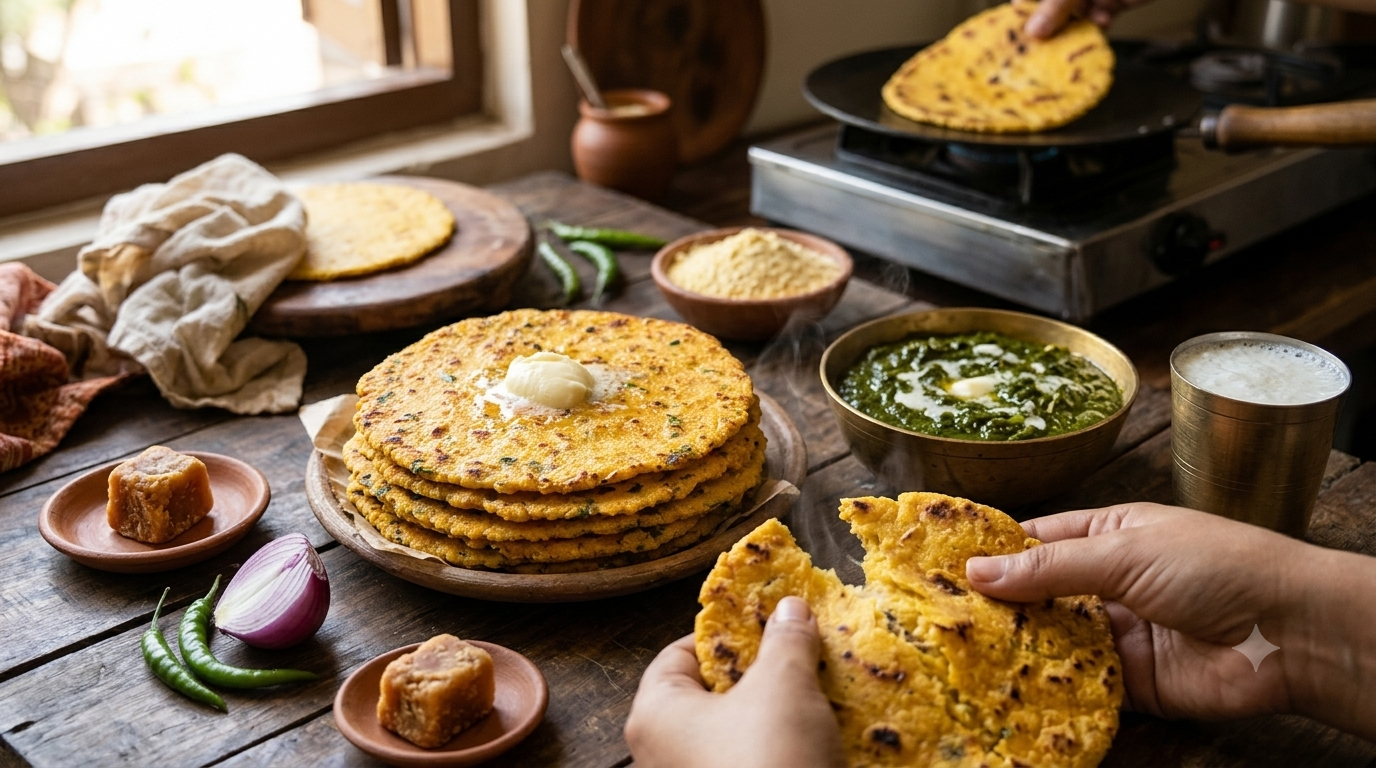
- Cracks along the edges: The dough may be too dry. Add a little hot water and knead it again.
- The roti sticks to the tawa: The cooking surface may not be hot enough.
- The roti becomes hard: It may have been rolled too thin or cooked for too long.
Why Makki Ki Roti Cracks
Maize flour does not contain gluten, so it cannot stretch in the same way as wheat dough. This makes the roti more likely to crack during shaping and rolling.
Cold water does not bind the flour effectively, leaving the dough loose and crumbly. Makki ka atta also absorbs water gradually, which means insufficient water or inadequate resting can cause the edges to split.
The texture of the flour matters as well. Coarsely ground maize flour does not hold together as easily as finely milled flour. Excessive heat or prolonged cooking can remove moisture from the roti, leaving it dry, hard and brittle.
Common Mistakes to Avoid
- Do not knead the dough with cold water.
- Do not leave the dough under-kneaded.
- Do not roll the roti too thin.
- Do not place it on a cold tawa.
Soft makki ki roti depends on the right flour, hot water and patient kneading. Once the dough reaches the correct consistency, shaping and cooking the rotis becomes considerably easier.

 Follow us

