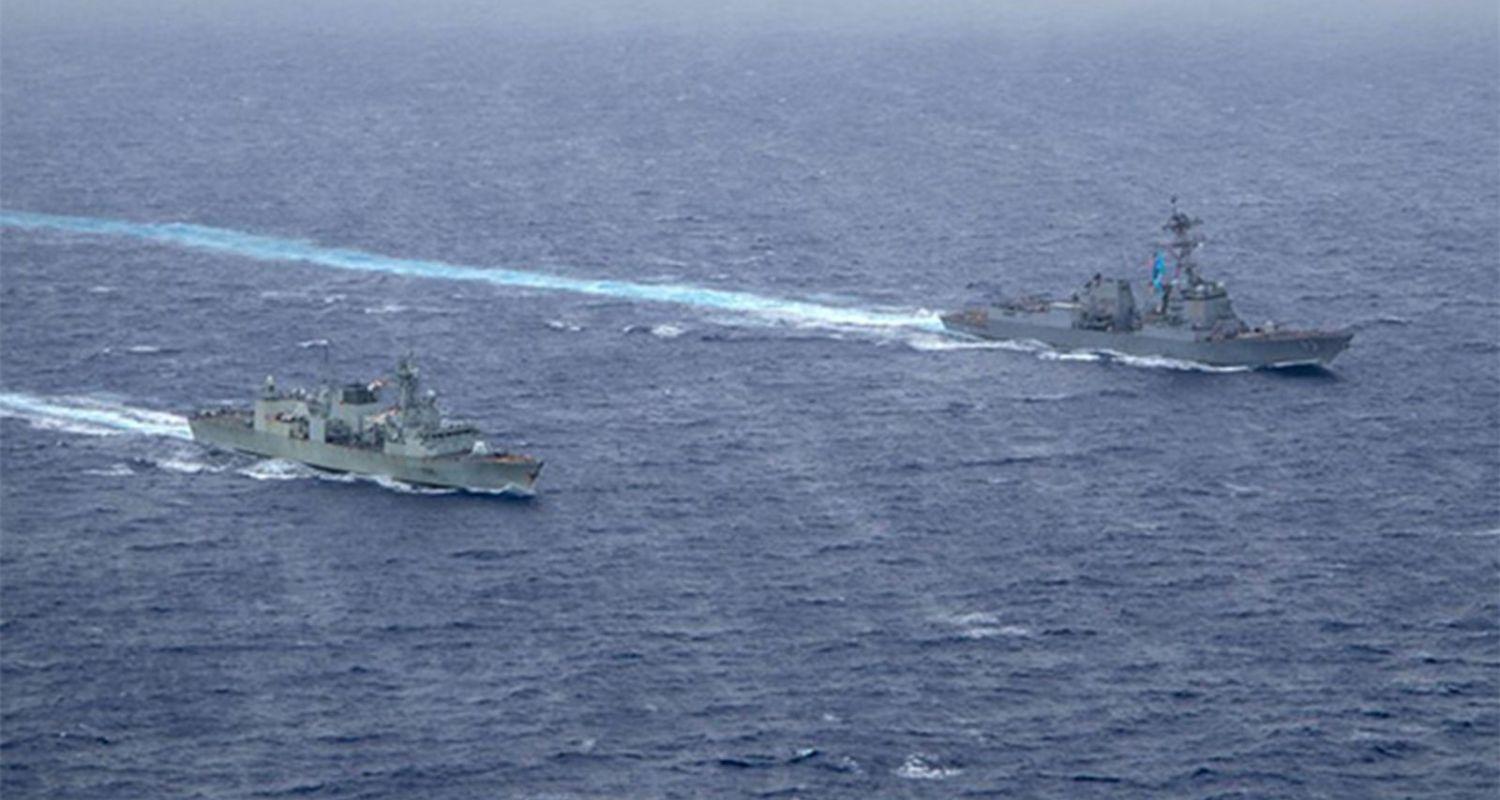
The 14-nation alliance, which comprises of the United Kingdom, the United States, and Japan among other countries, has reiterated the 2016 international arbitral decision that found that the expansive claims of Beijing in the South China Sea lacked any legal grounds. It is worth noting that Sunday marked the 10th anniversary of the decision made by the Arbitral Tribunal established in accordance with the United Nations Convention on the Law of the Sea (UNCLOS). Collectively through a press release, the coalition, comprising Australia, Canada, Estonia, Germany, Italy, Latvia, Lithuania, New Zealand, the Philippines, Romania, and Slovenia, emphasised their support for an Indo-Pacific region that is free, open, stable, and rule-based.
This group strongly condemned destabilising or unilateral actions, such as the threat of using force or coercion, within the region. They specifically criticised the deployment of coast guard, military, and maritime militia vessels to harass, obstruct, or intimidate lawful operations at sea or in the air, warning that such behaviour endangers personnel and fishermen while undermining regional security. The signatory countries urged all parties to abide by the award and resolve disputes peacefully through lawful mechanisms, whilst echoing support for ASEAN's vision of the South China Sea as a zone of peace and cooperation driven by vibrant, lawful commerce.
Adding to the international pressure, the European Union also called on the involved parties to fully implement the ruling. A statement issued by the EU High Representative on behalf of the bloc reiterated that the arbitral award remains final and must be respected. The international focus arrives at a significant juncture, as the Philippines holds the rotational chairmanship of the 11-member ASEAN this year.
China has strongly refused all the statements concerning the anniversary, sticking to its stance that it does not recognise the tribunal’s legitimacy. “The arbitral award is null and void and without legal binding force,” said Mao Ning, spokesperson of the Ministry of Foreign Affairs of the People's Republic of China. She instead highlighted the ongoing formulation of the Code of Conduct in the South China Sea (COC) as the proper framework forward, calling it an important consensus achieved between China and ASEAN members to ensure regional stability.
The original unanimous decision by the Permanent Court of Arbitration in The Hague marked the first time an international tribunal had ruled on the legal validity of maritime claims in the area. The most significant element focused on China's "Nine-Dash Line," a map-based claim encompassing roughly 80 per cent of the South China Sea. The tribunal concluded there was no legal basis for Beijing to claim historic rights to resources within this zone if they proved incompatible with the maritime zones established by UNCLOS.
State media commentary via Xinhua vehemently denounced the anniversary reflections, labelling the 2016 award a "poisoned legacy" and a "cynical parody of justice" that lacked legal legitimacy. Beijing argues that the tribunal was formed through a politically manipulated process that violated the principle of state consent and exceeded its jurisdiction. Moreover, China went ahead to claim that the Philippines’ unilateral filing of the case was an act of bad faith that contravened the 2002 Declaration on the Conduct of Parties as well as other bilateral agreements that provided for resolution of disputes through bilateral talks. China claims that the judgment has been abused by foreign entities in order to constrain its development.
Also read: US launches third round of military strikes on Iran; Hormuz shut

 Follow us