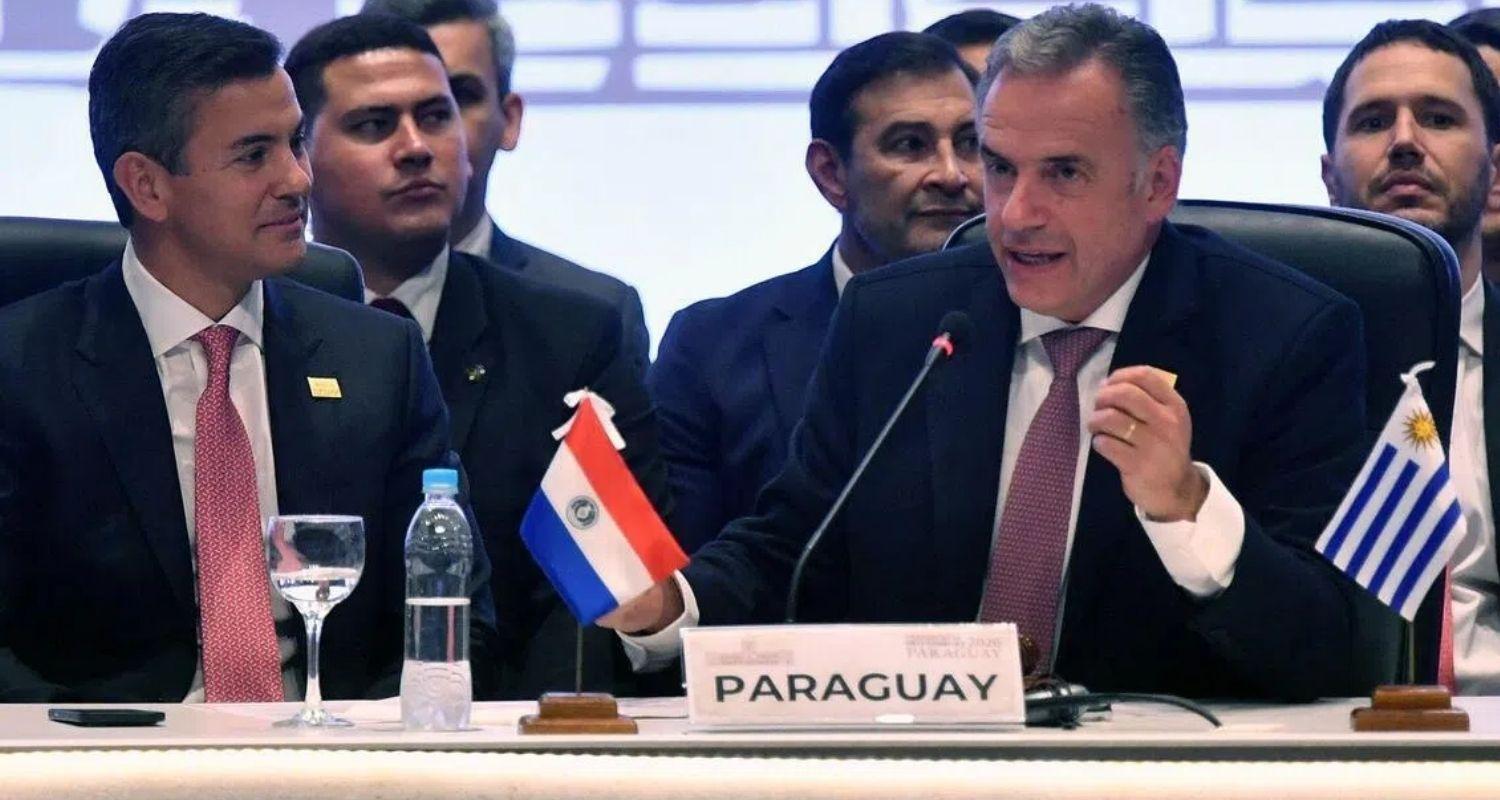
The 68th Mercosur Summit opened in Paraguay's capital, Asuncion, as the South American trade bloc marked the 35th anniversary of the Treaty of Asuncion, the founding agreement signed in 1991 that established Mercosur.
The ministerial session of the Common Market Council (CMC) began under the leadership of Paraguayan Foreign Minister Ruben Ramirez Lezcano, who emphasised the bloc's steady progress in promoting regional integration, economic cooperation, and institutional coordination.
In his inaugural address, Lezcano said Mercosur had continued to produce tangible gains for its member countries and their citizens through sustained collaboration and collective policymaking.
He noted that during Paraguay's pro tempore presidency, the bloc organised more than 360 meetings across its institutional bodies, enabling progress on key priorities such as trade facilitation, infrastructure development, border management, digital transformation, and regional connectivity.
According to Lezcano, recent meetings of the Mercosur Trade Commission (CCM) and the Common Market Group (GMC) delivered important outcomes, including revisions to rules of origin, improvements in integrated border control mechanisms, initiatives to strengthen competition policy, and measures to enhance consumer protection.
The CCM approved 22 new guidelines aimed at modernising the customs union and simplifying intra-bloc trade procedures, while the GMC advanced negotiations on the common external tariff, sustainable development initiatives, and deeper integration of the regional automotive sector, according to Brasil 247.
Also read: Students, teachers missing after gunmen raid school in Nigeria
Among the summit's major achievements was the conclusion of an agreement on the mutual recognition of electronic identification and authentication systems, representing a significant step towards greater digital integration and cross-border cooperation among Mercosur members. Seven heads of state are expected to attend the summit, including leaders from Mercosur member nations, alongside representatives from Chile and Ecuador.
Foreign ministers from associated states, as well as senior officials from Germany, the United Arab Emirates, Trinidad and Tobago, and Uzbekistan, are also participating. Business delegations from Germany, the UAE, and Chile have joined the event to explore investment and commercial opportunities in Paraguay.
The summit is also expected to discuss strengthening the Mercosur Structural Convergence Fund (FOCEM), which supports regional infrastructure, development, and integration projects across member countries.
In addition, leaders are expected to deliberate on expanding trade partnerships with countries such as Canada, Japan, India, Vietnam, the United Kingdom, and the UAE, as Mercosur seeks to diversify its global economic ties and broaden its international trade engagement.

 Follow us