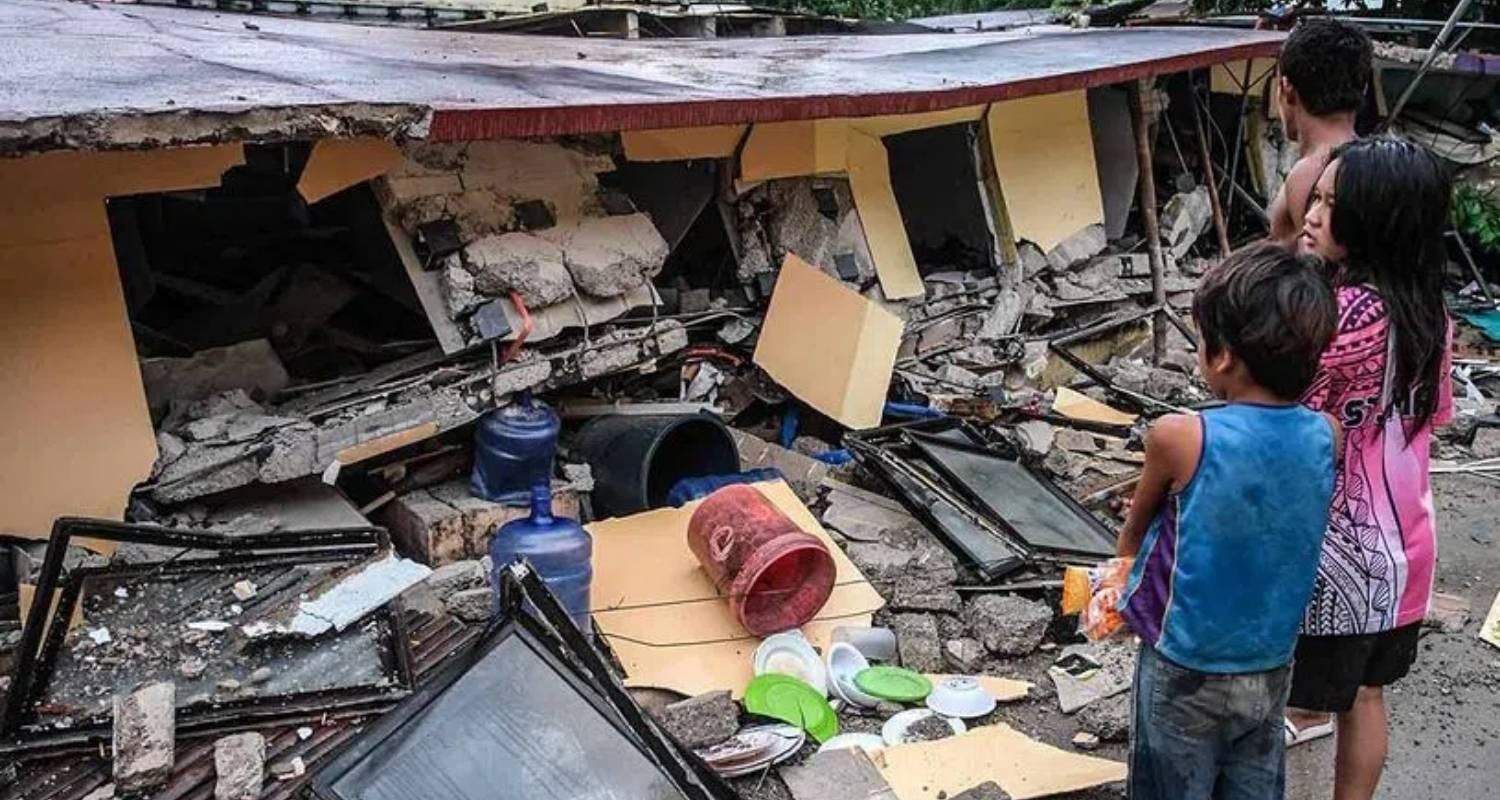
At least 32 people are feared dead and dozens injured after a powerful 7.8-magnitude earthquake struck off the southern Philippine island of Mindanao on Monday. Authorities have launched large-scale search and rescue operations as damage assessments continue.
The earthquake struck early in the morning around 20 kilometres off Sarangani province. Strong tremors were felt across Mindanao and as far as Manado city in Indonesia's Sulawesi island, located about 420 kilometres away. The quake also triggered tsunami alerts in several countries.
The Philippine government deployed military personnel and disaster response teams to affected areas. Civil defence officials said preliminary reports indicate that 32 people were killed and 134 injured, with most casualties caused by falling debris and landslides.
Tsunami warnings issued for parts of the southern Philippines, northern Indonesia and Malaysia's Sabah state were lifted after more than six hours. Residents in vulnerable coastal areas had earlier been asked to move to higher ground as a precaution.
The latest disaster comes eight months after the Philippines experienced its deadliest earthquake in more than a decade. A 6.9-magnitude quake near Cebu claimed 79 lives, while two strong earthquakes struck Mindanao just weeks later, including one measuring 7.4.
President vows support for Mindanao
Philippine President Ferdinand Marcos Jr ordered an immediate response operation across Mindanao. Government agencies were instructed to prepare relief materials, evacuation centres and rescue teams.
"The national government is moving and we will not leave Mindanao behind," Marcos said in a statement.
The Philippines and Indonesia frequently experience earthquakes because both countries lie along the seismically active Pacific Ring of Fire, a seismically active belt stretching from South America to the Russian Far East.
Authorities are still assessing the full extent of the damage. General Santos City, home to around 700,000 people, appears to be among the worst-hit areas. Several buildings and shops were damaged, with some structures partially collapsing.
Videos shared by local authorities showed a building housing a fast-food outlet collapsing as frightened residents ran for safety while dust and debris filled the air.
A hospital in General Santos was evacuated after cracks were noticed on upper floors. A building at Notre Dame of Dadiangas University also collapsed, though no one was inside at the time.
“I had to duck and shelter myself under the table. And it was very long and strong," university president Manuel de Leon told local media.
Hundreds of aftershocks recorded
The Philippine Institute of Volcanology and Seismology reported over 200 aftershocks following the quake. At least nine of them were strong enough to be felt across Mindanao, with the largest measuring 6.7 in magnitude.
The earthquake struck just as schools were reopening after a long break.
One video from a school showed children sitting on the floor when the tremors began. As the shaking intensified, some students clung to their teachers before rushing out of the building. A temporary shelter collapsed shortly after they evacuated.
Benjie Ancheta, police chief of Alabel town in Sarangani province, said the quake struck during a flag-hoisting ceremony at a police station, causing panic among those present. "This is the strongest earthquake we have ever experienced here," Ancheta said.
Indonesians move to safer locations
The US Tsunami Warning System initially warned that several countries could be affected by tsunami waves. Australia also issued an advisory for parts of its northern coastline.
Japan's weather agency issued a tsunami advisory and reported waves of up to 0.2 metres. Ferry services were disrupted in some areas and beaches were temporarily closed as a precaution.
Residents of Indonesia's Manado city said the tremors were clearly felt there. Indonesian disaster officials reported only limited damage. A tsunami wave measuring up to 0.75 metres was recorded in parts of North Sulawesi. Residents, including those living on the remote Sangihe Islands near the Philippines, moved to higher ground until authorities declared it safe to return.
Also read: 7.4 magnitude earthquake in Indonesia, one killed

 Follow us