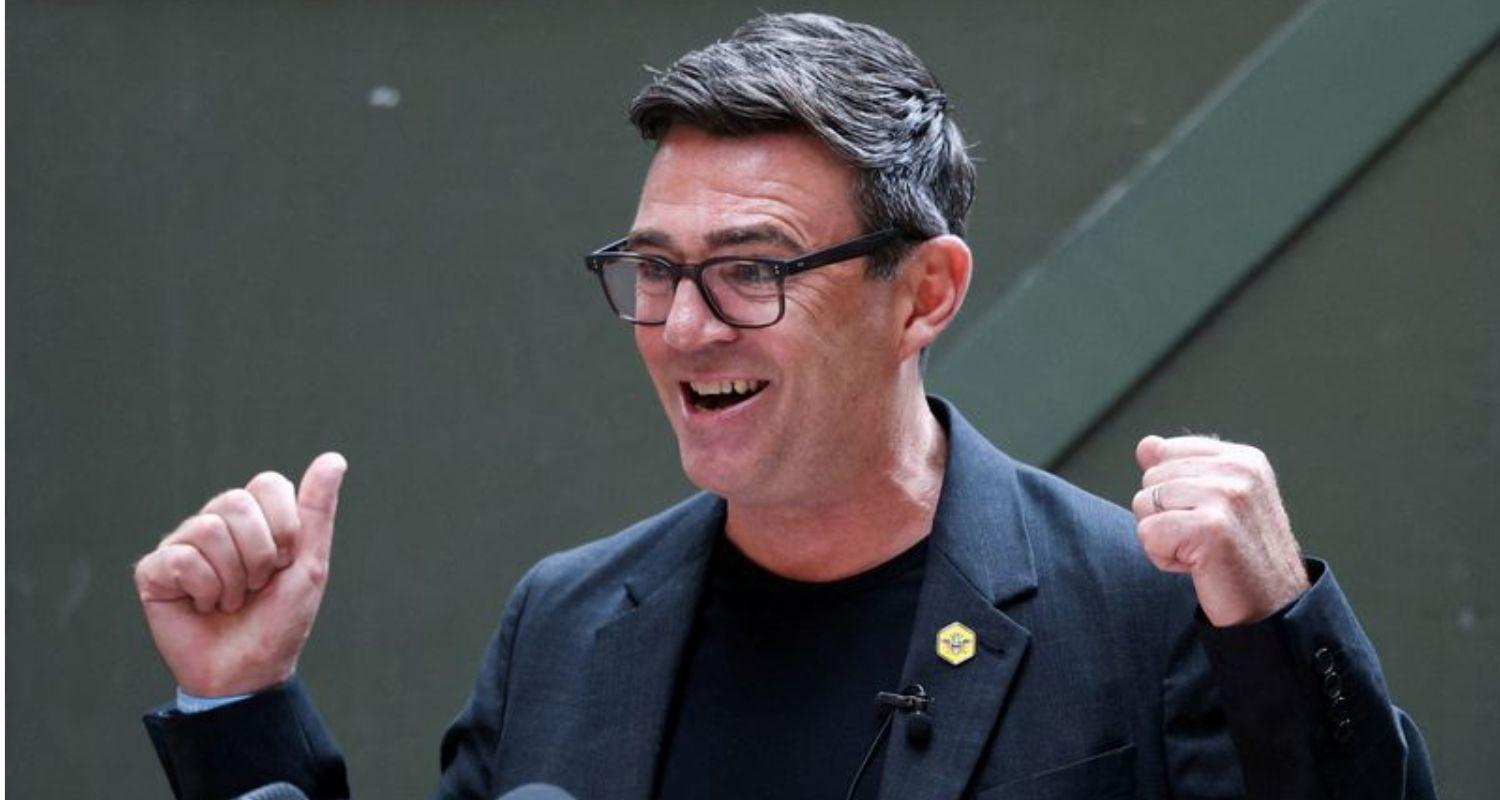
Andy Burnham's rise to Britain's top political office has been marked by a blend of patience, political risk-taking and regional leadership. After leaving Westminster nearly a decade ago to become Mayor of Greater Manchester, Burnham has now returned to national politics and is set to become Britain's 59th Prime Minister following the unexpected resignation of Keir Starmer after just two years in office.
The 56-year-old Burnham recently returned to Parliament after winning a special election, paving the way for his appointment as Labour leader and Prime Minister. While he enters Downing Street with strong public expectations, questions remain over how he will handle the challenges of leading the country.
Joshi Herrmann, founder of Manchester news outlet The Mill, said Burnham has become a figure onto whom many people have projected their hopes for the future of both the Labour Party and the country.
Born in Liverpool and raised in a village between Liverpool and Manchester, Burnham comes from a working-class family. His father worked as a British Telecom engineer and his mother was a receptionist. Raised in a Catholic household, he has said the values of social justice instilled through his upbringing and Labour politics shaped his worldview.
Burnham became the first generation in his family to attend university, graduating in English from the University of Cambridge despite initially doubting he belonged there. He later worked as a journalist before entering politics as a researcher and adviser to Labour politicians. He married fellow Cambridge student Marie-France Van Heel in 2000, and the couple have three children.
Elected as the Labour MP for Leigh in 2001, Burnham rose through the ranks under Prime Ministers Tony Blair and Gordon Brown. Between 2007 and 2010, he served as Chief Secretary to the Treasury, Culture Secretary and Health Secretary.
A defining moment in his political career came through his support for the families affected by the 1989 Hillsborough disaster. Burnham became a prominent advocate for justice, backing efforts that led to a new inquest, an official apology and stronger legal obligations for public officials to tell the truth following public tragedies.
After Labour lost power in 2010, Burnham unsuccessfully contested the party leadership twice before leaving Parliament in 2017 to become Mayor of Greater Manchester. In that role, he earned a reputation for pragmatic leadership, promoting what became known as "Manchesterism"—a model combining public and private investment to improve transport, housing and infrastructure.
Under his leadership, Manchester saw major regeneration, while reforms to the city's public transport system won widespread praise. During the COVID-19 pandemic, Burnham became a prominent critic of the Conservative government's handling of restrictions and funding for northern England, earning the nickname "King of the North."
Also read: US carries out fresh military strikes on Iran
Following Starmer's resignation, Burnham returned to Parliament after comfortably winning a by-election in the Manchester-area constituency of Makerfield, defeating the Reform UK candidate. He was subsequently elected unopposed as Labour leader.
As Prime Minister, Burnham has pledged to build "a new politics based on unity and hope" and create an economy that benefits all regions. A central element of his agenda is devolving more powers to regional leaders, including plans to establish a "No. 10 North" office in Manchester.
Supporters say Burnham's strengths lie in his communication skills, empathy and commitment to tackling inequality. Critics, however, argue that many of his policy proposals lack clear funding plans. He also faces significant challenges, including a sluggish economy, pressure on public services, rising living costs and complex foreign policy issues.
Despite limited international experience, allies believe Burnham's determination and willingness to confront opponents will help him navigate the demands of leading the United Kingdom.

 Follow us