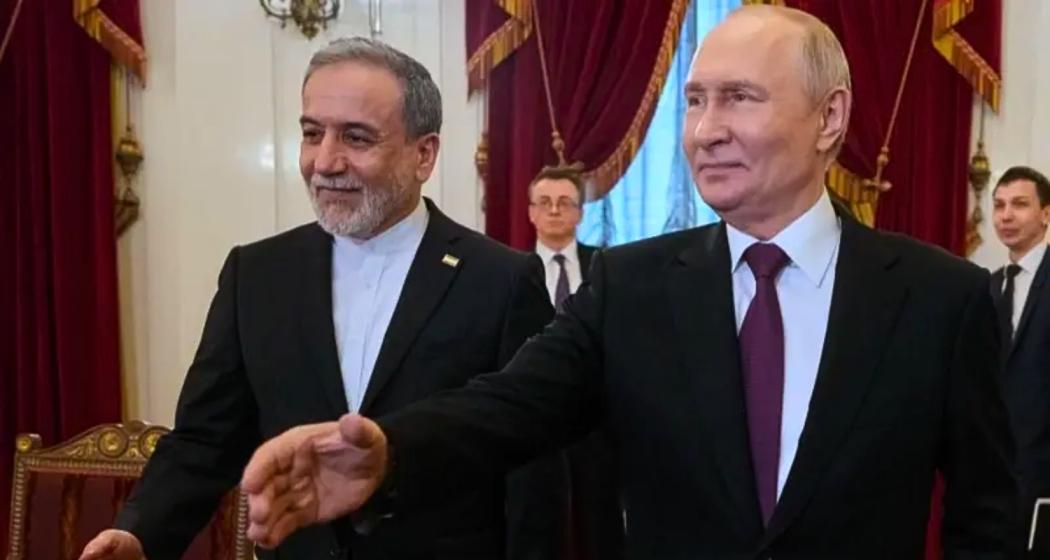
Fresh diplomatic activity unfolded across multiple capitals on Monday as Russia signalled its readiness to play a more active role in efforts to stabilise West Asia, even as uncertainty persisted over stalled US-Iran negotiations.
Russian President Vladimir Putin met Iran’s Foreign Minister Abbas Araghchi in St Petersburg, saying Moscow was prepared to “do everything in its power” to help restore peace in the region. Putin also reaffirmed Russia’s intent to maintain strategic ties with Tehran, while praising the Iranian people’s resilience.
Araghchi described Iran as a “stable and powerful” state and said ties with Russia would continue to deepen regardless of geopolitical pressures. The meeting, also attended by Sergey Lavrov, comes amid a broader churn in diplomatic engagement following recent hostilities.
Oman, Pakistan step up as mediation channels
Before arriving in Russia, Araghchi held talks in Oman and Pakistan, both emerging as key interlocutors. In Muscat, discussions with Badr Albusaidi focused on ensuring safe navigation through the Strait of Hormuz, a critical global energy corridor.
Araghchi said “some agreements” had been reached with Oman to continue consultations at the expert level on maritime security. In Islamabad, he described engagements with Pakistan’s leadership as “very productive”, aimed at assessing pathways to revive stalled negotiations.
Also read: 2 killed as Ukraine hits Russia-held Kherson; 14 hurt in attack
Trump cancels envoy visit, talks remain stalled
The diplomatic push follows a setback after US President Donald Trump cancelled a planned visit by senior envoys to Pakistan for talks with Iran. While Washington has indicated that engagement may continue through indirect channels, Tehran has flagged “excessive demands” and lack of progress in earlier rounds.
Over 35 ships turned back as Hormuz traffic collapses
Even as talks falter, the situation in the Strait of Hormuz has worsened. Fresh data shows that at least 37 ships have been turned back since mid-April, including multiple oil tankers. Daily vessel movement has dropped sharply, from around 130 ships earlier to single-digit transits.
Several vessels reportedly reversed course after coming under threat, with incidents of firing forcing crude carriers to retreat. The disruption has choked one of the world’s busiest oil routes, leaving hundreds of ships stranded or awaiting clearance.
Drone strikes on Iraq
The crisis has also widened geographically. Iran-linked drone and missile attacks have targeted vessels and infrastructure in and around the Strait, while strikes have also been reported in Iraq-linked theatres, particularly in Kurdish regions.
Maritime crews have reported frequent drone sightings and explosions, with at least 29 ship-related attack incidents recorded during the conflict period.
Nearly 20,000 seafarers stranded in Gulf
The combined impact of blockades and attacks has left nearly 20,000 seafarers stranded in the Gulf, facing shortages and rising security risks. Despite the ceasefire, the Strait of Hormuz remains effectively restricted, underlining the fragility of the current pause in hostilities.

 Follow us