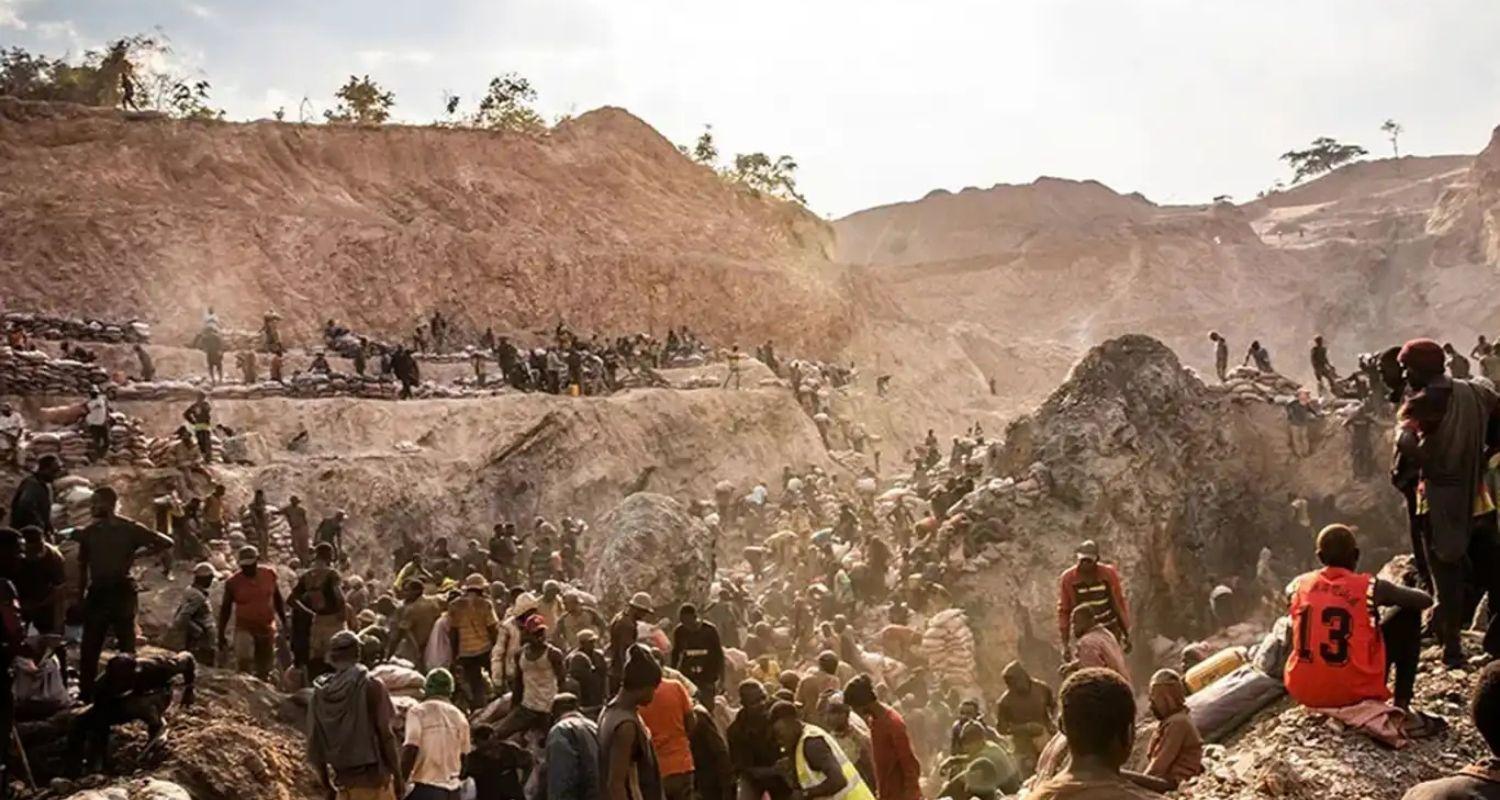
More than 200 people are reported to have been killed in eastern Democratic Republic of the Congo when a landslide collapsed several mines at a major coltan mining site, rebel authorities said on Saturday.
The collapse took place on Wednesday at the Rubaya mines, located about 60 kilometres northwest of Goma, the capital of North Kivu province. The exact death toll remained unconfirmed as of Saturday.
“More than 200 people were victims of this landslide, including miners, children and market women. Some people were rescued just in time and have serious injuries. About 20 injured people were being treated in health facilities,” said Lumumba Kambere Muyisa, the spokesperson of the rebel-appointed governor of North-Kivu province. The mines are controlled by the M23 rebels.
“We are in the rainy season. The ground is fragile. It was the ground that gave way while the victims were in the hole,” he added.
Muyisa said the injured were taken to three health facilities in the town of Rubaya, while ambulances were expected to transfer the wounded on Saturday to Goma, the nearest city around 50 kilometres (30 miles) away.
Also Read: DR Congo, Rwanda sign historic peace deals in US
The death toll was later confirmed by Eraston Bahati Musanga, North Kivu governor appointed by the M23 rebel group, who said some bodies had been recovered, but the casualty figure remains high.
Musanga has temporarily halted artisanal mining on the site and ordered the relocation of residents who had built shelters near the mine, Muyisa said.
Franck Bolingo, an artisanal miner, described the incident as being sudden and tragic. “It rained, and then the landslide happened and swept people away. Some were buried alive, and others are still trapped in the shafts,” he said.
Rubaya lies in the heart of eastern Congo, a mineral-rich part of the Central African nation, which, for decades, has been ripped apart by violence from government forces and different armed groups, including the Rwanda-backed M23, whose recent resurgence has escalated the conflict, worsening an already acute humanitarian crisis.
Over 15 per cent of the world’s supply of tantalum, a rare metal extracted from coltan that is a key component in the production of smartphones, computers and aircraft engines, comes from the Rubaya region.
Poverty and unemployment have driven many locals to work in these hazardous mines for little more than $70 a month.
In May 2024, M23 seized the town and took control of its mines. According to a UN report, since seizing Rubaya, the rebels have imposed taxes on the trade and transport of coltan, generating at least $800,000 a month.
Eastern Congo has been crises-ridden for decades, witnessing more than 7 million people’s displacement, including 100,000 who fled their homes this year.
Despite the signing of a deal between the Congolese and Rwandan governments brokered by the US and ongoing negotiations between rebels and the Congo, fighting continues on several fronts in eastern Congo, continuing to claim numerous civilian and military casualties.
The deal between Congo and Rwanda also opens up access to critical minerals for the US government and American companies.

 Follow us