One of the two gunmen who shot down people on Australia’s Bondi Beach on December 14 has been charged by the police on Wednesday with 59 offences, including 15 charges of murder.
Naveed Akram, 24, son of Sajid Akram and part of the duo accused of massacring 15 people celebrating Hanukkah at Bondi Beach, was charged after waking from a coma in a Sydney hospital, where he has been since police shot him and his gunman father at Bondi.
His 50-year-old father, Sajid Akram, died at the scene.
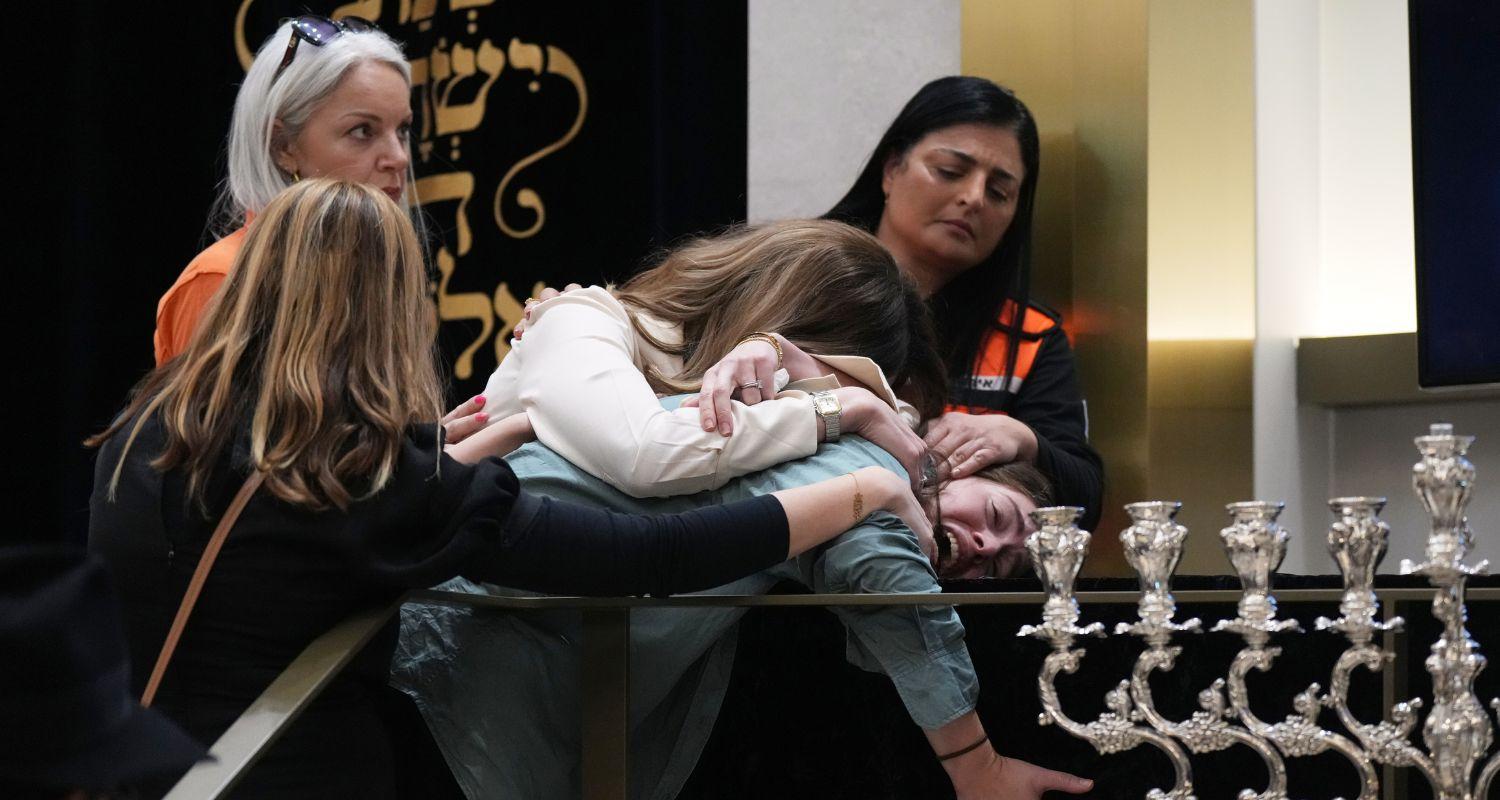
All of those killed by the gunmen who have been identified so far were Jewish, the police said, while hundreds of mourners gathered in Sydney to begin funerals for the victims.
Akram’s charges include one count of murder for each fatality and one count of committing a terrorist act. He has also been charged with 40 counts of causing harm with intent to murder in relation to the wounded and with placing an explosive near a building with intent to cause harm.
Police said the Akrams’ car, which was found at the crime scene, contained improvised explosive devices.
Heart-rending scenes were witnessed as funerals began for the victims of the attack, who ranged in age from a 10-year-old girl to an 87-year-old Holocaust survivor.
As Sydney’s close-knit Jewish community gathered to begin to bury their dead, investigations into the country’s deadliest hate-fueled massacre of modern times turn deep as Australia faces a social and political reckoning about antisemitism, gun control and whether police protections for Jews at events such as Sunday’s were sufficient for the threats they faced.
Jews are usually buried within 24 hours of their deaths, but funerals have been delayed by coronial investigations.
The first to be buried was Eli Schlanger, 41, a husband and father of five who served as the assistant rabbi at Chabad-Lubavitch of Bondi and organised Sunday’s Chanukah by the Sea event where the attack unfolded. The London-born Schlanger also served as a chaplain in prisons across New South Wales state and in a Sydney hospital.
“After what happened, my biggest regret was – apart from, obviously, the obvious – I could have done more to tell Eli more often how much we love him, how much I love him, how much we appreciate everything that he does and how proud we are of him,” said Schlanger’s father-in-law, Rabbi Yehoram Ulman, who sometimes spoke through tears.
Also Read: Bondi Beach shooter from India, left Hyderabad 27 yrs ago: Cops
Dmitry Chlafma, a mourner, said Schlanger was “warm, happy, generous, one of a kind.”
Among others killed were Boris and Sofia Gurman, a husband and wife aged in their 60s, who were fatally shot as they tried to disarm one of the gunmen when he got out of his car to begin the attack.
Another Jewish man in his 60s, Reuven Morrison, was gunned down by one shooter while he threw bricks at the other, his daughter said.
The youngest killed was Matilda, 10, whose parents urged attendees at a vigil on Tuesday night to remember her name.
“It stays here,” said Matilda's mother, who identified herself only as Valentyna, pressing her hand over her heart. “It just stays here and here.”
Meanwhile, authorities believe that the shooting was “a terrorist attack inspired by Islamic State,” as stated by Australia’s federal police commissioner, Krissy Barrett, on Wednesday.
They also confirmed that Naveed Akram came to the attention of the security services in 2019, although no other detail of their previous investigations was made public, including the examination of a trip the suspects made to the Philippines in November.
India’s Telangana police on Tuesday said the older suspect was originally from the southern city of Hyderabad, had migrated to Australia in 1998 and held an Indian passport.
The Philippines Bureau of Immigration confirmed on Tuesday that the two shooters travelled to the country from November 1 to November 28, giving the city of Davao as their final destination.
Groups of Muslim separatist militants, including Abu Sayyaf in the southern Philippines, once expressed support for IS and have hosted small numbers of foreign militants from Asia, the Middle East and Europe in the past, although the Philippine military and police officials say there has been no recent indication of any foreign militants in the country’s south.
Prime Minister Anthony Albanese has vowed on Wednesday to take whatever government action was needed to stamp out antisemitism, including tightening the country’s already strict gun laws in what would be the most sweeping reforms since a shooter killed 35 people in Port Arthur, Tasmania, in 1996.
Mass shootings in Australia have since been rare.

 Follow us