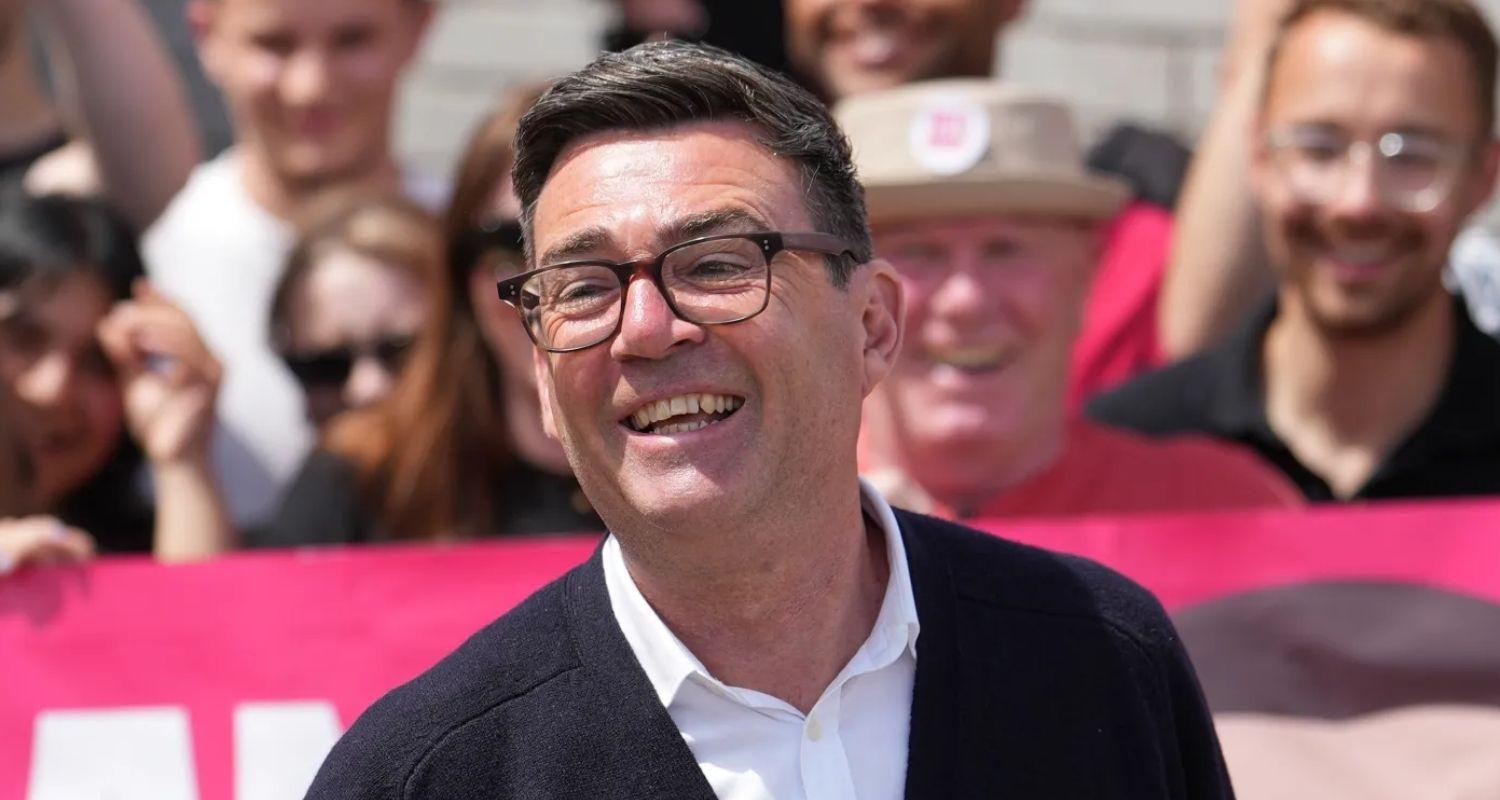
Andy Burnham moved a step closer to becoming Britain's next prime minister unopposed on Wednesday after Cabinet minister Darren Jones ruled himself out of the Labour leadership race. Jones, who had been viewed as a potential challenger to Burnham, announced that he would not seek the party leadership, increasing the likelihood that the Greater Manchester mayor could secure the position without facing a contest.
Meanwhile, outgoing Prime Minister Keir Starmer continued his final weeks in office, appearing at the weekly Prime Minister's Questions session in Parliament before travelling to Berlin for talks with European leaders on Ukraine, European security and the Middle East. Starmer revealed earlier this week that he intends to step down, triggering a leadership transition within the governing Labour Party. His successor is expected to be chosen within weeks.
Some Labour figures had encouraged Jones, a close Starmer ally, to enter the race in order to provide scrutiny of Burnham's policy agenda and leadership vision. Others, however, argued that a contested leadership election would only deepen internal divisions and prolong political uncertainty at a sensitive time.
Jones confirmed he would not stand for the leadership, saying it was "not something that I'm going to do." While declining to run, Jones cautioned Burnham against shifting Labour's economic policies too far to the left, reflecting concerns among some business leaders and financial markets about the party's future direction.
Also read: Ukrainian forces hit railway bridge to Crimea
Attention is already turning to who could become the next Chancellor if Burnham takes office. He is expected to appoint a replacement for Rachel Reeves, who was selected by Starmer to lead the Treasury. Jones said the role should go to someone capable of reassuring financial markets, trade unions, Labour MPs and the wider public. Burnham is expected to set out more details of his economic vision in a major speech next week as he seeks to build support among lawmakers and party members.
Starmer's departure follows a turbulent two-year premiership marked by a series of political setbacks and controversies that weakened both his public approval ratings and his standing within Labour.
Burnham, a former Cabinet minister who has served as mayor of Greater Manchester since 2017, returned to Parliament after winning a special election last week. He had openly signalled that his objective was to challenge Starmer for the Labour leadership and ultimately become prime minister. At present, Burnham appears to have significant backing within the party. Former Health Secretary Wes Streeting, widely viewed as a possible rival, has already announced his support for Burnham's candidacy.
The formal nomination period for the Labour leadership contest will open on July 9 and close on July 16. Should Burnham remain the sole candidate, he could become prime minister as early as July 17. If a contest is required, the process is expected to conclude before Parliament reconvenes following its summer recess on September 1.
During a Cabinet meeting on Tuesday, Starmer said he would work to ensure an orderly transition of power and provide full support to his successor during the handover period. Although preparing to leave office, Starmer has maintained a busy international schedule in an effort to strengthen his legacy. However, convention prevents him from launching major new policy initiatives or making significant spending commitments during his remaining time in office.

 Follow us