The West Asia ceasefire showed immediate signs of strain on Wednesday as Iran reportedly shut the Strait of Hormuz again, halting oil tanker movement despite agreeing to a two-week truce with the United States. The move, linked to Israel’s continued strikes in Lebanon that have left 89 dead, came after only two tankers were briefly allowed safe passage, casting fresh doubt over the durability of the agreement.
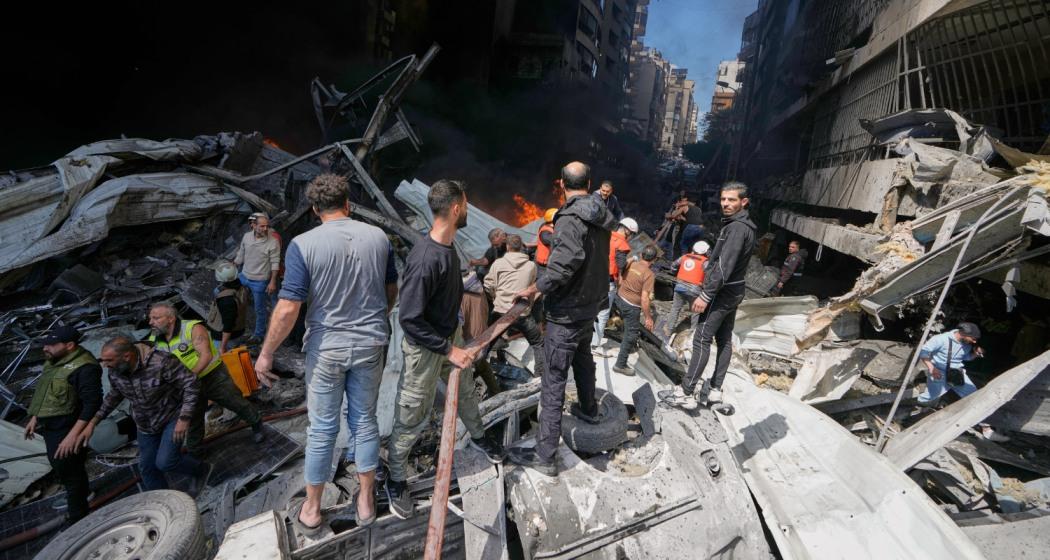
The Middle East remained on a knife-edge as the ceasefire offered only a momentary pause in direct US-Iran hostilities, even as fresh strikes rocked Lebanon, Iran and several Gulf countries. Israeli strikes hit densely populated commercial and residential areas in central Beirut on Wednesday, hours the ceasefire was announced. Lebanon’s health ministry reported at least 89 dead and 700 wounded. Hundreds of people are believed to be under the rubble of collapsed buildings. Describing it as the largest wave of air strikes in the ongoing conflict, Israel said it hit more than 100 Hezbollah command centres and military sites in 10 minutes.
On the other hand, US President Donald Trump told mediapersons that Lebanon was excluded from the deal due to Hezbollah. On Israel’s latest attacks, he said, “That’s a separate skirmish.” Israel maintained the truce does not cover its conflict with the Iran-backed group.
Within hours of the truce, President Donald Trump floated the idea of a US-Iran “joint venture” to manage tolls on the Strait of Hormuz, describing it as “a beautiful thing”, while violence continued unabated on multiple fronts.
Ceasefire announcement and immediate strains
The ceasefire, brokered with Pakistani mediation and set to include negotiations in Islamabad from Friday, was conditional on Iran ensuring the “complete, immediate and safe opening” of the Strait of Hormuz. Tehran agreed to allow safe passage for ships in coordination with its armed forces, in exchange for the US suspending attacks on Iranian targets. Iran portrayed the deal as a strategic success, with President Masoud Pezeshkian crediting it to the “blood of our great martyred leader Khamenei”. Supreme Leader Mojtaba Khamenei, however, made clear it was “not the end of the war”, ordering military units to cease fire while keeping options open.
Despite the announcement, traffic through the vital waterway remained slow, and some ships in the Persian Gulf received messages claiming to be from Iran’s navy asserting the strait was still closed. Global oil prices eased on the news but concerns lingered over potential tolls, with reports suggesting charges could reach up to $1 million per vessel.
Trump’s proposal: Joint venture on Hormuz tolls
In a striking shift hours after the truce, President Trump suggested Washington could enter a “joint venture” with Iran to secure and manage the Strait of Hormuz. Speaking to American media houses, he said it would be a way of “securing it, also securing it from lots of other people”. Trump added that the US would work closely with Iran on removing deeply buried enriched uranium from earlier strikes and discussed tariff and sanctions relief, claiming many points of a proposed 15-point plan had already been agreed upon. He also warned that any country supplying military weapons to Iran would face immediate 50 per cent tariffs on all goods sold to the US.
Lebanon front remains wide open
The ceasefire explicitly does not cover Lebanon, where Israel launched what it described as its largest wave of strikes yet against Hezbollah targets. Israeli Defence Minister Israel Katz called it the biggest blow to the group since the 2024 pager attacks, claiming hundreds of fighters were hit across Beirut and other areas. Strikes targeted dense residential and commercial zones, with reports of dozens killed and hundreds wounded. UN Special Coordinator for Lebanon Jeanine Hennis pleaded for an end to the violence, warning that “neither side can shoot or strike their way to victory”. The UN Refugee Agency highlighted mounting civilian deaths and massive destruction.
Hezbollah sources indicated it had paused operations for the two-week period, but Israeli officials, including Prime Minister Benjamin Netanyahu, insisted operations against the group would continue. Iran’s Foreign Minister Abbas Araghchi raised Israel’s actions in Lebanon during a call with Pakistan’s army chief General Asim Munir.
Also read: US-Iran truce trembles as missiles hit Iran, UAE, Kuwait
Attacks across Gulf raise doubts on truce durability
Fresh strikes hit several Gulf nations shortly after the ceasefire. The UAE, Kuwait and Bahrain reported intercepting Iranian missiles and drones, with damage to infrastructure including a gas facility in Abu Dhabi and oil/power targets in Kuwait. In Bahrain, debris injured civilians and damaged homes. Saudi Arabia’s strategic East-West oil pipeline, a key bypass route for millions of barrels daily, was reportedly damaged, along with other facilities. The Islamic Revolutionary Guard Corps claimed responsibility for strikes using missiles and drones.
These incidents, coming so soon after the truce, have raised serious questions about its durability. Russia’s Maria Zakharova described the broader US-Israeli campaign against Iran as an “unprovoked attack” that ended in a “crushing defeat” for the aggressors. Meanwhile, Iraq’s Islamic Resistance announced it would suspend operations for two weeks in alignment with the US-Iran pause.
India’s cautious welcome and advisory to nationals
India welcomed the ceasefire, with the Ministry of External Affairs expressing hope that the temporary truce would lead to lasting peace in West Asia through “dialogue and diplomacy”. New Delhi has consistently advocated de-escalation, citing immense suffering and disruptions to global trade and energy flows.
However, the Indian Embassy in Tehran issued a fresh advisory urging remaining Indian nationals to exit Iran expeditiously using embassy-approved routes, reflecting persistent security concerns.

 Follow us