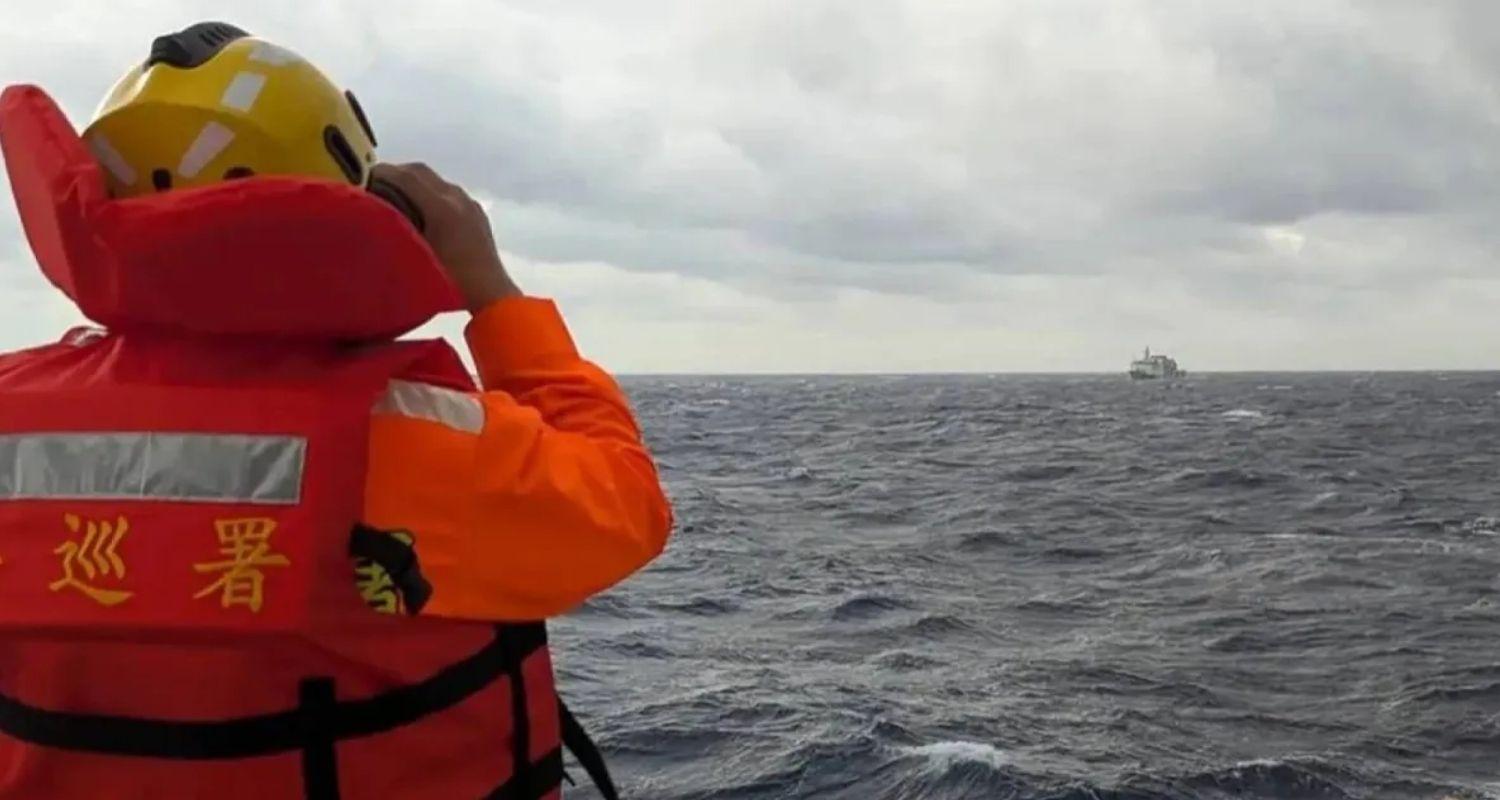
Taiwan has reported a significant increase in the presence of Chinese coast guard and government research vessels operating around the island, prompting authorities to strengthen maritime preparedness and plan new drills to simulate potential Chinese actions targeting key sea routes along Taiwan's Pacific coast.
Taiwan's Coast Guard Administration (CGA) recorded 55 sightings of Chinese government vessels in June, including coast guard ships and research vessels. The figure marks a substantial rise from 30 sightings in May and more than doubles the 25 sightings recorded during the same period last year.
The reported numbers do not include Chinese vessels operating near Taiwan-controlled offshore islands located close to mainland China, indicating that activity in the broader region may be even higher.
Taiwanese officials view the increase as part of Beijing's evolving strategy to reinforce its territorial claims over Taiwan by relying more heavily on coast guard and other civilian maritime agencies alongside military operations.
While China's People's Liberation Army (PLA) continues to maintain an almost daily presence around Taiwan through aircraft and naval deployments, officials in Taipei say the Chinese coast guard is increasingly being used to expand Beijing's influence in surrounding waters without immediately escalating to direct military confrontation.
According to the Taipei Times, Taiwanese authorities describe this approach as a form of "lawfare"—the use of legal, administrative and law-enforcement measures to assert sovereignty claims and gradually alter the status quo without resorting to open conflict.
A senior Coast Guard Administration official, speaking to the newspaper on condition of anonymity, said Taiwan is preparing for the possibility that China could attempt to interfere with or even blockade vital maritime supply routes on the island's Pacific side during a future crisis.
To strengthen preparedness, Taiwan has conducted both tabletop exercises and live operational drills in coordination with the navy to ensure the security of critical shipping lanes that serve as essential lifelines for the island.
These routes are considered strategically important because they could become crucial channels for maintaining trade, fuel supplies and other essential imports should access to the Taiwan Strait become restricted during a conflict.
The report also cited Taiwanese officials as saying that several Chinese coast guard vessels currently operating near Taiwan were originally built as naval destroyers before being transferred to the coast guard and repainted for law-enforcement duties.
According to Taiwanese authorities, these converted vessels possess significantly greater endurance, firepower and operational capability than conventional coast guard ships, allowing them to remain at sea for extended periods while supporting Beijing's maritime objectives.
Officials further alleged that Chinese coast guard ships frequently patrol in pairs just beyond Taiwan's economic waters in the Pacific Ocean. Such deployments, they said, place additional strain on Taiwan's coast guard resources by requiring constant monitoring and response operations.
Taiwanese authorities also accused Chinese coast guard vessels of attempting to exert influence over commercial shipping by broadcasting radio messages requesting information from merchant vessels regarding their intended ports of departure and arrival.
Also read: HIV outbreak at Karachi hospital; 6 children dead
According to the report, these communications appear aimed at creating the impression of administrative authority over maritime traffic despite the absence of internationally recognised jurisdiction in those waters.
In response, Taiwan has instructed commercial shipping operators to disregard such radio calls and continue normal navigation in accordance with international maritime regulations. A senior Taiwanese official quoted by the Taipei Times said Beijing's activities represent a sustained effort to reshape the regional security environment by creating new operational realities through persistent maritime pressure rather than overt military action.
The official argued that China has no legal authority to exercise administrative control over the waters in question and described the continued deployment of coast guard vessels as an attempt to gradually alter the existing balance through repeated assertions of presence.
The developments come amid continuing tensions across the Taiwan Strait, where China has intensified military exercises, air patrols and maritime operations in recent years while maintaining its claim over Taiwan. Taipei, meanwhile, has continued to strengthen its defence preparedness and maritime surveillance capabilities, saying it remains committed to protecting freedom of navigation and safeguarding the island's territorial waters and critical sea lines of communication.

 Follow us