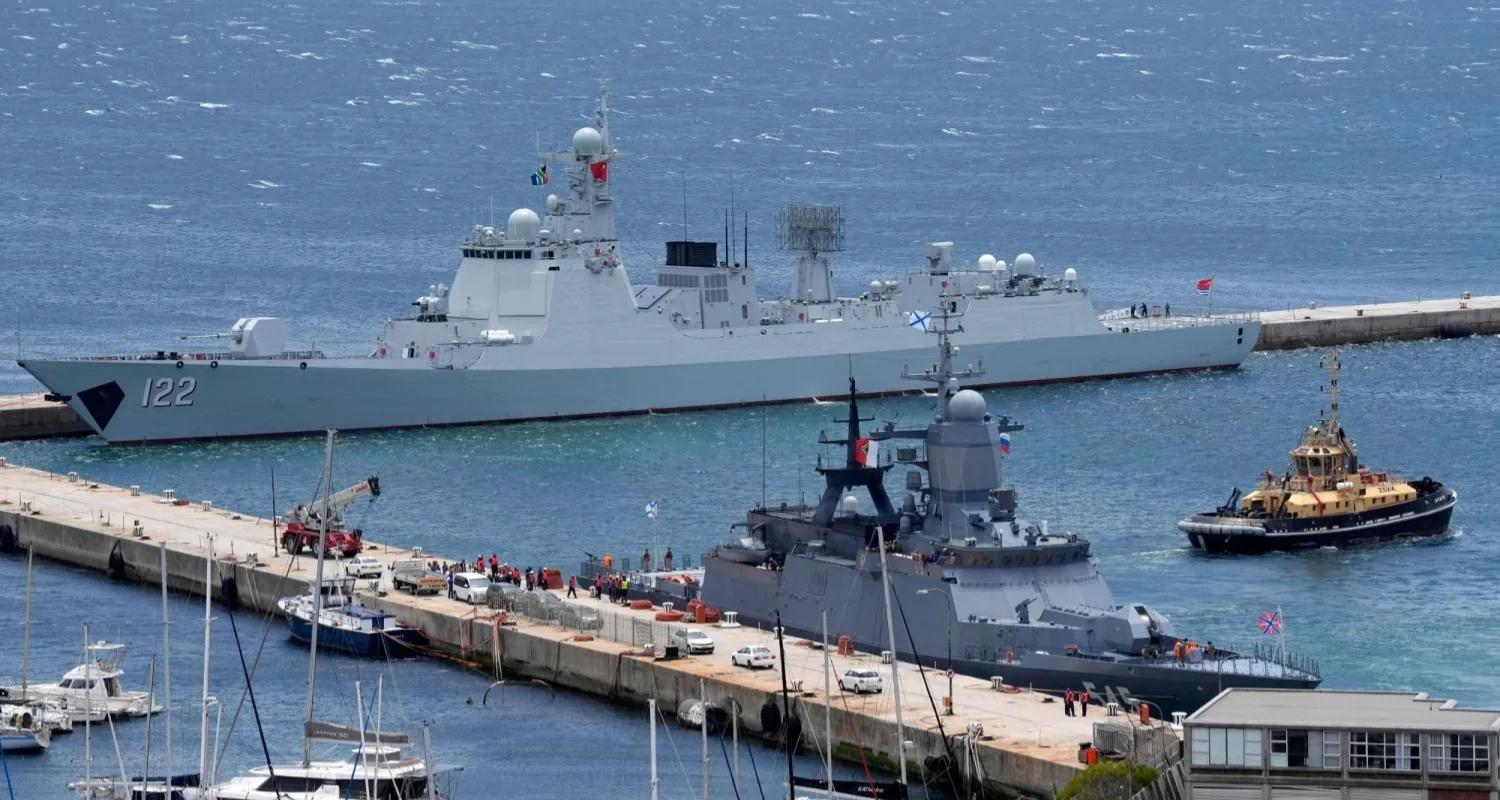
Chinese, Russian, and Iranian warships arrived in South African waters on Friday to participate in week-long naval drills off the coast of Cape Town as geopolitical tensions rise across the world, escalated by the US’ armed assault in Venezuela and the subsequent capture of its President, Nicolas Maduro.
Ships belonging to Russia, Iran and China, were seen moving into and out of the harbor that serves South Africa’s top naval base in Simon’s town, south of Cape Town, where the Indian Ocean meets the Atlantic Ocean. Participating Chinese warships include the Tangshan, a 161-metre-long destroyer class vessel.
The Chinese-led drills were organised last year under the BRICS bloc of developing nations, of which China, Russia and South Africa are longtime members while Iran joined in 2024. Although the drills were meant to take place in late November of 2025, they were delayed for diplomatic reasons, especially in the wake of South Africa hosting the Group of 20 summit around the same time.
South Africa’s armed forces said they will bring members of the bloc together to practice maritime safety and anti-piracy operations and “deepen cooperation” in an increasingly polarised world.
Also Read: China begins military drills in Taiwan Strait
A spokesman for the South African armed forces said he wasn’t yet able to confirm all the countries participating in the drills, which will run until next Friday. Notably, South Africa had also hosted Chinese and Russian ships for navy drills in 2023.
With protests in Iran escalating, and its regime blaming the US for the violence, the latest drills are bound to further strain ties between the US and South Africa. US President Donald Trump has been especially critical of the African country, which is a leading voice for the continent, alleging it supports “bad actors on the world stage”, referring to Iran.
Although South Africa says it maintains a non-aligned foreign policy and remains neutral, it has been accused of encouraging Russian presence on its southern tip, which South Africa denies.
However, the country’s latest naval drills have also found criticism within its political circles, with the Democratic Alliance, the country’s second-biggest political party, saying it was opposed to hosting drills that included “heavily sanctioned” Russia and Iran.
“Calling these drills ‘BRICS cooperation’ is a political trick to soften what is really happening. Government is choosing closer military ties with rogue and sanctioned states such as Russia and Iran,” said the party.

 Follow us