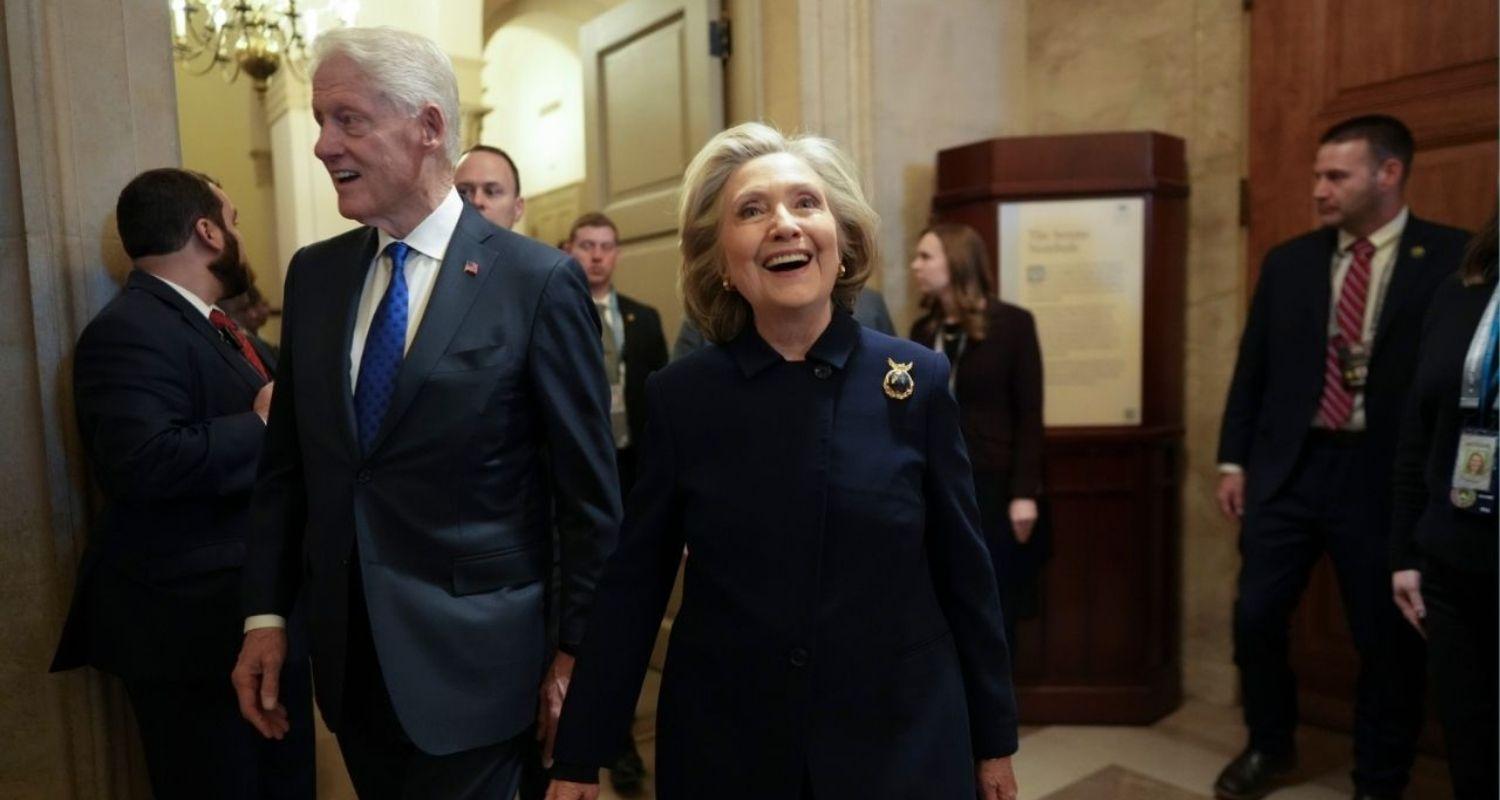
Former US President, Bill Clinton, and his wife and former Secretary of State, Hillary Clinton, agreed late Monday to testify in the Congressional investigation into late sex offender Jeffrey Epstein, although an agreement has not yet been finalised, said the official leading the probe.
“We don’t have anything in writing,” said Rep. James Comer, the chair of the House Oversight Committee, adding that the Clintons’ offer “depends on what they say”.
Clintons’ lawyers emailed staff for the Oversight panel to say the duo would accept Comer’s demands and “will appear for depositions on mutually agreeable dates” after Republican leaders began advancing criminal contempt of Congress charges against both Clintons Monday evening for defying a congressional subpoena.
Comer earlier Monday rejected an offer from attorneys for the Clintons to have Bill Clinton conduct a four-hour transcribed interview on “matters related to the investigations and prosecutions of Jeffrey Epstein” and for Hillary Clinton to submit a sworn declaration.
“The Clintons do not get to dictate the terms of lawful subpoenas,” Comer, a Kentucky Republican, said.
When the Clintons’ attorneys requested that Comer agree not to move forward with the contempt proceedings, the Republican said he was not immediately dropping the charges that carry the threat of a substantial fine and even incarceration if passed by the House and successfully prosecuted by the Department of Justice.
Bill Clinton’s relationship with Epstein has been a focal point for Republicans amid the public push for a reckoning over Epstein, who allegedly killed himself in 2019 in a New York jail cell as he faced sex trafficking charges.
Like the other numerous celebrities and high-powered individuals, Clinton had a well-documented relationship with Epstein in the late 1990s and early 2000s, with pictures of the two in public domain. He has, however, not been accused of wrongdoing in his interactions with the late financier.
Also Read: Epstein files drop bombshell claims on Trump
But the former president and secretary of state had resisted the subpoenas for months after they were issued by the Oversight panel for their testimony in August as it opened an investigation into Epstein and his associates. Their attorney had tried to argue against the validity of the subpoena.
It was only when Comer threatened to begin contempt of Congress proceedings, that the Clintons started negotiating towards a compromise.
The Republican-controlled Oversight committee advanced criminal contempt of Congress charges last month. Nine of the committee’s 21 Democrats joined Republicans in support of the charges against Bill Clinton as they argued for full transparency in the Epstein investigation. Three Democrats also supported advancing the charges against Hillary Clinton.
The Clintons have insisted that Comer bring Trump into the investigation’s fold and hold him accountable for delays in producing the Department of Justice’s case files on Epstein.
“They negotiated in good faith. You did not,” a spokesperson for the Clintons, Angel Ureña, said in response to Come’'s threats on Monday. “They told you under oath what they know, but you don’t care.”
Still, the prospect of a vote raised the potential for Congress to use one of its most severe punishments against a former president for the first time. Historically, Congress has given deference to former presidents. None has ever been forced to testify before lawmakers, although a few have voluntarily done so.

 Follow us