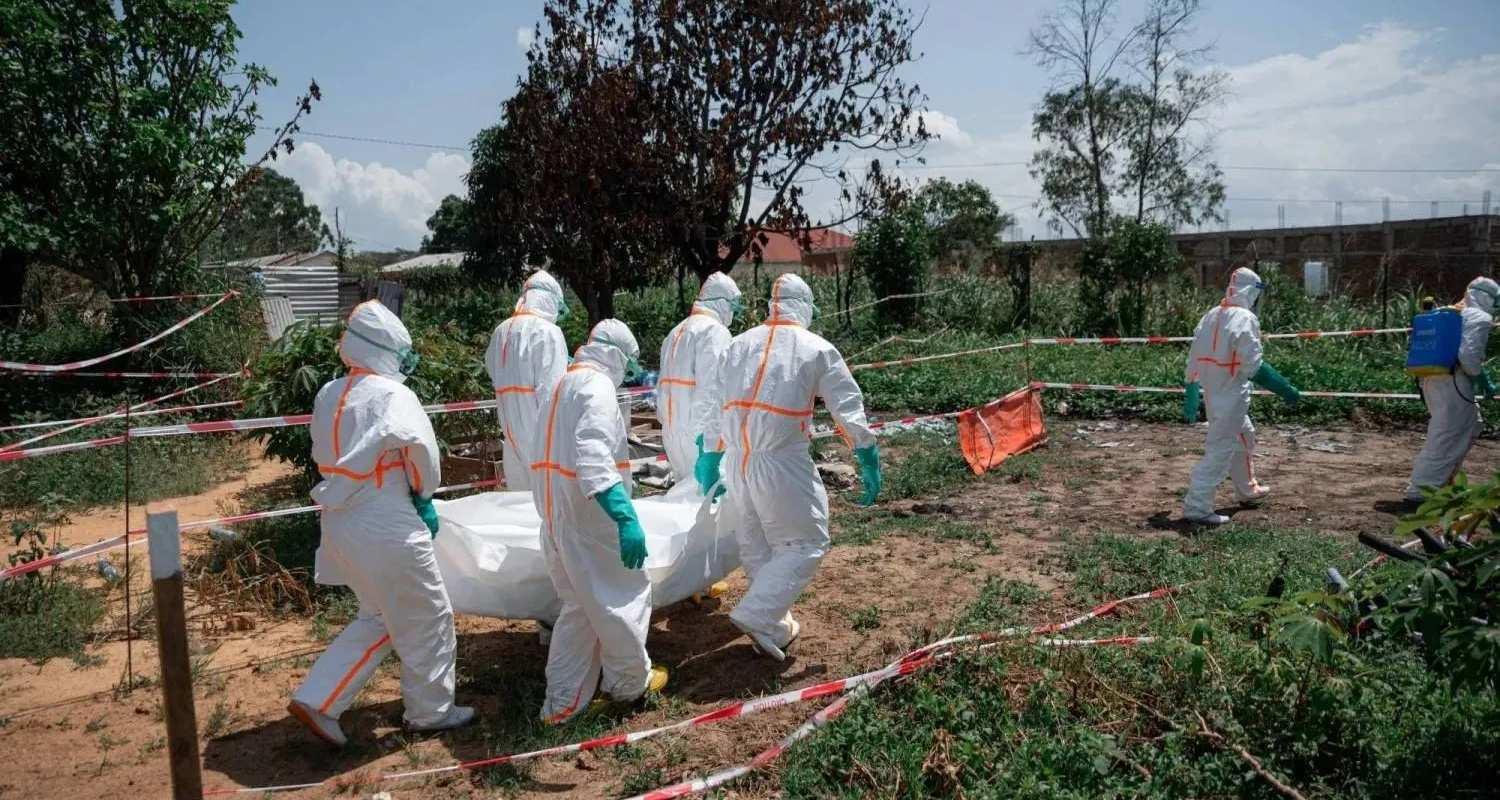
The number of confirmed cases in the ongoing Ebola outbreak in eastern Congo has crossed 1,000, with health authorities reporting 1,003 infections and 254 deaths as efforts to trace contacts and contain the disease continue to face significant challenges.
According to the Ministry of Health, 100 people have recovered since the outbreak was officially declared on May 15 in the northeastern province of Ituri. The ministry also said that at least 365 patients are currently receiving treatment in hospitals or remain in isolation facilities.
The outbreak, caused by the rare Bundibugyo strain of the Ebola virus for which no approved vaccine or specific treatment exists, has already become one of the most severe in recent years. Health officials acknowledge that the actual number of infections may be considerably higher, warning that the outbreak has likely not yet reached its peak.
A major obstacle remains contact tracing, with authorities managing to monitor only about 55 per cent of identified contacts, according to the ministry.
“If you want to control an outbreak, especially an Ebola outbreak, you must know the index case. We don't have confidence on when this outbreak started,” Jean Kaseya said.
Officials have yet to identify the source case of the outbreak and are still struggling to trace more than 35,000 people believed to have come into contact with infected individuals.
Containment efforts have been further complicated by the persistent insecurity in eastern Congo. In Ituri province, attacks by the Islamic State-linked Allied Democratic Forces have restricted access to several communities and forced thousands of residents to flee their homes.
Also read: After months, German journalist released from Syrian prison
Many displaced families are now living in overcrowded camps or moving frequently, making disease surveillance and contact tracing even more difficult.
More than a month after the outbreak began, health authorities admit that the virus continues to spread faster than response efforts, and the true scale of the crisis remains uncertain.
At the Kigonze displacement camp in Bunia, the capital of Ituri province, local officials reported that 10 people died under unusual circumstances last week, raising fears of a possible outbreak among the camp's population of more than 20,000 displaced residents.
Although no Ebola cases have yet been confirmed at the camp, officials described the recent death toll as unprecedented and called for an urgent investigation.
The United Nations High Commissioner for Refugees has warned that at least two million internally displaced people, along with more than 320,000 refugees, currently live in areas vulnerable to the spread of Ebola in Congo.
In a statement, the agency said it was “deeply concerned by the accelerating spread” of the virus and the increasing threat it poses to displaced populations across the region.
“If a disease or epidemic were to spread among the thousands of people living at this site, it would be a real catastrophe given our already very precarious living conditions,” said Charite Banza, a civil society leader in Ituri.
Health experts continue to stress that strengthening surveillance, improving access to affected communities and accelerating contact tracing will be critical to preventing the outbreak from escalating further.

 Follow us